The Sinosphere · Volume 32, The Stocking, the Shelter and the Spice Route
Wonton Noodle Soup (雲吞麵)
Guangzhou's Xiguan district
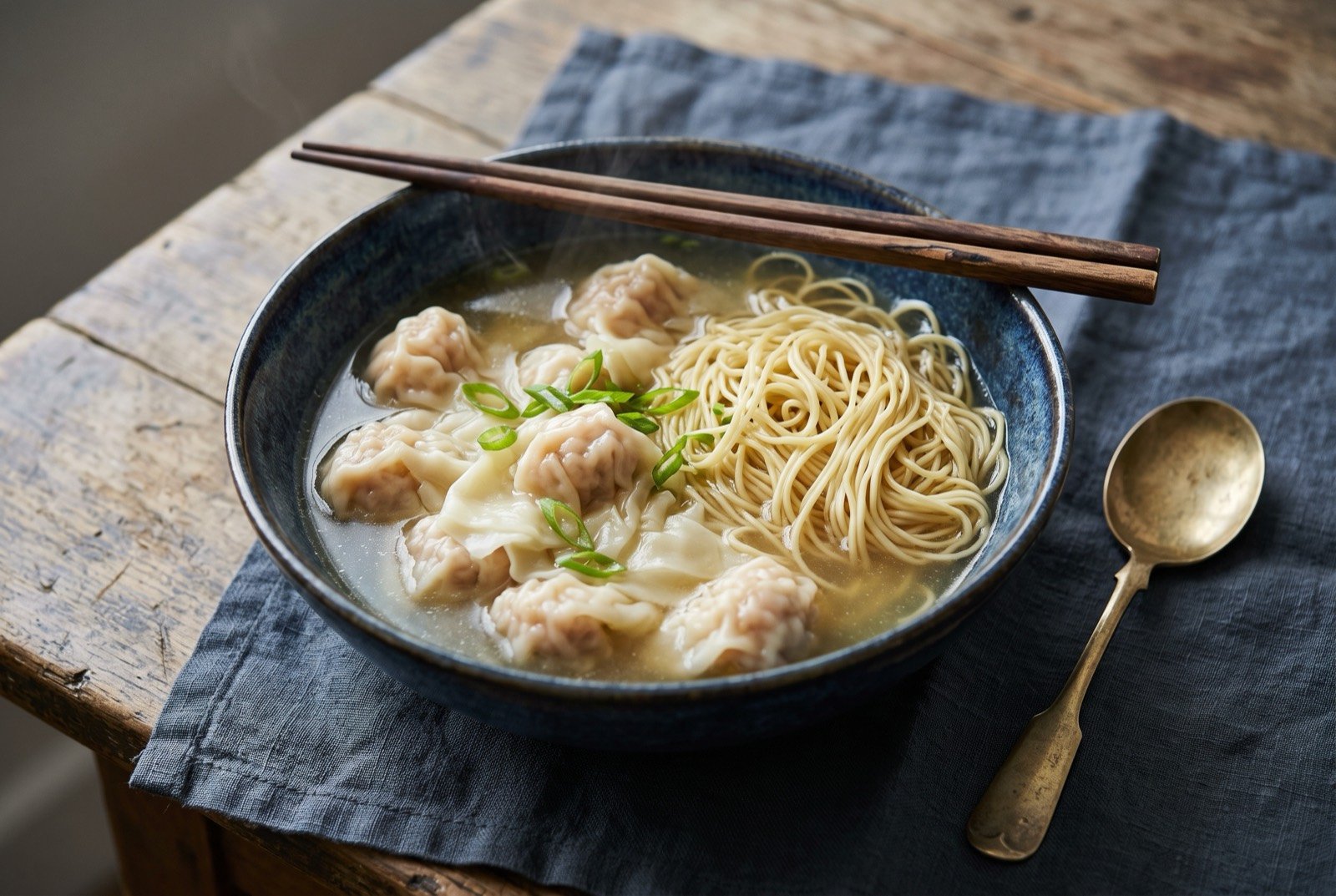
An illustration of the dish, not a photograph of it cooked.
- Time
- 4 hours 30
- Reviewed
- Not yet reviewed from inside the tradition
- Cooked
- Not yet cooked and reported
Guangzhou's Xiguan district, by way of a bamboo pole. A noodle pressed with a person's whole body weight, not a machine.
As tradition built it
Serves 4. About 4 hours for the broth, plus 30 minutes to assemble.
Ingredients
- 1 kg pork or soup bones
- 800 g shrimp shells and heads
- 30 g dried flounder (大地魚), or 1 teaspoon dried flounder powder
- 50 g Jinhua ham
- 300 g raw shrimp, peeled and chopped
- 150 g minced pork
- 1 egg, beaten
- about 300 g (roughly 30 to 40) wonton wrappers
- 400 g bamboo-pole egg noodles (or the best fresh egg noodles available)
Method
- Simmer the bones, shrimp shells, dried flounder and ham together for about 4 to 5 hours on a gentle heat, skimming as needed, for a clear, deeply savoury broth.
- For the wontons, combine the shrimp and pork roughly 7 parts shrimp to 3 parts pork by weight, season, bind with a little beaten egg, and wrap in wonton wrappers.
- Boil the wontons separately until they float, then drain.
- Cook the noodles separately in plain boiling water, then drain.
- Assemble in the bowl in this order: wontons first, noodles on top, broth ladled over last. This order matters: cooking wonton and noodle together in the dried-flounder stock itself would cloud and thicken it with flour residue from the wrappers, and noodles left stewing in broth before serving turn starchy and soft.
What a modern chef changes
A longer broth, and the noodle itself treated as the technique.
Rung 3, applied by analogy to dough rather than batter
Method
- Push the broth to a full restaurant-scale simmer, 15 hours if time allows, rather than the 4 to 5 hour home shortcut, for the deeper savoury depth a dried-flounder-and-ham stock is capable of.
- Source genuine bamboo-pole noodles rather than machine-pressed egg noodles if at all possible (see Sourcing), since no amount of broth refinement compensates for a noodle with the wrong bite.
- Dehydrate and grind spare dried flounder into a fine powder in advance, using the reader's own dehydrator and spice grinder, for a more concentrated, better-controlled seasoning boost to the broth than relying on the fish alone.