The Sinosphere · Volume 32, The Stocking, the Shelter and the Spice Route
The Macau Egg Tart
Coloane, Macau
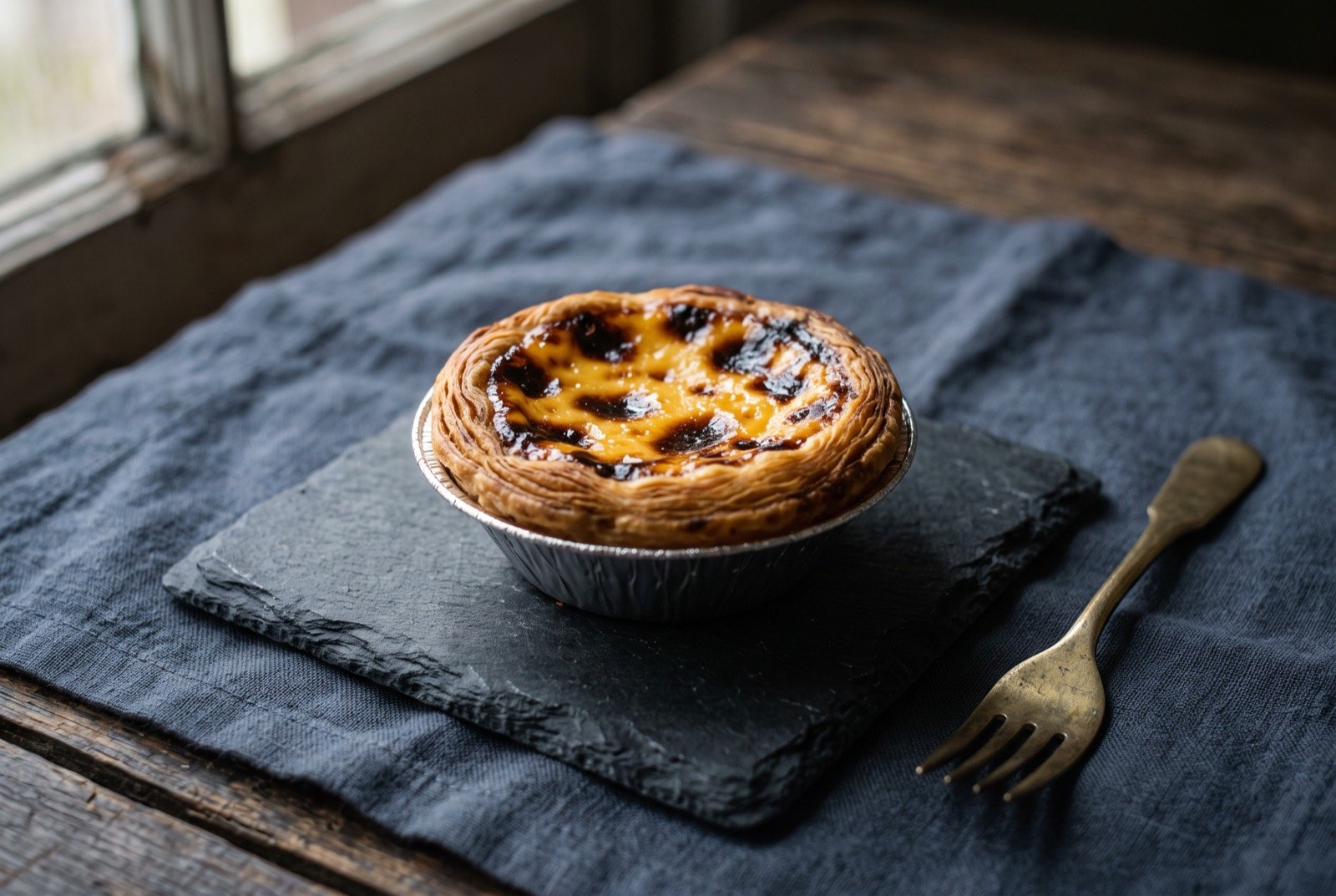
An illustration of the dish, not a photograph of it cooked.
- Time
- 1 hour
- Reviewed
- Not yet reviewed from inside the tradition
- Cooked
- Not yet cooked and reported
Coloane, 1989. An Englishman's own custard, Portuguese puff pastry, and a caramelised top nobody in Lisbon or Guangzhou would recognise as their own.
As tradition built it
A credible recipe in the Macau style, not presented as Lord Stow's own.
Makes about 12. About 1 hour, plus resting.
Ingredients
- 300 g all-butter puff pastry, ready made or homemade
- 250 ml whole milk
- 100 ml double cream
- 100 g sugar
- 4 egg yolks
- 20 g cornflour
- as available a little extra sugar, for the caramelised top
Method
- Warm the milk and cream together with the sugar until dissolved.
- Whisk the egg yolks with the cornflour, then temper in the warm milk mixture gradually, whisking constantly.
- Return to a low heat and cook gently, stirring, until the custard thickens enough to coat the back of a spoon.
- Roll the puff pastry thin and into a spiral, the traditional pastel de nata method, then press into tart tins, working the spiral up the sides.
- Fill with the custard and, just before baking, scatter over a little extra sugar for the caramelised top, then bake in the hottest oven available, as close to its absolute maximum as the equipment allows, until the tart shell is fully set beneath and the custard top has scorched into deep, near-black leopard spotting.
- Cool slightly before eating; the caramelised top is the whole point, and it does not survive reheating well.
What a modern chef changes
The heat this bake actually needs, and nothing else changed.
Rung 5
Method
- Use a Big Green Egg run wide open, or a domestic oven's absolute maximum setting with a preheated pizza stone, since a standard 220 to 250 degree domestic oven alone will not properly blister and caramelise the custard top no matter how long it runs.
- Rest the finished custard overnight before baking, for a fuller, more settled flavour than baking it the same day.
- Serve within an hour or two of baking, since the pastry's crispness and the custard's contrast genuinely do not survive much longer than that.