The Sinosphere · Volume 32, The Stocking, the Shelter and the Spice Route
Hong Kong-Style Borscht (羅宋湯)
Hong Kong
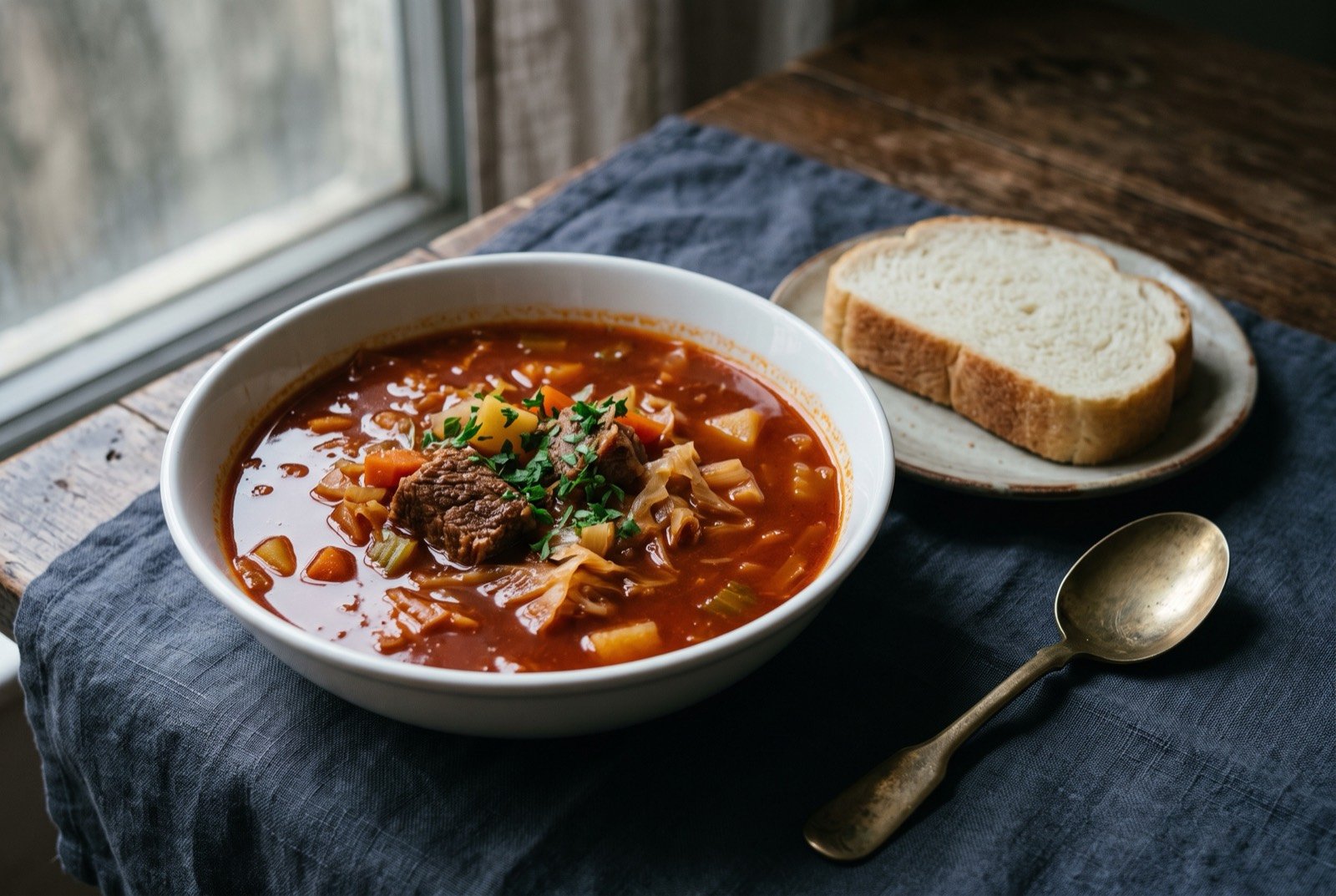
An illustration of the dish, not a photograph of it cooked.
- Time
- 2 hours 30
- Reviewed
- Not yet reviewed from inside the tradition
- Cooked
- Not yet cooked and reported
Cha chaan teng starter, by way of Shanghai. Red soup, no beetroot, and genuinely not Russian borscht.
As tradition built it
Serves 4. About 2.5 hours.
Ingredients
- 600 g beef brisket, cut into large chunks
- 3 slices, 1 stalk ginger, spring onion, for blanching
- 1 onion, chopped
- 2 carrots, chopped
- 2 celery sticks, chopped
- 2 garlic cloves, chopped
- 2 tomatoes, chopped, plus 2 tablespoons tomato paste
- 1 bay leaf
- 200 g cabbage, chopped
- 1 potato, chopped
- 400 g tinned tomatoes
- 1 litre water
Method
- Blanch the beef with ginger and spring onion for about 15 minutes, then drain and sear until browned.
- Sauté the onion, carrot and celery in the rendered fat, then add the garlic, fresh tomato and tomato paste, cooking down until fragrant.
- Add the bay leaf, cabbage, potato, tinned tomatoes, water and the seared beef.
- Bring to the boil, then cover and simmer gently for about 2 hours, until the beef is tender and the soup has reduced and deepened in colour.
- Serve with bread, cha chaan teng style.
What a modern chef changes
A longer, gentler braise, and the beetroot question settled honestly.
Rung 2, applied by analogy
Method
- Braise the beef separately, low and slow on the Big Green Egg run indirect (roughly 120 to 140°C for several hours) rather than simmering it in the soup itself, for a more tender result, then combine with the vegetable base near the end.
- Do not add beetroot, even though some Hong Kong home versions do for colour; this chapter treats that hybridisation as evidence of the dish's identity still being actively blurred between an "authentic Russian" aspiration and the actual tomato-based cha chaan teng norm, and keeps the tomato-only version as the more honestly Hong Kong one.
- Finish with a little grated Parmesan or a spoon of soured cream if serving in a more restaurant-facing register, a genuinely non-traditional but harmless addition that several modern Hong Kong kitchens themselves now offer.