Mainland Southeast Asia · Volume 40, One Bank to the Other
Sai krok Isan
Isaan, Thailand
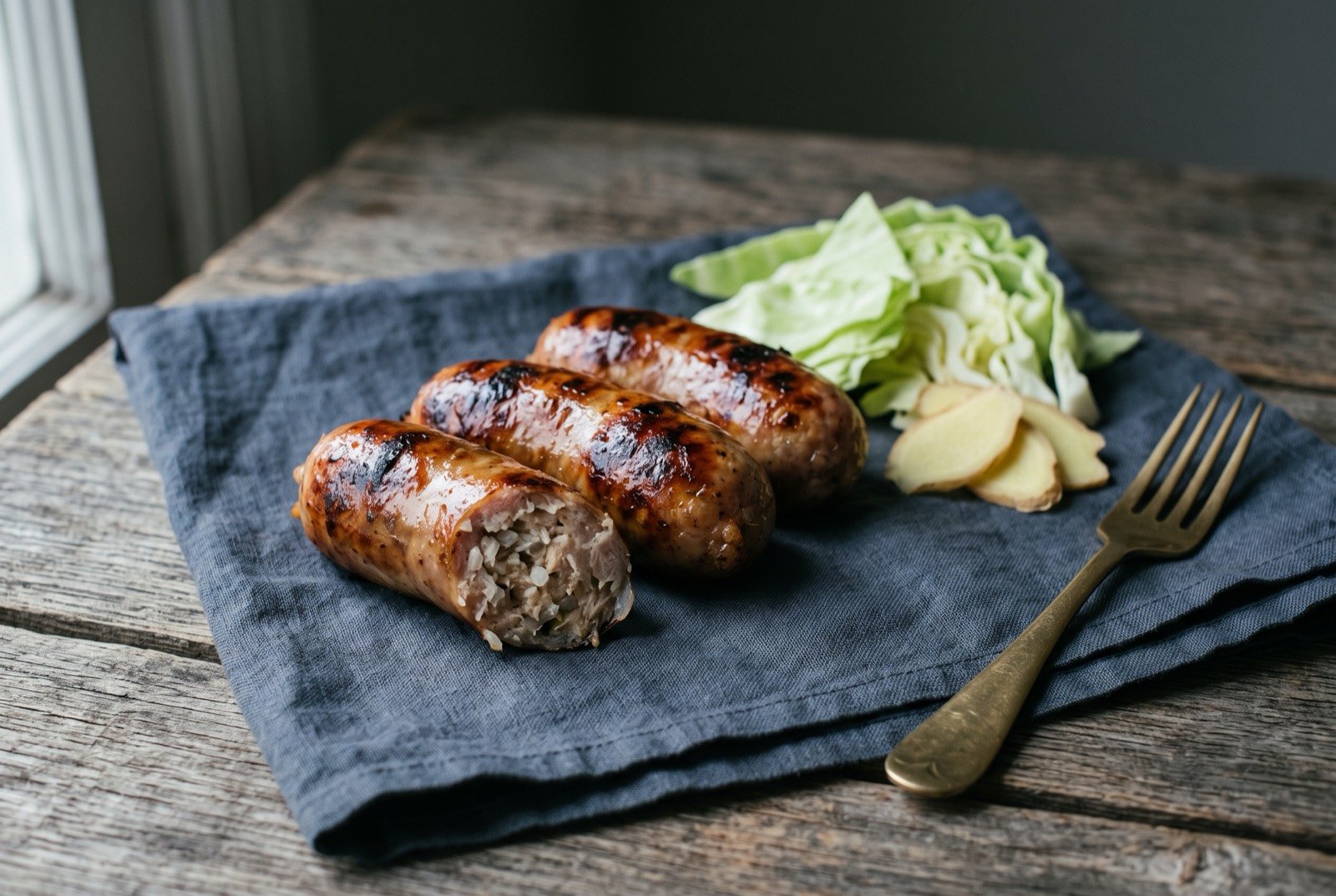
An illustration of the dish, not a photograph of it cooked.
- Time
- Not statedNo source states a time and the atlas has too few comparable dishes to estimate one.
- Reviewed
- Not yet reviewed from inside the tradition
- Cooked
- Not yet cooked and reported
Fermented pork and rice sausage: the clearest, most precisely sourced fermentation technique in this whole chapter.
As tradition built it
Makes about 1 kg. 2 to 4 days fermenting.
Ingredients
- 1 kg fatty ground pork
- 300 g cooked glutinous rice
- 100 g garlic, crushed
- ½ tsp salt
- as available natural sausage casing, cleaned
Method
- Combine the pork, cooked rice, garlic and salt thoroughly.
- Stuff into cleaned casing and tie into rounds.
- Hold at a steady ambient temperature of around 30°C for 2 to 4 days, depending on the level of sourness wanted, roughly 2 to 3 hours for barely sour, up to 2 days for assertively sour, the rice's sugar feeding lactic-acid bacteria as it ferments.
- Grill or fry to finish before eating.
What a modern chef changes
A tropical ferment run in temperate Britain, precisely
Rung 3
Method
- Ferment in a dehydrator with a temperature-hold function set to 30°C, rather than relying on ambient room temperature, which a British kitchen cannot reliably supply.
- Use cure salt and monitor humidity as for any home charcuterie project, since this is a genuine fermentation with the same food-safety considerations as any other cured meat, not a quick pickle.
- Taste at each stage of the drying window rather than fixing a single time, since the intended sourness is a matter of preference within the safe range, not a fixed endpoint.