Mainland Southeast Asia · Volume 40, One Bank to the Other
Mok pa
Both banks, mok pa in Lao, mok pla in Isaan
Illustration
- Time
- 25 minutes
- Researched
- Researched from 127 sources in the brief
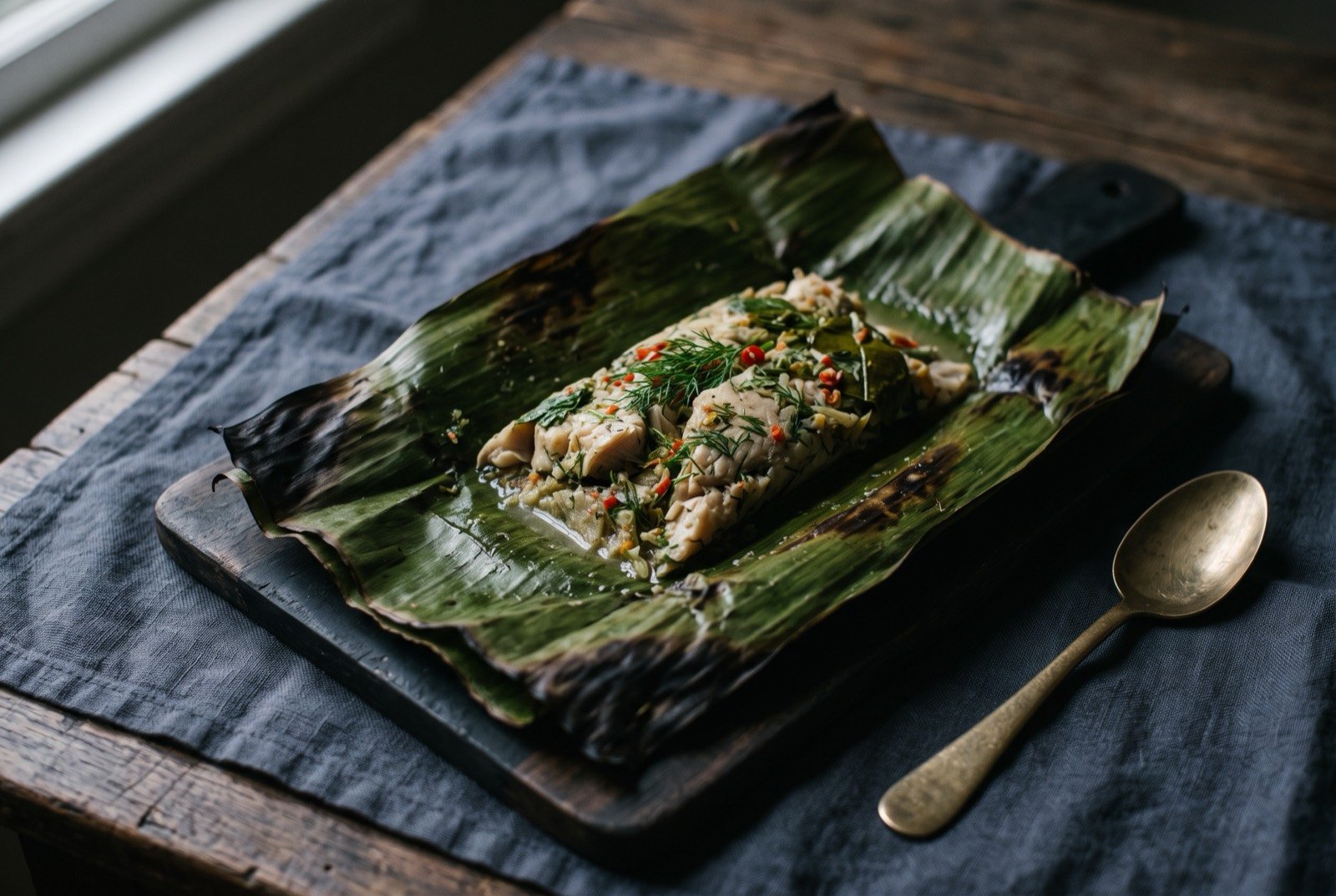
Fish, sealed and steamed in a banana leaf: the clearest single point of identical technique found anywhere in this chapter's research, mok pa in Lao and mok pla in Isaan alike.
As tradition built it
Serves 2 to 3. About 25 minutes.
Ingredients
- 5 cm lemongrass
- 2 kaffir lime leaves
- 2 to 3 garlic cloves
- 2 shallots
- 1 chilli
- 1 cm galangal
- 200 g white fish, cubed or minced
- 1 tsp khao khua
- 1 tbsp padaek or pla ra
- 1 egg
- ½ cup each dill and spring onion, a small handful Thai basil dill, spring onion and Thai basil, chopped
- 2 sheets banana leaf, softened over a flame
Method
- Pound the lemongrass, lime leaf, garlic, shallot, chilli and galangal together to a paste.
- Combine with the fish, khao khua, padaek or pla ra and egg.
- Fold through the chopped dill, spring onion and Thai basil.
- Wrap in a softened banana leaf, folding into a secure parcel.
- Steam 15 to 30 minutes, depending on parcel size, until the fish is cooked through and the parcel is firm.
What a modern chef changes
The parcel's own sealed heat used deliberately
Rung 4
Method
- Set the parcel on a Big Green Egg run at a moderate, steady dome temperature rather than a domestic steamer, for a faint smokiness the leaf itself will carry into the fish.
- Use a high-power blender for the aromatic paste rather than a full mortar pound here, since this dish's texture target is a smooth, cohesive filling rather than the fractured texture laab and tam mak hoong need; this is the one dish in this chapter where the blender is the right call, not the wrong one, and worth naming as such.
- Test doneness by weight and firmness of the parcel rather than by time alone, since banana leaf size varies more than a British cook is used to accounting for.