Mainland Southeast Asia · Volume 40, One Bank to the Other
Tam mak hoong
Both banks, under two names
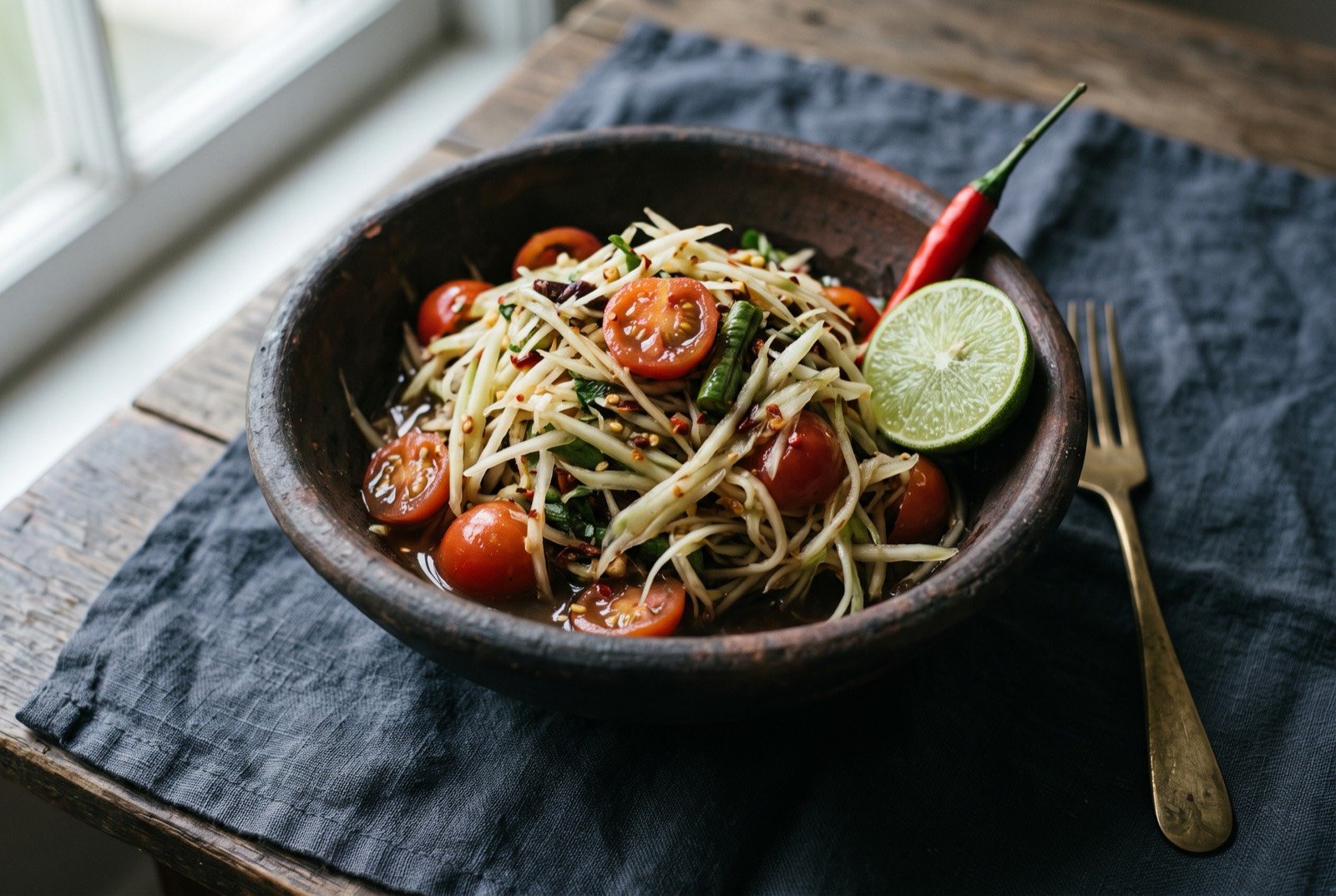
An illustration of the dish, not a photograph of it cooked.
- Time
- 15 minutes
- Reviewed
- Not yet reviewed from inside the tradition
- Cooked
- Not yet cooked and reported
The two sides genuinely differ in balance rather than in method. The central Thai version sold as "Thai food" everywhere else builds around dried shrimp and roasted peanuts, sweet and gently sour. The Isaan and Lao version this chapter treats as the region's own leads with salt and fermented funk from pla ra or padaek, chilli close behind, sugar barely present at all.
As tradition built it
Serves 2 to 4 as a side. About 15 minutes.
Ingredients
- 300 g green papaya, peeled and shredded
- 2 to 4 bird's eye chillies
- 2 garlic cloves
- 1 tbsp palm sugar (omit or reduce for the Isaan/Lao balance)
- 2 tbsp pla ra or padaek
- 1 tbsp fish sauce
- 2 tbsp lime juice
- 100 g cherry tomatoes, halved
- 50 g long beans, cut into short lengths
- 1 tbsp roasted peanuts (optional; central Thai style, not traditional to the Isaan/Lao balance)
Method
- Pound the garlic and chillies together in a mortar to a rough paste.
- Add the tomatoes and long beans, and bruise lightly with the pestle, cracking rather than pulping them.
- Add the palm sugar, pla ra or padaek, fish sauce and lime juice, and stir through with the pestle to combine, tasting as you go.
- Add the shredded papaya in batches, pounding and turning with a spoon between each addition, until it is bruised through and has taken up the dressing.
- Serve immediately with sticky rice, and the roasted peanuts scattered over if using them.
Notes
This chapter's own research could not find a single credible in-tradition source giving exact gram or spoon quantities for either the Lao or the Isaan version of this dish specifically, despite dedicated search in both Lao and Thai script; the quantities above are a composite, consistent with the widely described flavour balance for each style, and should be read as indicative rather than a tested professional ratio, in the same spirit as this atlas has flagged an indicative marinade elsewhere when no single precise source existed.
What a modern chef changes
The mortar technique taken as seriously as the ingredients
Rung 1
Method
- Pound in the sequence given above, hardest ingredients first, rather than tipping everything in at once, the actual difference between a properly pounded salad and a tossed one.
- Do not reach for the blender at any stage of this dish. It is the clearest single case in this whole chapter of a kitchen shortcut destroying the point of the technique rather than merely changing it.
- Taste and adjust before the papaya goes in, not after, since papaya releases its own water once bruised and dilutes the dressing if the balance was wrong to begin with.