Korea and Japan · Volume 53, The Grill, the Broth and the Sealed Port
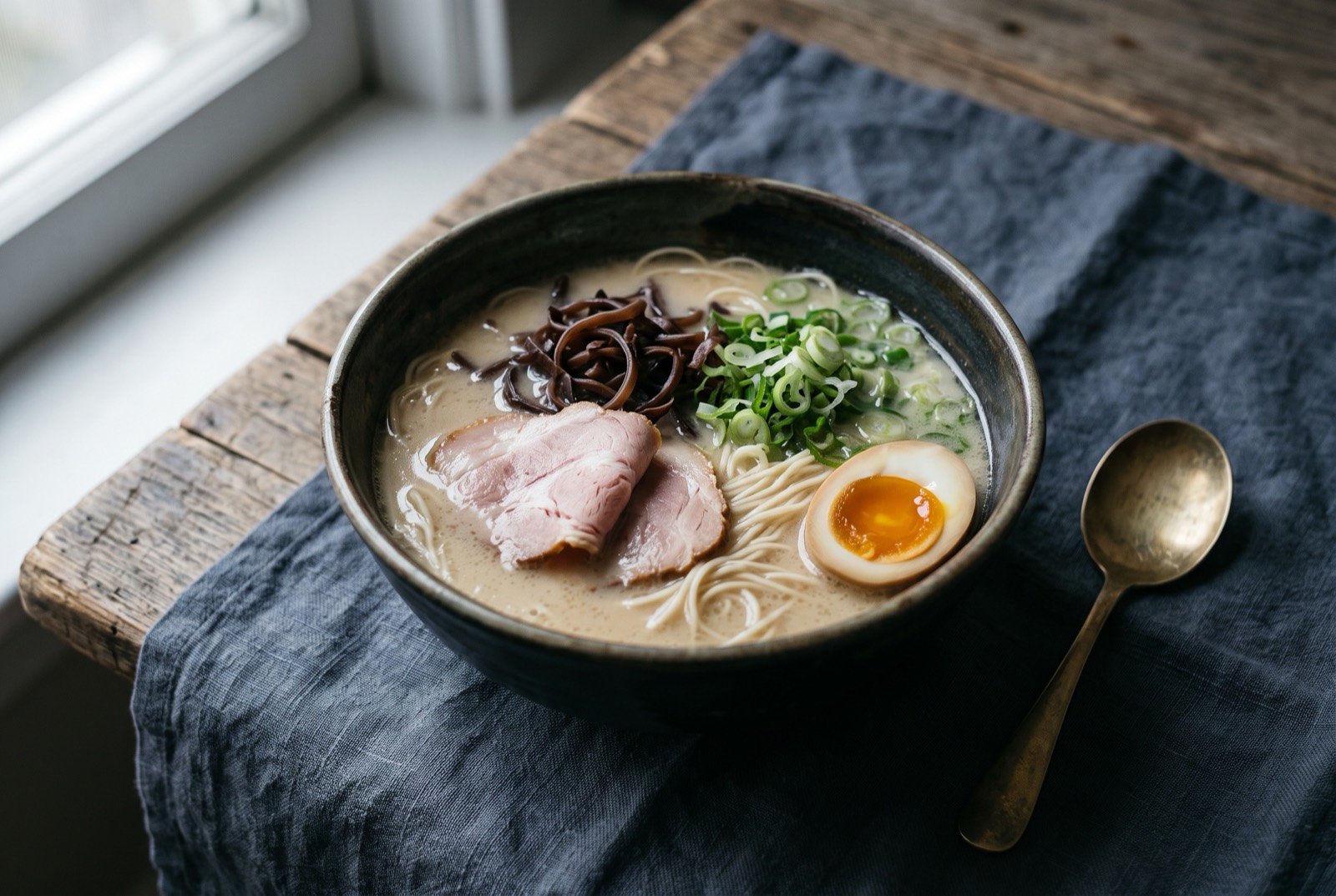
Hakata tonkotsu ramen
Kurume and Hakata, Fukuoka
Illustration
- Time
- 20 hours
- Researched
- Researched from 87 sources in the brief
Kurume's Nankin Senryo served the first tonkotsu ramen, clear, in 1937; the milky broth now associated with the dish arrived by accident roughly a decade later at a stall called Sankyu, when a batch was over boiled far beyond what was intended.
As tradition built it
Yields roughly nine litres of stock. 6 to 20 hours for the broth.
Ingredients
For the broth
- 2kg pork leg or knuckle bones
- 2kg pork backbone
- 500g pork trotters, split
- 10 litres water, to yield roughly 9 litres of finished stock
For the tare
- roughly equal parts usukuchi soy and mirin, adjusted to taste
To finish
- 1 ball (tama) per serving thin, straight, low hydration noodles, 30 per cent hydration or below
- 2 to 3 slices chashu pork
- a small handful, rehydrated wood ear mushroom
- finely sliced, a scattering spring onion
- 1, halved a hard boiled egg
- as needed kaedama, a fresh refill of noodles, offered once the first bowl is finished
Method
- Blanch the pork leg or knuckle bones, pork backbone and pork trotters first in boiling water for ten minutes, then discard that water.
- Return the bones to a clean pot with fresh water and bring to a hard, rolling, uncovered boil, stirring occasionally to agitate and break down the bone surface, for six to twenty hours depending on how far the emulsion is pushed.
- Combine the tare, made from the usukuchi soy and mirin, adjusted to taste, in the bottom of each bowl.
- Cook the thin, straight, low hydration noodles for as little as thirty seconds in furiously boiling water, since they are far quicker to cook than a standard ramen noodle.
- Add the broth and noodles to the bowl.
- Top with chashu pork, wood ear mushroom, spring onion and a hard boiled egg.
- Offer kaedama, a fresh refill of noodles alone, once the first bowl is finished.
What a modern chef changes
Sustained rolling agitation, a sous vide chashu and scratch made noodles
Rung 1
Method
- Hold the boil at a genuine, sustained rolling agitation rather than a bare simmer for the full cook, the actual variable that drives the emulsion rather than time alone.
- Strain the finished broth through a chinois in stages, coarse then fine, for the cleanest possible texture without losing the emulsion itself.
- Cure the pork belly for the chashu sous vide at 68 degrees Celsius for twelve hours, then finish with a hard sear on the Big Green Egg, for a texture no simmered version can match.
- Make the noodles from scratch with bread flour and kansui.
- Grind toasted sesame and dried chilli fresh in the spice grinder for the table condiment rather than reaching for a jarred version.
Notes
No UK retailer currently sells proper fresh ramen noodles to home cooks, only to trade buyers, which is why the noodles are made from scratch here.