Korea and Japan · Volume 53, The Grill, the Broth and the Sealed Port
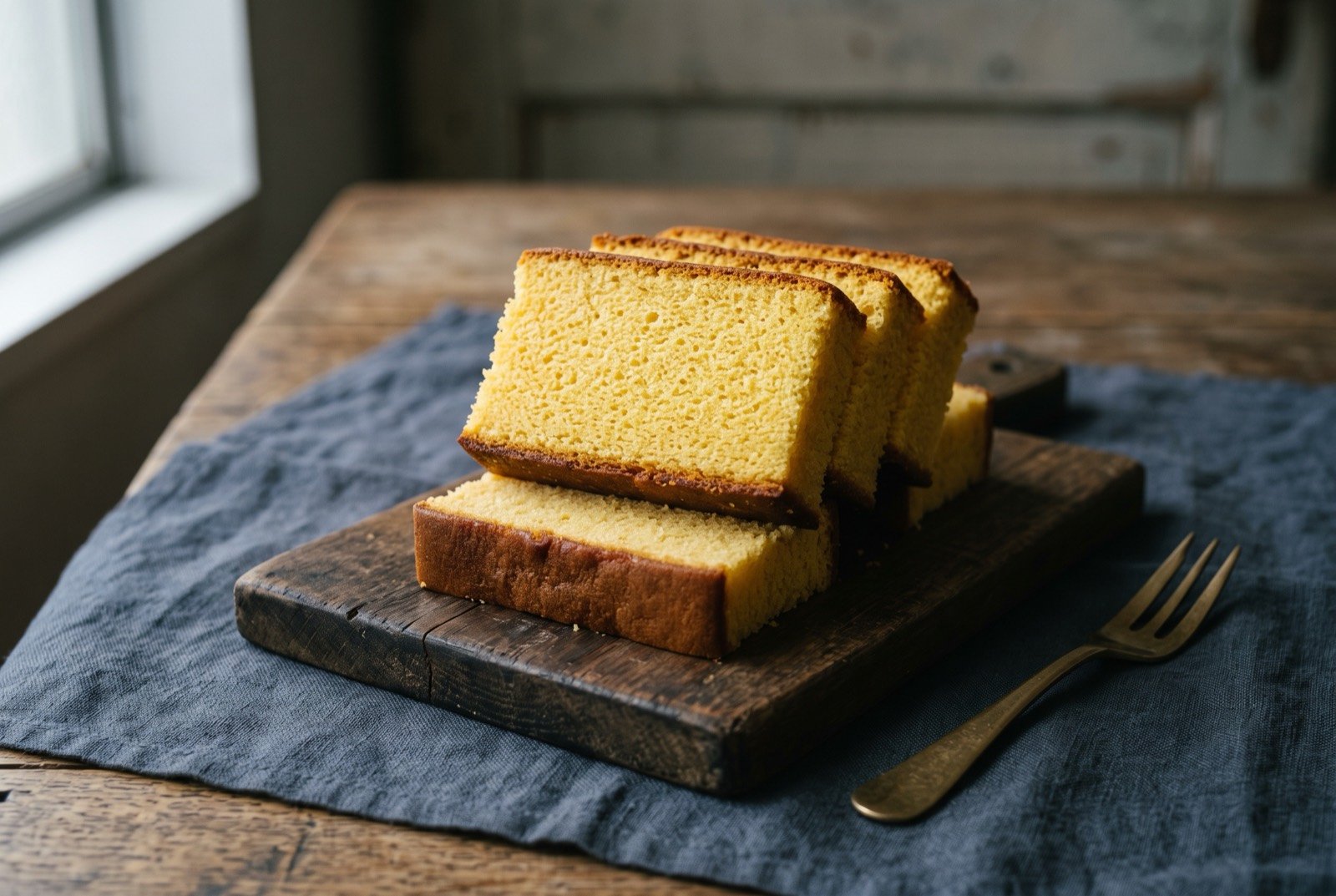
Kasutera, Nagasaki's castella cake
Nagasaki, Kyushu
Illustration
- Time
- Hands on 1 hour · Waiting 8 hours
- Researched
- Researched from 87 sources in the brief
The clearest, best documented crossover in this whole chapter. The cake's very name is the evidence: kasutera is a direct transliteration of the Portuguese pao de Castela, bread of Castile, brought by Jesuit traders in the sixteenth century and never generically absorbed into "Western cake" the way so many imports were. The same Castile root produced the French pain d'Espagne, the Italian pan di Spagna and the Greek pantespani, and the cake is explicitly comparable to Portugal's own pao de ló, the plain sponge this atlas's Volume EU-10, Portugal, treats in full: this chapter names the connection rather than re-treating a dish that belongs there. Three old Nagasaki houses still trade on the lineage directly, Fukusaya, founded 1624, Shooken, founded 1681, and Bunmeido, founded 1900.
As tradition built it
Makes one loaf. About 1 hour, plus overnight resting.
Ingredients
- 6 whole eggs
- 200g caster sugar
- 200g plain flour, sifted
- 2 tbsp mizuame or golden syrup
- 1 tbsp warm water
- 1 tbsp coarse sugar, for the tin
Method
- Whisk the eggs and caster sugar together over a bain marie until warm and thick.
- Continue whisking off the heat until pale, doubled in volume and holding a ribbon trail for several seconds.
- Fold in the sifted plain flour in three additions, taking care not to knock out the air.
- Fold in the mizuame or golden syrup, loosened with the warm water.
- Pour into a lined loaf tin scattered with the coarse sugar across the base, for the traditional gritty sweet bottom layer.
- Bake at 160 degrees Celsius for 40 to 45 minutes until risen and set.
- Wrap while still warm and rest overnight before slicing.
Notes
The mizuame is the specifically Japanese addition that keeps the sponge moist far longer than the plain Portuguese original.
Resting overnight is when the texture actually settles into what castella is known for.
What a modern chef changes
A precisely held bain marie and a black koji amazake fold
Rung 6
Method
- Whisk the eggs and sugar in a stand mixer over a precisely held 45 degree Celsius bain marie, rather than judging warmth by touch, for a more consistent, higher rising crumb.
- Fold through a small amount of black koji amazake in place of some of the mizuame, keeping the moisture retaining role the syrup was always doing.
- Once rested, finish with a thin glaze made from reduced Portuguese pao de ló crumbs blitzed in the high power blender with a little of the same syrup, brushed over the top.
Notes
The pao de ló glaze is a small, honest gesture at the dish's other home rather than an attempt to disguise which country castella actually belongs to.