Aotearoa and Australia · Volume 04, The Roast, the Dairy and the Corner Shop
Hokey pokey ice cream
New Zealand
Illustration
- Time
- 1 hour
- Researched
- 8 sources cited
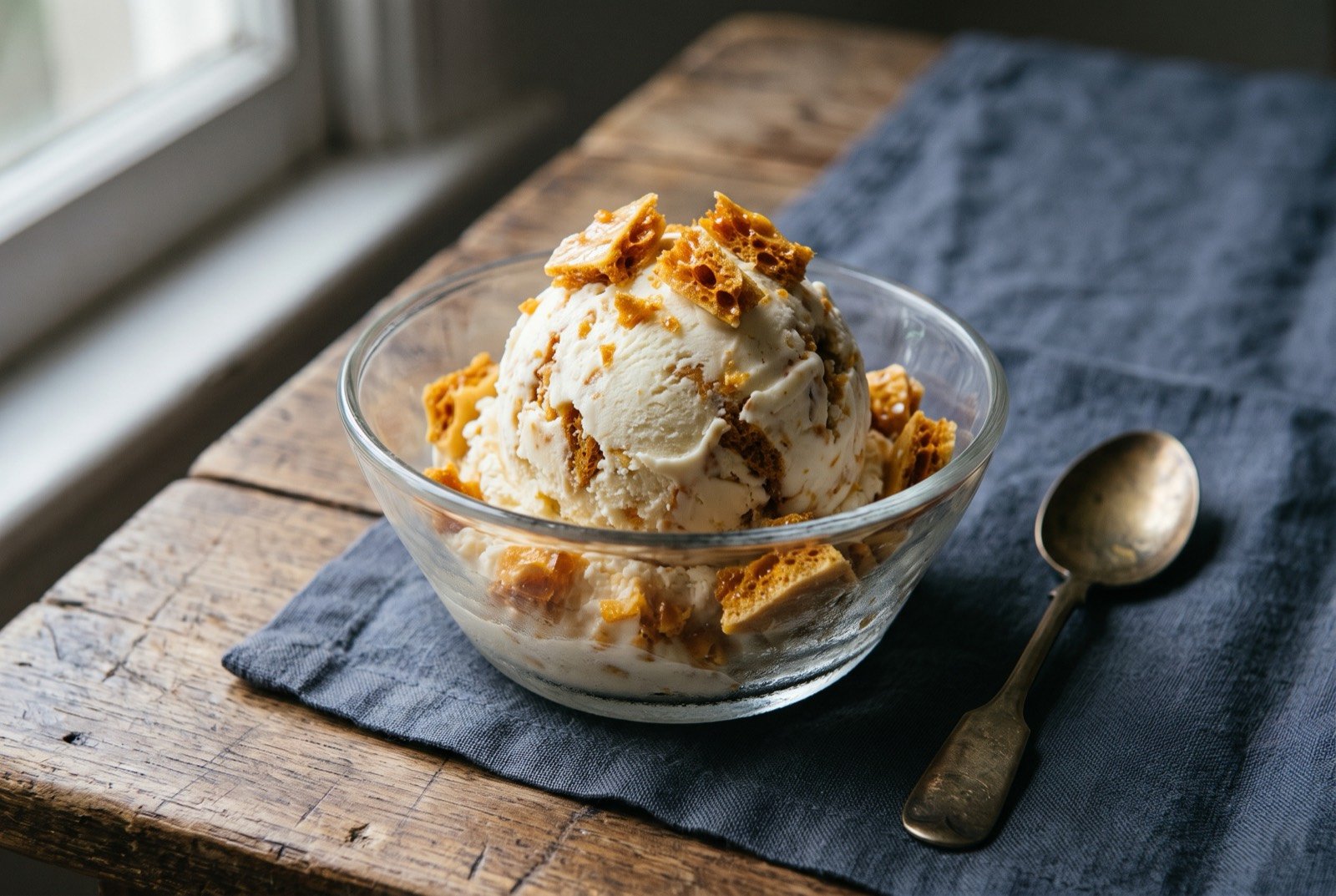
"Hokey pokey" has meant honeycomb toffee in New Zealand since the late nineteenth century, though the word's own origin is genuinely uncertain, a corruption of "hocus pocus," an echo of Italian street-vendor cries, or inherited ice-cream-seller slang. Ice-cream maker Brian Simon says he first put hokey pokey into ice cream in 1953 at his father's Dunedin factory, using broken Crunchie bar; Tip Top's own reformulation around 1980, switching from mixed-through toffee to small honeycomb balls, made the flavour genuinely national.
As tradition built it
Makes about 1 litre. About 1 hour, plus churning.
Ingredients
- 500ml cream, 4 egg yolks, 220g caster sugar vanilla ice cream base
- 4 tbsp sugar
- 2 tbsp golden syrup
- 1 tsp bicarbonate of soda
Method
- Make a plain vanilla ice cream base.
- Heat sugar and golden syrup to hard-crack stage, around 150°C.
- Off the heat, stir in bicarbonate of soda, which reacts and aerates the toffee.
- Pour to set, break into pieces once cool, and fold through the churned ice cream.
What a modern chef changes
Feijoa-fold honeycomb, in two textures
This chapter's own technique work, extending Rung 4.
Method
- Take the toffee to a slightly lower final temperature and fold through a feijoa purée before pouring to set, giving the honeycomb a genuinely New Zealand-specific fruit note rather than the plain golden syrup flavour alone. Rung 4.
- Shatter the set toffee into a fine dust rather than chunks for part of the batch, folding it through at the very end of churning so it partially dissolves into a caramel ribbon rather than staying as discrete pieces throughout.
- Dehydrate a thin feijoa slice separately for a crisp garnish shard, echoing the fruit's own season rather than serving the ice cream plain.
Notes
No New Zealand source documents a chef-driven elevated hokey pokey; this is the chapter's own extension of the Technique Ladder's sugar chemistry.