Aotearoa and Australia · Volume 04, The Roast, the Dairy and the Corner Shop
Bluff oysters
New Zealand
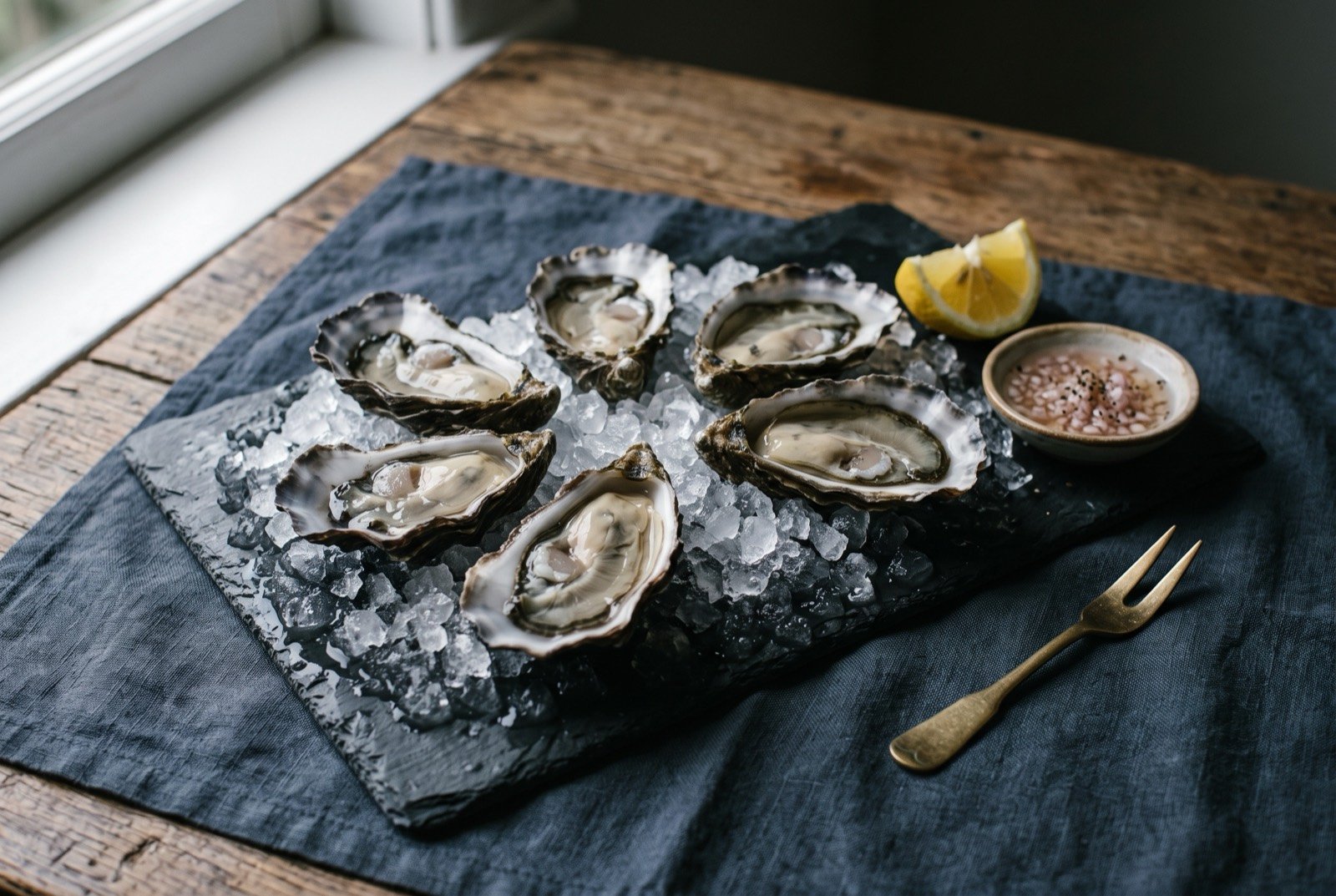
An illustration of the dish, not a photograph of it cooked.
- Time
- 10 minutes
- Researched
- 8 sources cited
- Reviewed
- Not yet reviewed from inside the tradition
- Cooked
- Not yet cooked and reported
The fishery is genuinely fragile: the endemic parasite Bonamia exitiosa killed an estimated one billion oysters between 2000 and 2003, and the harvest was cut short again in 2023, 2024 and 2025. The annual Bluff Oyster and Food Festival, running since 1997, opens with the oyster "piped onto the site" and features speed-shucking competitions, professional shuckers opening 50 oysters in a little over two minutes. No named-chef, named-dish source was found for how top New Zealand kitchens plate them; the consistent pattern found in this research is restraint, served raw on ice with only lemon or a mignonette of vinegar and finely diced shallot, and this chapter reports that honestly as the finding rather than inventing a more elaborate treatment no source supports.
As tradition built it
Serves as many as oysters allow. About 10 minutes.
Ingredients
- as available Bluff oysters, in shell
- as available lemon wedges
Method
- Shuck the oyster, keeping its liquor.
- Serve on ice with a wedge of lemon.
What a modern chef changes
A Sauvignon Blanc mignonette, and nothing more
This chapter's own extension of the documented restraint principle. Rung 5.
Method
- Make a mignonette of Marlborough Sauvignon Blanc vinegar and finely diced shallot, tying the dish to this chapter's own wine strand rather than a generic French vinegar. Rung 5.
- Serve no more than two garnishes, following the fragility argument set out in the Technique Ladder: a rare, short-season, disease-affected fishery earns restraint, not manipulation.
- Chill the serving plate itself over ice rather than merely bedding the oysters in it, holding temperature for longer service without diluting the oyster's own liquor.
Notes
Fine dining sourcing for this dish did not surface a more elaborate named example; the chapter treats that restraint itself as the correct answer for a fragile, single-origin ingredient rather than as a gap to fill with invention.