The Southern Cone · Volume 25, The Río de la Plata Table
Choripán, with chimichurri
The Pampas, shared with Uruguay
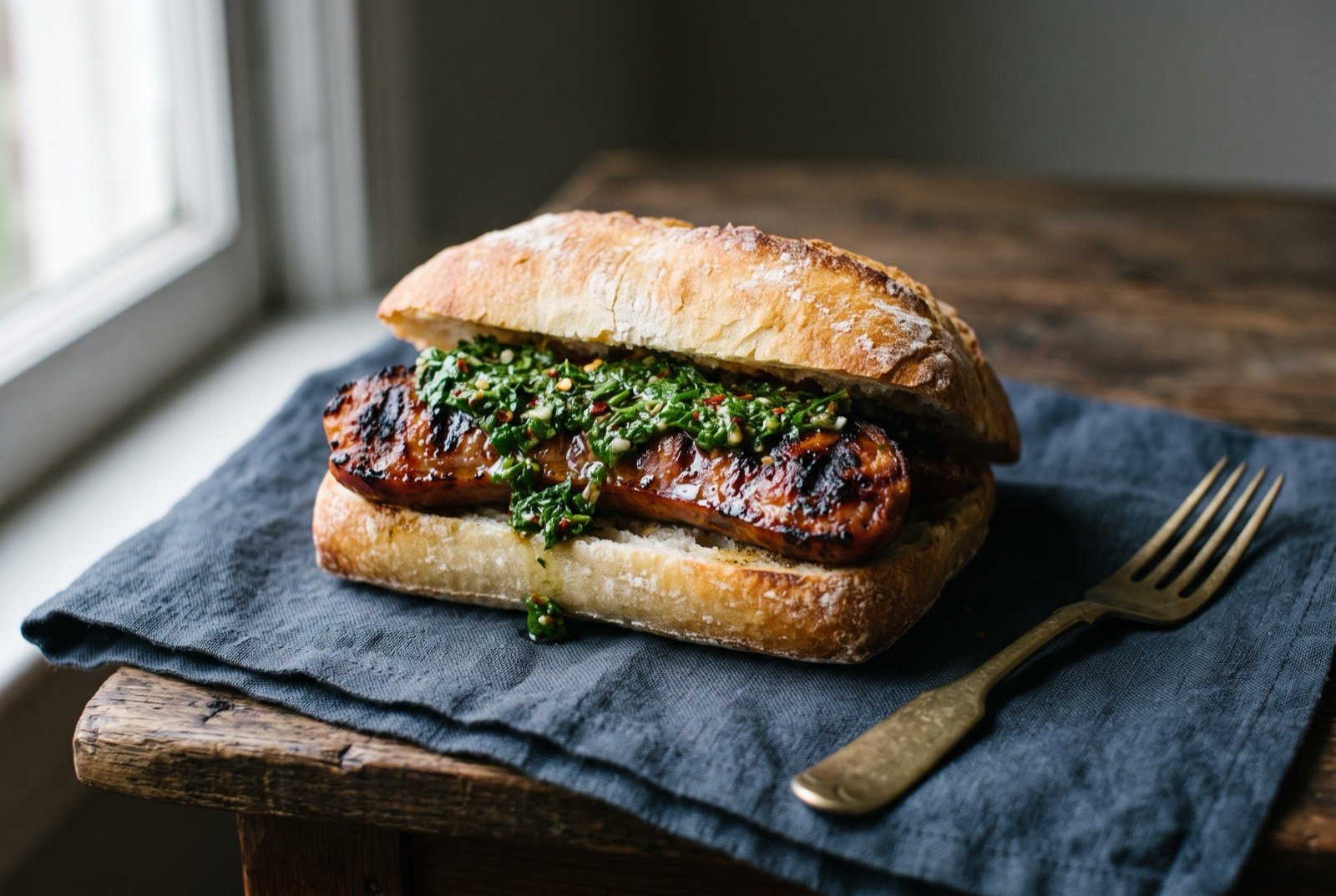
An illustration of the dish, not a photograph of it cooked.
- Time
- 25 minutes
- Reviewed
- Not yet reviewed from inside the tradition
- Cooked
- Not yet cooked and reported
No single documented inventor or date exists; the strongest account places its origin among nineteenth century gaucho asado culture, chorizo split and eaten between two pieces of bread at the fireside, oral references traceable to roughly 1850 to 1860, only reaching written record much later since gauchos left none themselves and contemporary writers did not think their food worth recording. It later moved into the cities via street carts and football stadiums, and is now claimed as shared heritage well beyond Argentina, across Uruguay, Paraguay, Chile, Bolivia and Brazil.
As tradition built it
Serves 4. About 25 minutes, plus resting the sauce a day ahead.
Ingredients
For the chimichurri
- half a cup flat-leaf parsley leaves, finely chopped
- 2 tbsp dried oregano
- 2 to 4 garlic cloves, finely chopped
- 2 tbsp red wine vinegar
- half a cup extra virgin olive oil
- to taste ají molido, salt and pepper, to taste
For the choripán
- 4 fresh Argentine or Uruguayan-style chorizo, pork and beef, not Spanish cured chorizo
- 4 crusty rolls, split
Method
- Make the chimichurri the day before: combine all ingredients, cover, and rest at room temperature, minimum a couple of hours, ideally a full day, so the flavours genuinely integrate rather than sitting as separate chopped herbs in oil.
- Grill the whole chorizo over the parrilla's embers until the skin is well charred and the inside is cooked through, roughly 15 to 20 minutes, turning occasionally.
- Split each sausage lengthways without cutting all the way through, press it flat, and finish it briefly, cut side down, over the coals.
- Serve in the roll with a generous spoon of chimichurri.
What a modern chef changes
The sauce built to the same discipline as a fresh herb emulsion, and the sausage rendered rather than merely charred
Rung 3
Method
- Chop the herbs by hand or in short mortar strokes, not a continuous blitz. A high-power blender run hard bruises the cell walls too fast and pushes the sauce toward a flat, uniformly green paste rather than a bright, textured chop; if you must use one for volume, pulse in short bursts with a chilled jug. Rung 3.
- Rest the finished chimichurri a full 24 hours, not the traditional minimum couple of hours, in a sealed jar in the fridge, then bring back to room temperature before serving. The extra time noticeably deepens the integration without cooking the mixture.
- Score the chorizo lightly before grilling so the fat renders more evenly through the casing, then finish flat side down for a genuinely crisp, caramelised face rather than relying on the round grill marks alone.