The Southern Cone · Volume 25, The Río de la Plata Table
Chajá
Paysandú
Illustration
- Time
- 2 hours
- Researched
- Researched from 179 sources in the brief
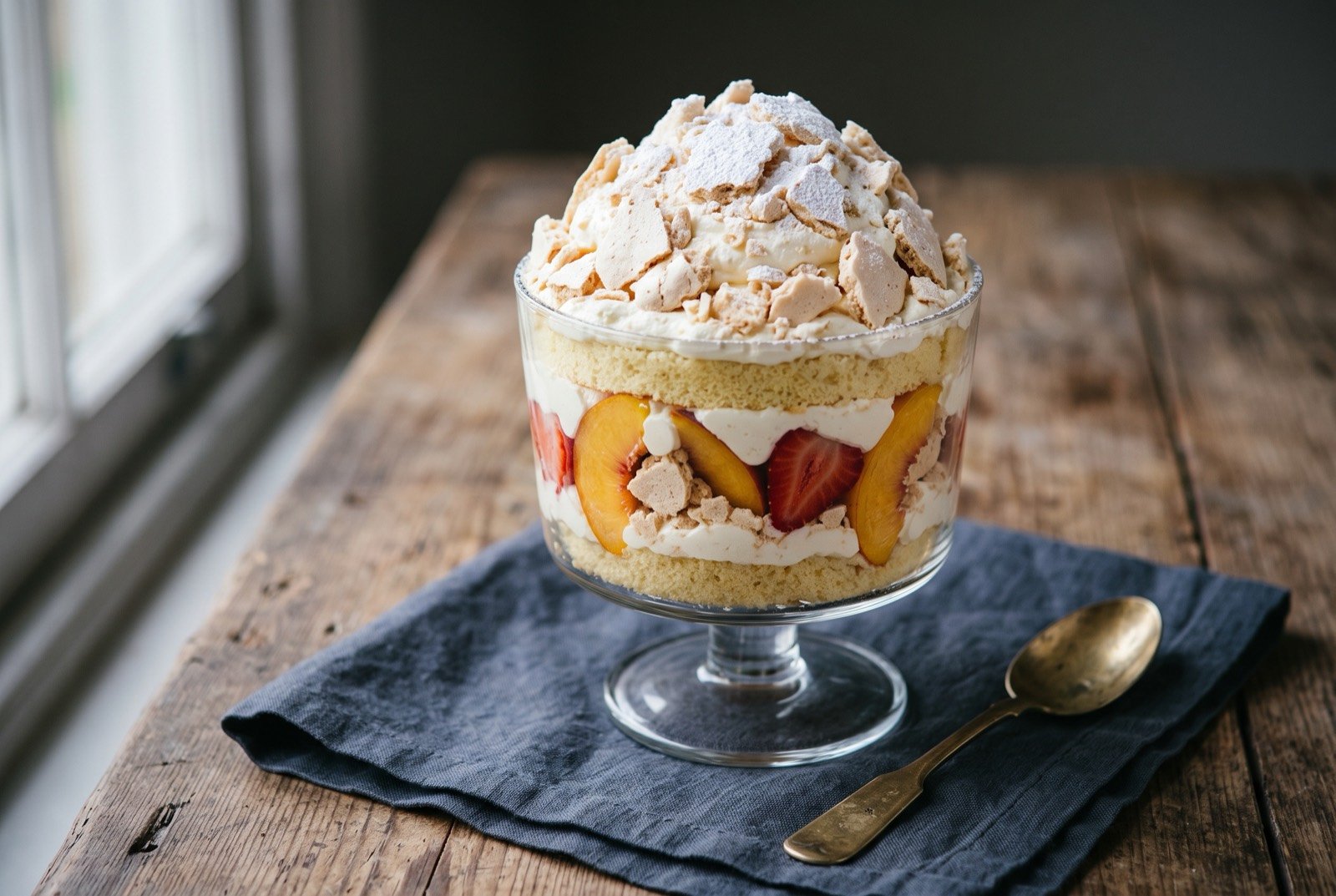
Created by Orlando Castellano, owner of Confitería Las Familias, in Paysandú, on 27 April 1927, formalising an existing regional dessert already made informally on both sides of the Río Uruguay under the plainer name torta de merengue y durazno. The name itself comes from a family friend who, seeing the dessert's feathery, light body, compared it to the chajá bird, Chauna torquata, genuinely abundant in Paysandú department; the Department of Paysandú now treats the dessert as a protected patrimonial cultural asset.
No source consulted for this chapter gave exact gram quantities for the traditional Paysandú recipe; the composition, sponge, meringue, cream, peach and strawberry, is well and consistently documented, but the quantities below are this chapter's own workable version rather than a transcribed household recipe.
As tradition built it
Serves 8. About 2 hours, mostly assembly and chilling.
Ingredients
- 1 sponge cake (bizcochuelo), baked and cooled
- 400ml double cream, whipped
- 4 egg whites, for meringue
- 200g caster sugar
- 400g fresh peaches, sliced
- 200g strawberries, sliced
- as needed dulce de leche, to layer through
Method
- Make a simple meringue: whisk the egg whites to soft peaks, then gradually beat in the sugar until stiff and glossy. Pipe or spoon into small discs and bake low, roughly 100°C, until crisp and dry, then cool and break into pieces.
- Slice the sponge into thin layers.
- Build the dessert in a deep dish or individual glasses: sponge, a thin layer of dulce de leche, whipped cream, peach and strawberry, a scattering of broken meringue, and repeat.
- Chill at least 1 hour before serving, so the layers settle and the meringue softens slightly against the cream.
What a modern chef changes
The meringue's texture controlled deliberately, and the fruit's moisture managed so the layers hold rather than weep
Rung 3
Method
- Dry the meringue pieces in a dehydrator at a low, steady temperature overnight rather than a domestic oven, giving a more consistently crisp, evenly dried result across every piece, without the risk of colouring that a slightly-too-warm domestic oven can introduce.
- Macerate the peach and strawberry briefly in a little sugar and lemon juice, then drain before layering, so the fruit's own released liquid does not thin the cream or soften the sponge before serving.
- Whip the cream to a slightly firmer peak than usual, since it needs to hold its structure against both the fruit's moisture and the meringue's fragility through a full hour of chilling, not just at the moment of assembly.