The Indian subcontinent · Volume 24, Nepal, Bhutan, Ladakh, Sikkim and Darjeeling
Skyu
Ladakh
Illustration
- Time
- 30 minutes
- Researched
- Researched from 116 sources in the brief
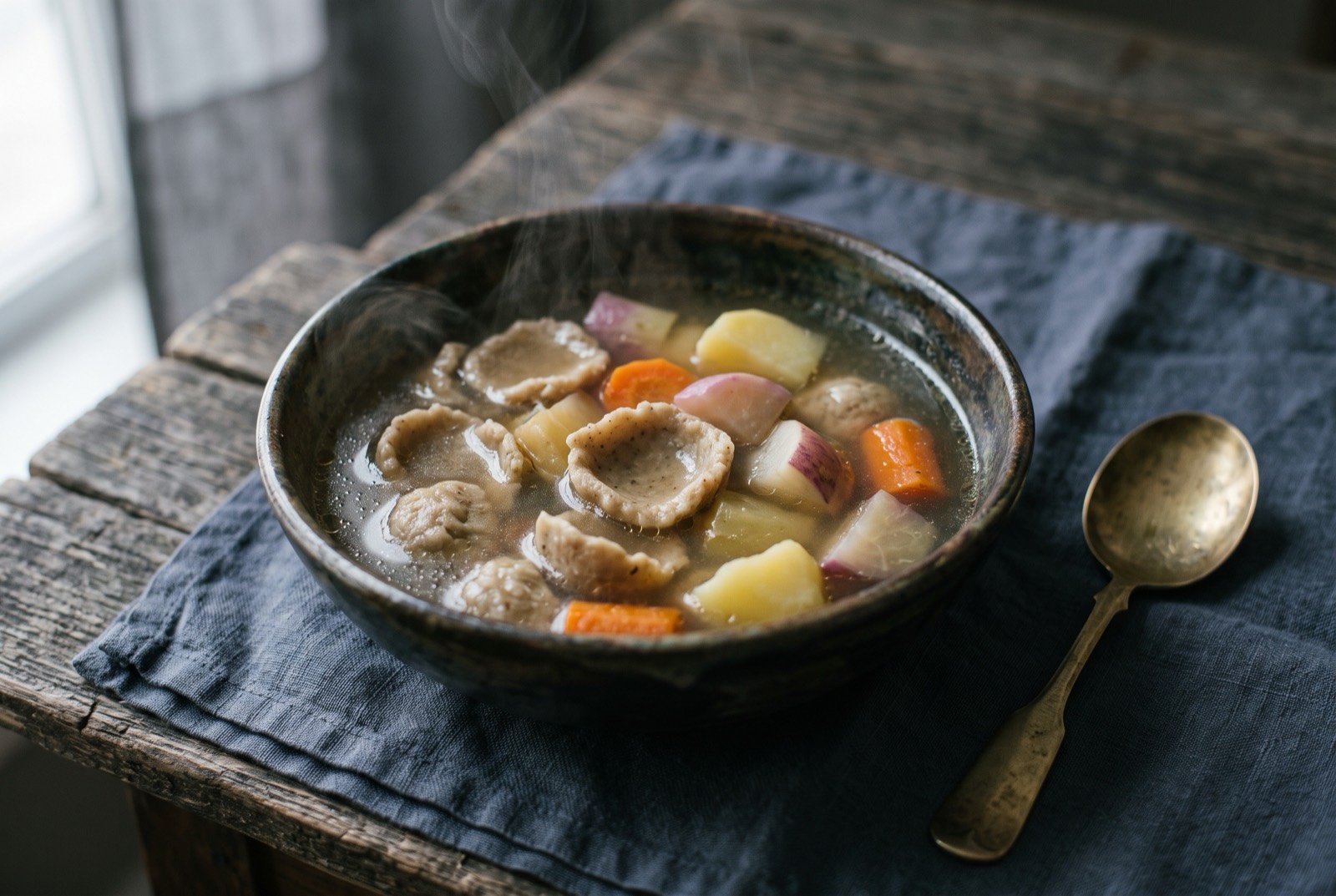
Ladakh's hand-pinched pasta stew, a genuine winter dish eaten when temperatures drop below freezing, is documented with real technique but, honestly, without a single source this research could find giving exact weights or volumes; it is one of the clearest instances in this chapter of real, living tradition outrunning the written record, kept alive by cooks like Nilza Wangmo of Alchi Kitchen in Leh rather than by any cookbook.
As tradition built it
Serves 4. About 30 minutes.
Ingredients
For the dough
- 300 g wheat flour
- about 150 ml lukewarm water
For the stew
- as available chopped tomato, onion, carrot, turnip and potato
- to cover water or a light stock
- to taste salt
Method
The dough
- Knead a hard, stiff dough from the wheat flour and lukewarm water, firmer than a pasta dough and firmer than momo dough both, and rest it briefly.
- Roll portions into thin tubes and pinch off small nuggets, flattening each with a thumb into a shallow cup shape as it goes into the pot, the shape is functional, not decorative, designed to catch broth.
The stew
- Simmer the chopped tomato, onion, carrot, turnip and potato in water or a light stock for 10 to 15 minutes until softening, then drop the pinched dough pieces in and simmer a further 5 minutes until they float and are cooked through.
- Season simply with salt; this is not a heavily spiced dish.
What a modern chef changes
A long-simmer stock and a two-texture dough
Rung 2
Method
- First, use a bone or vegetable stock built with the same long-simmer discipline as rung two of the technique ladder, rather than plain water, giving the finished stew a depth the tradition's simplicity does not aim for but a British diner used to a richer broth will notice.
- Second, roast the root vegetables separately before they go into the pot, caramelising them for a depth of flavour a straight simmer does not develop.
- Third, form a portion of the dough pieces slightly thinner than tradition and finish them briefly in a hot dry pan after simmering for a contrast of textures within the same bowl, echoing the pan-sear idea used for momo above.
- Fourth, finish with a small amount of dehydrated, powdered dried apricot stirred through at the very end, a genuinely Ladakhi ingredient reaching sideways into a dish it does not traditionally touch, for a faint sweet-sour top note against the savoury broth, offered here explicitly as an elevation rather than claimed as traditional.