The Indian subcontinent · Volume 24, Nepal, Bhutan, Ladakh, Sikkim and Darjeeling
Dal bhat tarkari
Nepal, nationwide
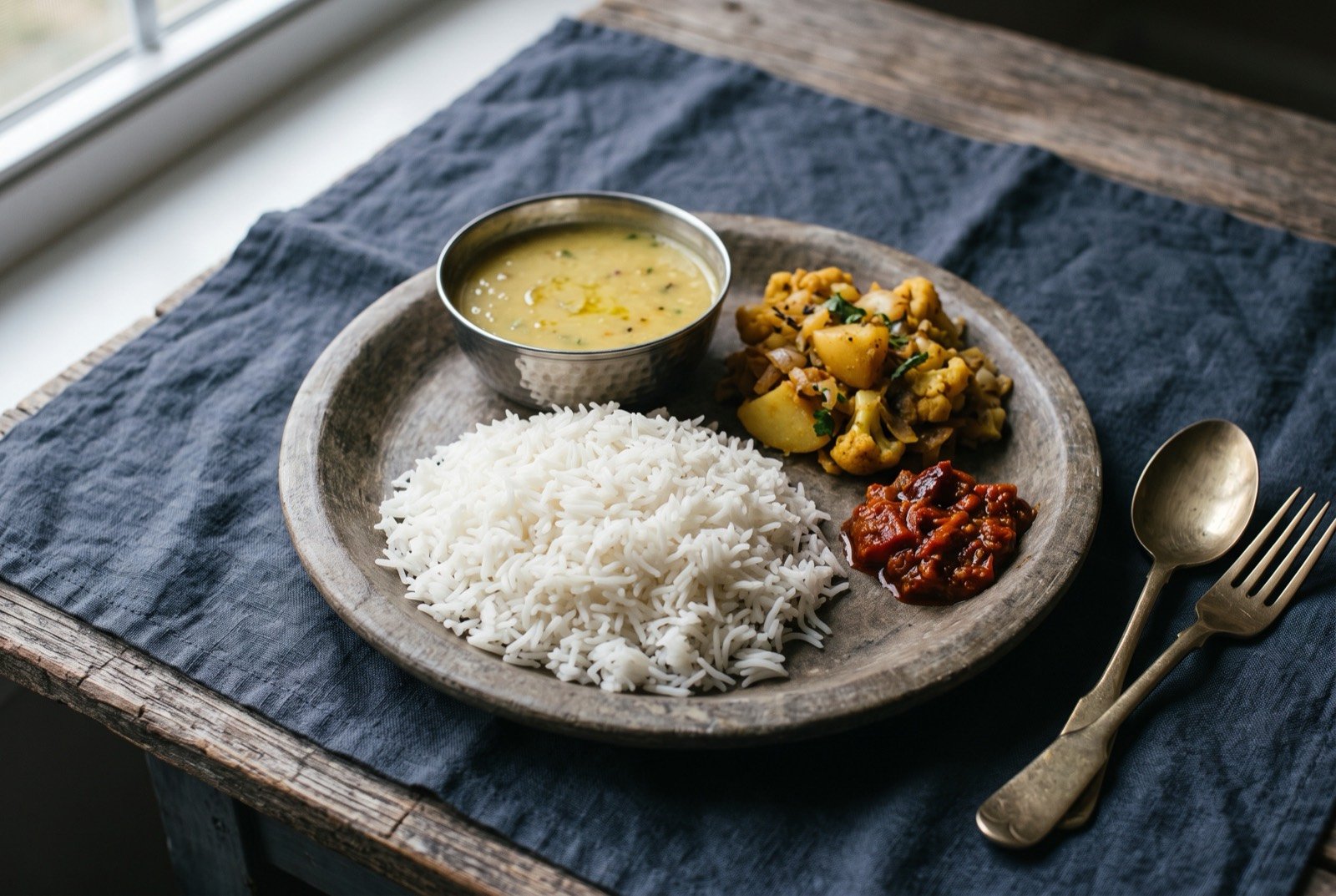
An illustration of the dish, not a photograph of it cooked.
- Time
- 1 hour
- Reviewed
- Not yet reviewed from inside the tradition
- Cooked
- Not yet cooked and reported
Nepal's everyday meal, eaten in most households twice a day, is less a single dish than a format: rice (bhat), a thin lentil soup (dal), a seasonal vegetable curry (tarkari), and achar, a broad category covering fresh, fermented and oil-preserved condiments alike, from boiled potato with sesame to hog plum pickle. Which lentil, which vegetable and which achar varies by region, household and season; what does not vary is the twice-daily rhythm or the caste logic sitting underneath it, since boiled rice and dal have historically been food that could not be accepted from a person of lower caste, a rule that shaped who could eat with whom for generations and that some households still observe in some form. This chapter could not locate a Nepal-published cookbook source giving dal bhat exact quantities to the standard the rest of this book holds itself to; Santosh Shah's own cookbook almost certainly does, and the working figures below, while genuinely cookable, come from diaspora and Western recipe sources rather than an in-tradition text, a gap worth stating rather than dressing up.
As tradition built it
Serves 4. About 1 hour.
Ingredients
For the dal
- 200 g dal (yellow split lentils are the everyday choice, though masoor or a mixed dal is equally traditional depending on region)
- 500 ml water
- a pinch a pinch of turmeric and salt
For the rice
- 300 g rice, rinsed
- 600 ml water
For the tarkari
- as available a seasonal vegetable, potato and cauliflower is a common, reliable pairing
- to taste mustard oil, cumin seed, turmeric, ginger and green chilli
For the jhaneko and to serve
- 1 tsp jimbu
- 1 dried red chilli
- 1 tbsp ghee
- to serve achar, to serve
Method
The dal
- Rinse the dal and simmer in the water with a pinch of turmeric and salt, covered, 45 minutes to an hour, until fully soft; mash lightly.
The rice
- Separately rinse the rice, soak 30 minutes, then cook in the water, covered, until the water is absorbed, about 10 minutes on a low simmer once boiling, then rest off the heat 5 minutes.
The tarkari
- Sauté the vegetable in mustard oil with cumin seed, turmeric, ginger and green chilli until tender.
To finish
- Finish the dal with a jhaneko: bloom the jimbu and dried red chilli in the hot ghee until fragrant, and pour over just before serving.
- Serve all three together with a spoon of achar on the side, never poured over the rice, kept separate so each mouthful is composed by the eater, not the cook.
What a modern chef changes
A double jhaneko, pilau rice and a concentrated vegetable dust
Rung 3
Method
- Four deliberate changes, each tied to a rung above. First, cook the dal in a pressure cooker or sous vide bag at 90°C for two hours to extract more body from the lentil skins without breaking them into mush, then finish the texture by hand rather than the machine.
- Second, replace a single jhaneko with a layered one: bloom whole cumin and mustard seed in ghee at the start of the dal's cook for base aromatics, then a second, sharper jhaneko of jimbu and dried timur at the very end, rung three done twice, at two different temperatures, for two different effects.
- Third, cook the rice as a proper pilau method, toasting it briefly in ghee before the water goes in, then finishing the last few minutes under a tight lid for a thin tahdig-like crust at the base of the pan, an Iranian-adjacent idea applied honestly rather than pretending it is traditionally Nepali.
- Fourth, dehydrate a portion of the tarkari's vegetable trim into a powder and dust it over the finished plate for a concentrated, savoury top note that reads as an intensified version of the vegetable rather than a foreign addition.