The Indian subcontinent · Volume 19, The Ash Pot, the Bamboo Basket and a Border the Map Draws Wrong
Jadoh
Meghalaya, Khasi
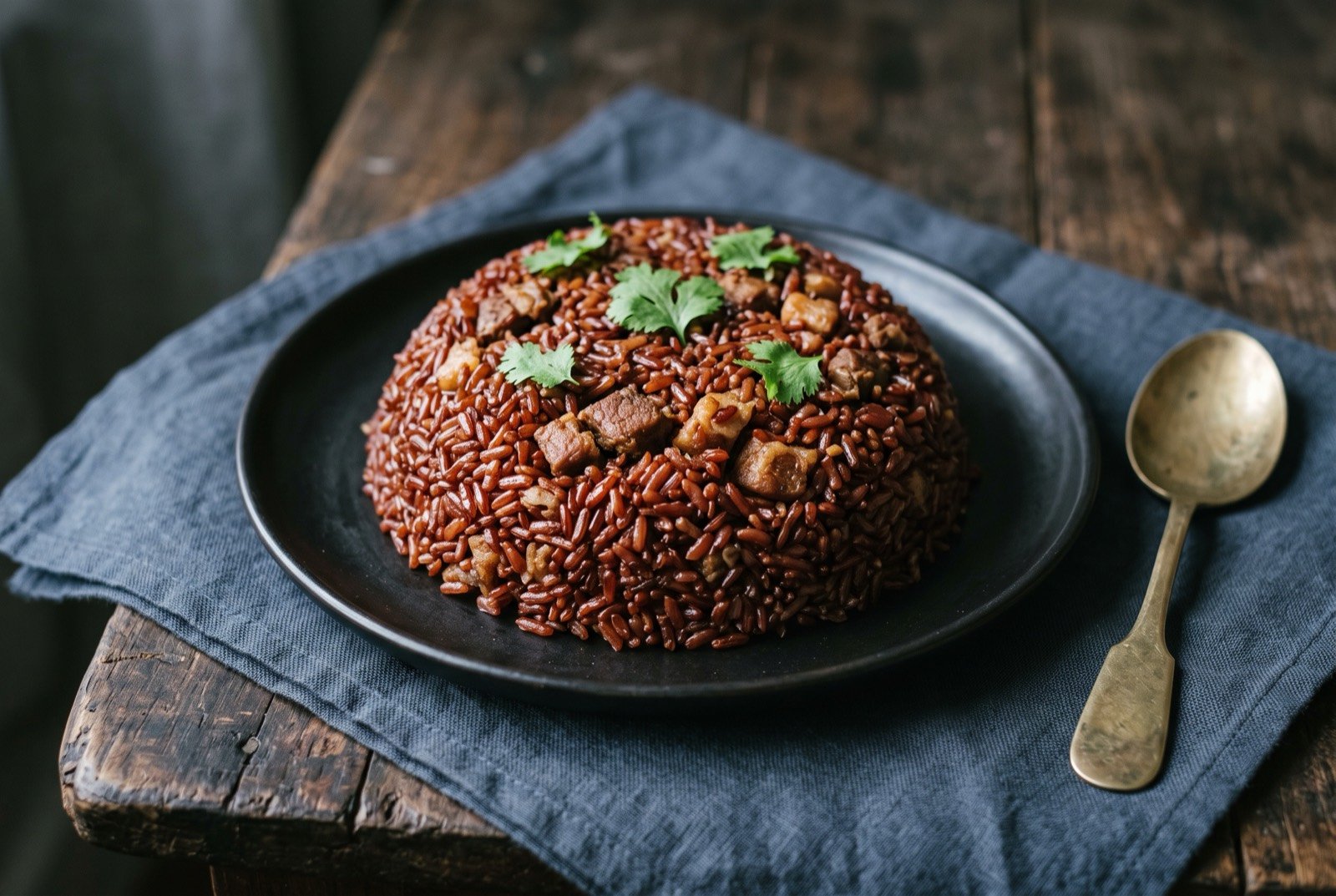
An illustration of the dish, not a photograph of it cooked.
- Time
- 1 hour
- Reviewed
- Not yet reviewed from inside the tradition
- Cooked
- Not yet cooked and reported
Khasi rice cooked in pork stock enriched with pork blood, often called Meghalaya's biriyani, eaten at breakfast or on significant occasions.
As tradition built it
Serves 4. About 1 hour.
Ingredients
- 50 g pork fat, diced
- 300 g pork shoulder, diced
- 1 onion, sliced
- 4 garlic cloves
- 1 thumb ginger, chopped
- 1/2 tsp turmeric
- To taste black pepper, to taste
- 300 g rice, rinsed
- 600 ml pork stock
- 2 tbsp fresh pork blood, optional
Method
- Render the diced pork fat in a heavy pot, then add the pork shoulder and brown well.
- Add the onion, garlic and ginger and cook until softened.
- Stir in the turmeric and black pepper, then the rinsed rice, stirring to coat each grain in the fat.
- Add the pork stock and, if using, the pork blood, stirred in off the heat to avoid it seizing.
- Bring to a simmer, cover, and cook 18 to 20 minutes until the rice is tender and the stock absorbed.
- Rest 5 minutes before serving.
What a modern chef changes
A four hour stock, a pilau method rice and a sous vide confit of pork shoulder
Method
- First, make the stock properly rather than using water, simmering pork bones for at least four hours to extract real gelatine and body before the rice ever meets it, the same principle this atlas's Himalayan chapter uses for thukpa broth.
- Second, cook the rice separately using a pilau method, toasting it briefly in the rendered pork fat before the stock goes in, then finishing under a tight lid for a thin, tahdig like crust at the base of the pot.
- Third, confit a portion of the pork shoulder separately at a low, controlled sous vide temperature, shredding it back through the finished rice for a second, more tender texture alongside the browned pieces.
- Fourth, finish with a spoon of the pork blood, prepared as a thin, barely set custard rather than stirred raw into the pot, spooned over the top at the table for a controlled richness rather than an unpredictable one.