The Horn · Volume 10, The Highland Ferment
Zigni / key wat
Eritrea, and Ethiopia
Illustration
- Time
- 3 hours
- Researched
- Researched from 149 sources in the brief
- Reviewed
- Awaiting a reader from inside the tradition
- Cooked
- Awaiting a cook report
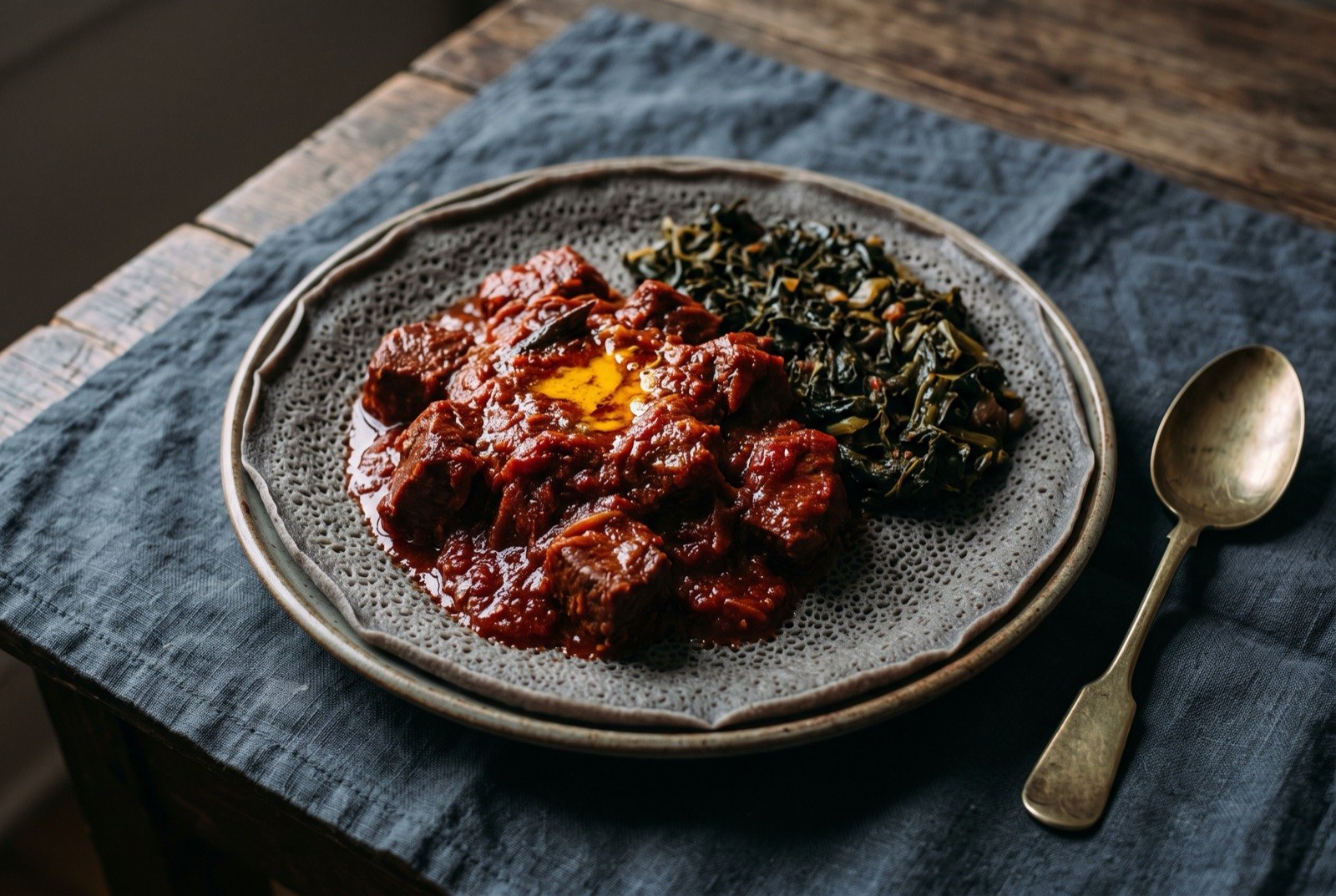
Tigrinya zigni, Amharic key wat or keyyih tsebhi: beef, lamb, goat or chicken cooked slowly for hours with berbere and finished with tesmi. And here is the divergence. In the Eritrean version tomato is structural, the dish being built on meat first and then tomatoes and onions, and it is documented as using less seasoned butter than the Ethiopian version, producing a lighter dish. In Ethiopian key wat the onion carries the body alone and the butter load is higher. Same berbere, same architecture, two theories of where richness should come from, and neither is a degraded copy of the other.
As tradition built it
Serves 6. About 3 hours.
Ingredients
- 1 kg beef or goat shoulder, in 3 cm cubes
- 900 g red onions, minced fine
- 600 g ripe tomatoes, chopped, or good tinned
- 100 to 140 g berbere, by weight
- 80 ml oil
- 4 tbsp tesmi, to finish
- 6 garlic cloves and 25 g ginger, pounded
- 700 ml water or light stock
- to taste salt, tasted against your berbere
Method
- Brown the beef or goat shoulder in a dry heavy pan in small batches and set aside with its juices.
- Cook the red onions dry in the same pan, 40 minutes, scraping up the fond, until collapsed and deep gold.
- Add the oil, then the garlic cloves and 25 g ginger, 3 minutes.
- Add the berbere, bloom one minute, then the ripe tomatoes. Cook them down 20 minutes, until they have lost their raw edge and the fat is separating at the edge of the pan.
- Return the meat and its juices with the water or light stock. Simmer covered 1 hour 30, then uncovered 30 minutes until the sauce is glossy and clings.
- Finish with the tesmi and salt to taste off the heat, and no more than four tablespoons. Restraint here is the Eritrean signature.
Notes
The Eritrean build.
Serve on taita with hamli and a wedge of ayib.
What a modern chef changes
The tomato treated as a reduction, the meat cooked apart, and the butter kept out of the heat
Rungs 3, 4 and 6
Method
- Reduce the tomato separately and hard. Take 800 g down to 300 g before it meets the wat: the structural tomato the Eritrean version wants, at twice the concentration, without forty extra minutes of simmering, and every extra minute costs berbere aroma. Rung 4.
- Cook the meat sous vide at 68°C for 18 hours in a little of the finished kulet, then finish it in the sauce for 20 minutes. Long braising in an acidic, fatty sauce is what shreds meat into strings.
- Add the tesmi at the pass, in two stages. Two tablespoons off the heat for body, one melted over the surface at the table for aroma. Rung 4: those aromatics were extracted below simmer for a reason.
- Serve with a crisp taita chip, not more bread. A dirkosh round fried for 20 seconds, which is dried injera doing a new job rather than a new ingredient. Rung 6.