The Horn · Volume 10, The Highland Ferment
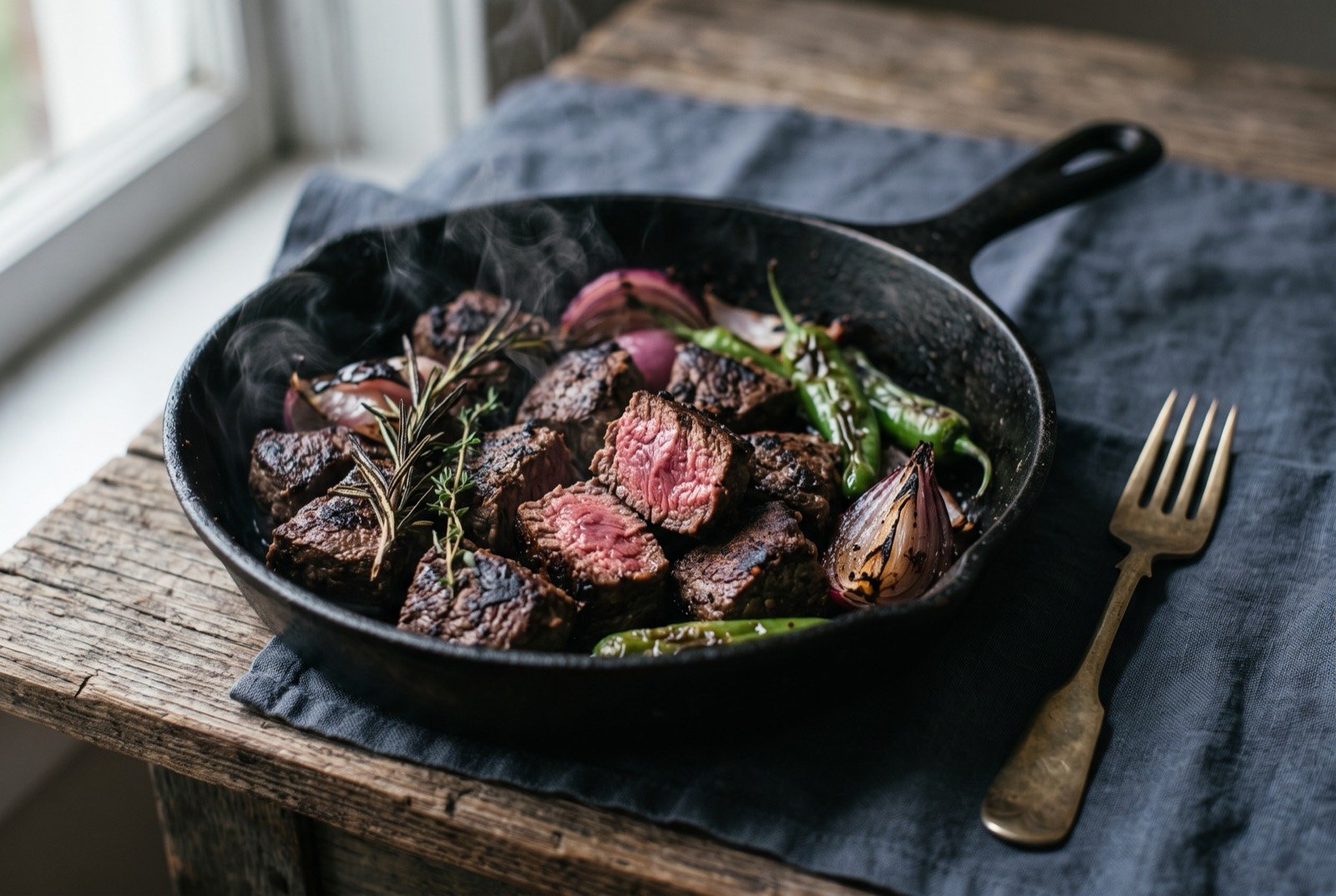
Derek tibs
Ethiopia and Eritrea
Illustration
- Time
- 20 minutes
- Researched
- Researched from 149 sources in the brief
- Reviewed
- Awaiting a reader from inside the tradition
- Cooked
- Awaiting a cook report
Everything else in this volume is slow. Tibs is not, and that is its point on a menu built from long-cooked purées: very high heat, very small batches, a fat that is already aromatic, almost no liquid. Derek tibs, derek meaning dry, is beef fried hard in niter kibbeh with onion and jalapeño and no sauce at all; zilzil tibs is the same cut in long strips; awaze tibs is finished with awaze paste for a glossy coating; shekla tibs arrives at the table in a clay dish over live charcoal, still spitting. Note too that Ethiopian butchers traditionally distinguished fourteen beef cuts, and modern shops often collapse this to three, qurt for raw chunks, tibs for frying in spiced butter and wot for stewing in kulet. The retail architecture of Ethiopian beef is organised by cooking method rather than anatomy.
As tradition built it
Serves 4. 20 minutes.
Ingredients
- 700 g beef sirloin or rump, in 3 cm chunks
- 80 g niter kibbeh
- 2 red onions, in thick wedges
- 3 jalapeño or green chillies, halved lengthways
- 1 tsp mekelesha
- 1 rosemary sprig, optional but common
- to taste salt
Method
- Get a heavy pan or cast iron skillet very hot. Melt half the niter kibbeh.
- Fry the beef sirloin or rump in two batches, 3 to 4 minutes each, moving it as little as possible, until deeply browned outside and still pink within. Crowding the pan is the one unforgivable error: it drops the temperature and gives grey stewed meat.
- Return all the meat, add the red onions in thick wedges and the jalapeño or green chillies, and cook 2 minutes so they take colour but keep their bite.
- Add the rest of the niter kibbeh, the mekelesha, the rosemary sprig and salt. Toss 1 minute and serve immediately, ideally in the pan.
What a modern chef changes
The sear separated from the cook, and the aromatic fat kept off the fire
Rungs 4 and 6
Method
- Cook the beef before you sear it. Sous vide at 54°C for 90 minutes, dry the surface, then sear 45 seconds a side. You get edge-to-edge medium rare under a hard crust, which one hot pan cannot deliver on 3 cm chunks.
- Keep the niter kibbeh out of the searing fat. Sear in a high smoke point neutral oil and add the niter kibbeh at the toss. Rung 4: at searing temperature you are burning the aromatics you spent fifty minutes extracting, and the acrid note in a bad tibs is exactly that.
- Char the onion and chilli separately over live fire, until blistered and still crunching. Two ingredients needing completely different heat treatments should not share a pan.
- Serve it on a hot cast iron plate, not on the injera. Shekla tibs already knows this. Rung 6: meat resting on a wet sponge steams itself soft within two minutes.