Mainland Southeast Asia · Volume 42, The Tea Leaf, the Curry Oil and the Caravan Road
Lahpet Thoke
Fermented tea leaf salad, grown in the Shan hills, eaten across the whole of Myanmar
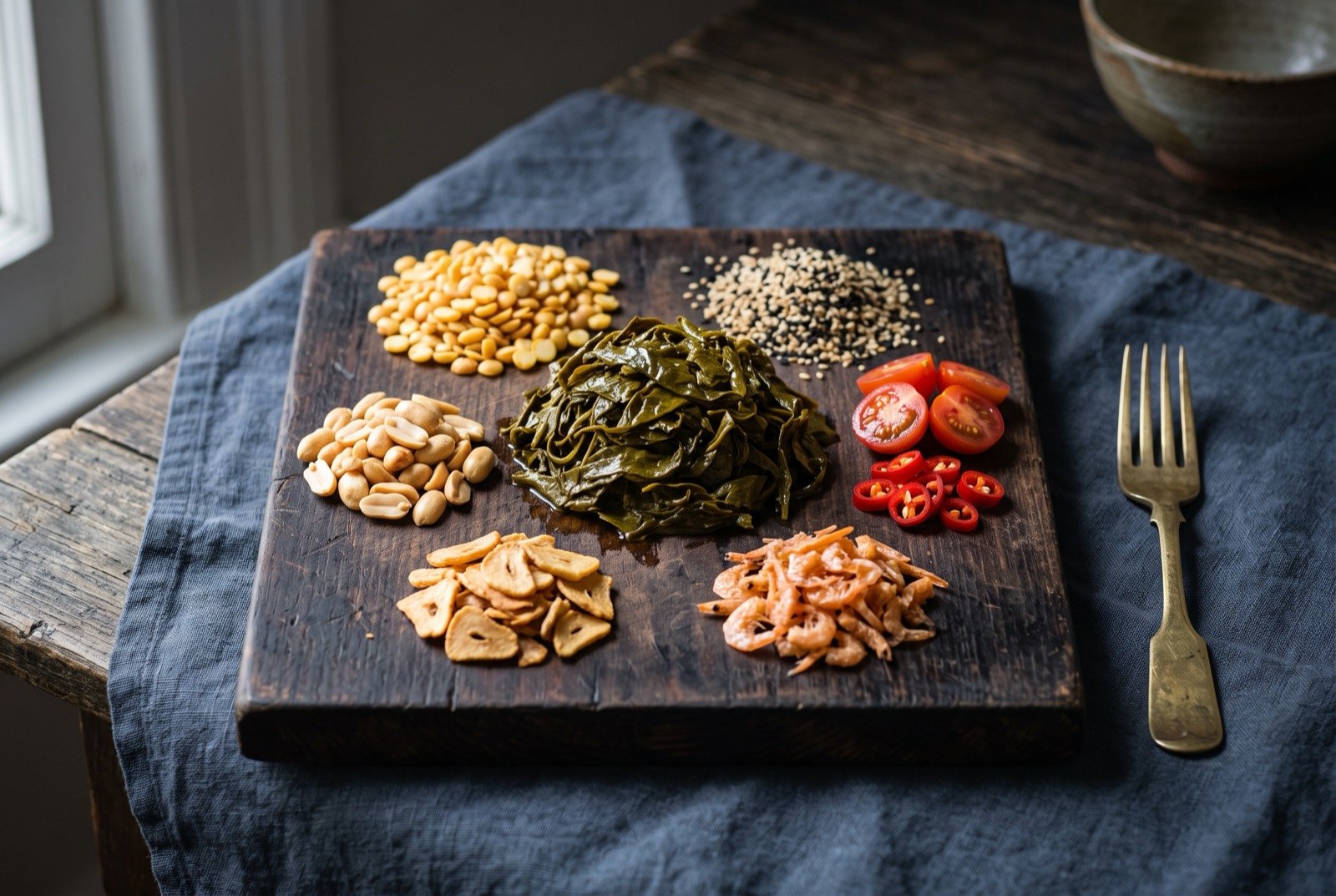
An illustration of the dish, not a photograph of it cooked.
- Time
- 20 minutes
- Researched
- 12 sources cited
- Reviewed
- Not yet reviewed from inside the tradition
- Cooked
- Not yet cooked and reported
As tradition built it
Serves 4 as a starter. Fermentation 2 to 4 months, then 20 minutes.
Ingredients
An outline, not yet a recipe: the tradition's method with its ingredients named but not weighed. Quantities are being added from sources inside the tradition, lead dishes first.
- fermented tea leaf (lahpet), see the ferment bench below
- as available fried garlic, roasted sesame, fried yellow split peas, fried peanuts, dried shrimp
- as available tomato, sliced
- to taste fresh chilli
- 5 to 10% garlic and 5 to 10% chilli, 1 to 2% salt, 1 to 2% lime juice, 20 to 30% peanut oil, all by weight of the fermented leaf garlic, ground chilli, salt, lime juice, peanut oil, to dress
Method
- Dress the fermented tea leaf with minced garlic and ground chilli at roughly 5 to 10% of the leaf's weight each, salt at 1 to 2%, fresh lime juice at 1 to 2%, and peanut oil worked through at 20 to 30% of the leaf's weight.
- Arrange the dressed leaf with the fried garlic, roasted sesame, fried split peas, fried peanuts, dried shrimp, sliced tomato and fresh chilli in separate small piles rather than pre-mixed.
- Toss everything together at the table, not in the kitchen. The dish's whole point is a diner controlling the ratio of ferment to crunch as it's eaten, not a fixed composition.
What a modern chef changes
The service moved deliberately to the table, and a genuine dehydrator ferment offered where months-long lahpet cannot be sourced
Rung 3
Method
- If genuine lahpet is available, respect its months of fermentation and change nothing about the leaf itself. This chapter does not modernise the ferment, only the assembly.
- Where lahpet cannot be sourced, ferment your own quick version: good loose-leaf green tea, briefly steeped and pressed dry, packed under a coffee filter in a sterilised jar, held at 28 to 32°C in a dehydrator on its lowest setting for seven to ten days. Say plainly on the plate that this is a compromise, not the genuine article.
- Serve every component separate and let the diner build the dish themselves, following Desmond Tan's own correction of the pre-mixed version most diaspora restaurants serve: composed table-side, the crunch stays crunch.