Mainland Brazil · Volume 39, The Fritter and the Fire
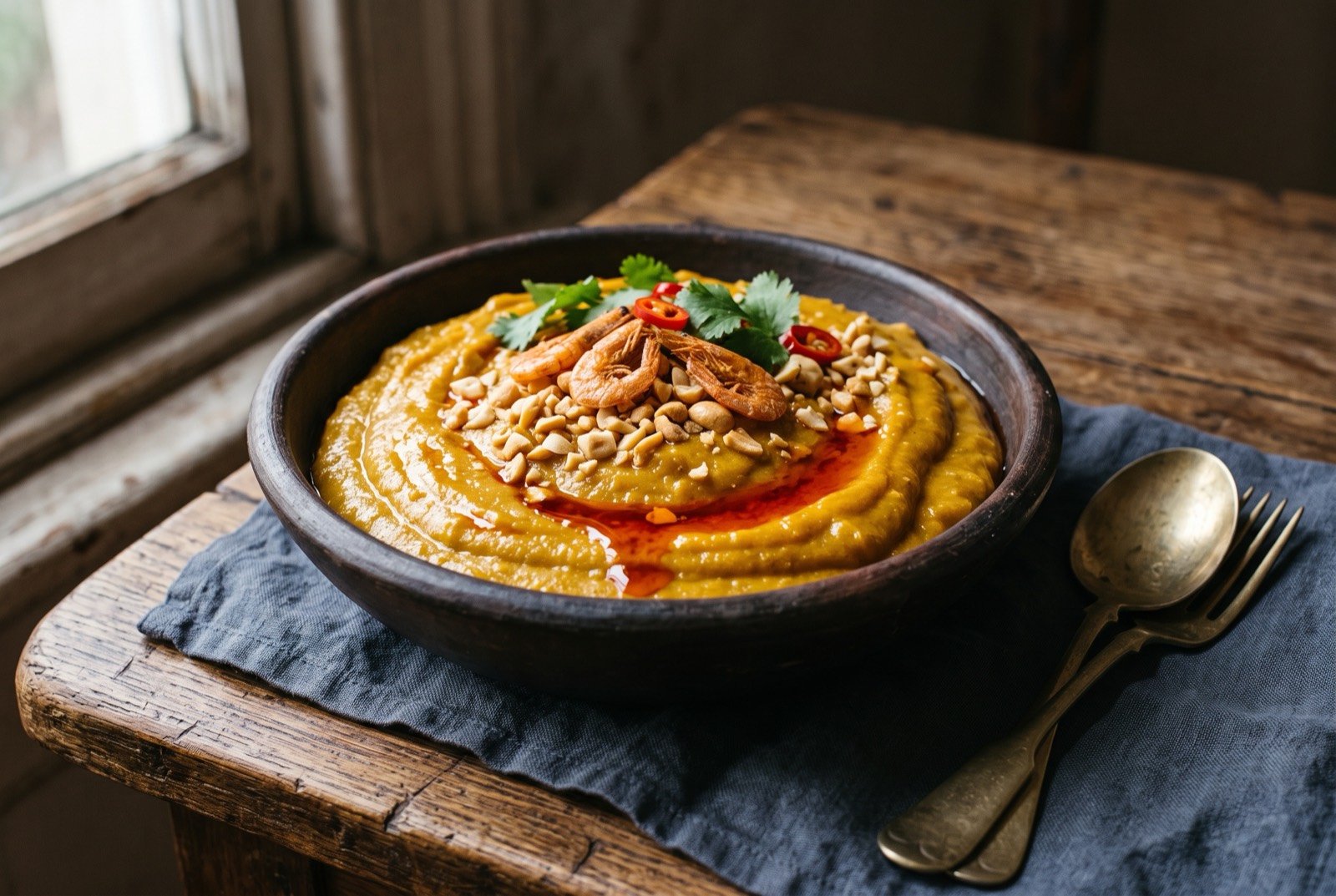
Vatapá
Salvador, Bahia
Illustration
- Time
- 45 minutes
As tradition built it
Vatapá
Serves 4 to 6. About 45 minutes, including soaking the bread.
Ingredients
- roughly 300g stale bread, crusts removed
- 400ml, plus more for soaking coconut milk
- 100g, or to taste dried shrimp
- a generous handful roasted peanuts
- a generous handful roasted cashews
- a thumb fresh ginger
- 2 to 3 cloves garlic
- 1, chopped onion
- 2 tablespoons, or to taste dendê
- to taste salt
- a little malagueta
Method
- Soak the stale bread in coconut milk until fully softened.
- Blend the softened bread smooth with a further 400ml coconut milk, dried shrimp, roasted peanuts, roasted cashews, ginger, garlic, onion and a spoonful of dendê, to a thick, pourable paste.
- Cook the paste gently in a wide pan, stirred often to stop it catching, for fifteen to twenty minutes, until it has thickened to the consistency of a loose porridge and turned a deep gold.
- Season with salt and a little malagueta.
- Serve spooned over rice or use as an acarajé filling.
What a modern chef changes
Fresh-toasted nuts and a chinois pass for a silkier paste
Rung 4
Method
- Toast the peanuts and cashews fresh in a dedicated spice grinder immediately before blending rather than from a jar, a real, checkable difference in aromatic oils that a nut left sitting since roasting has already begun to lose.
- Pass the finished paste through a chinois for a genuinely silkier, grit-free result than the traditional blend-and-stir method gives, since bread and whole roasted nuts, however well blended, leave a coarser texture behind than a modern kitchen's tools can remove.
- Finish with a spoonful of raw dendê stirred in off the heat, Rung 4, the same principle applied here as everywhere else in this chapter.