Mainland Brazil · Volume 43, São Paulo, the Immigrant Metropolis and Coffee Interior
Esfiha
Syria and Lebanon, Levantine tradition, carried to São Paulo
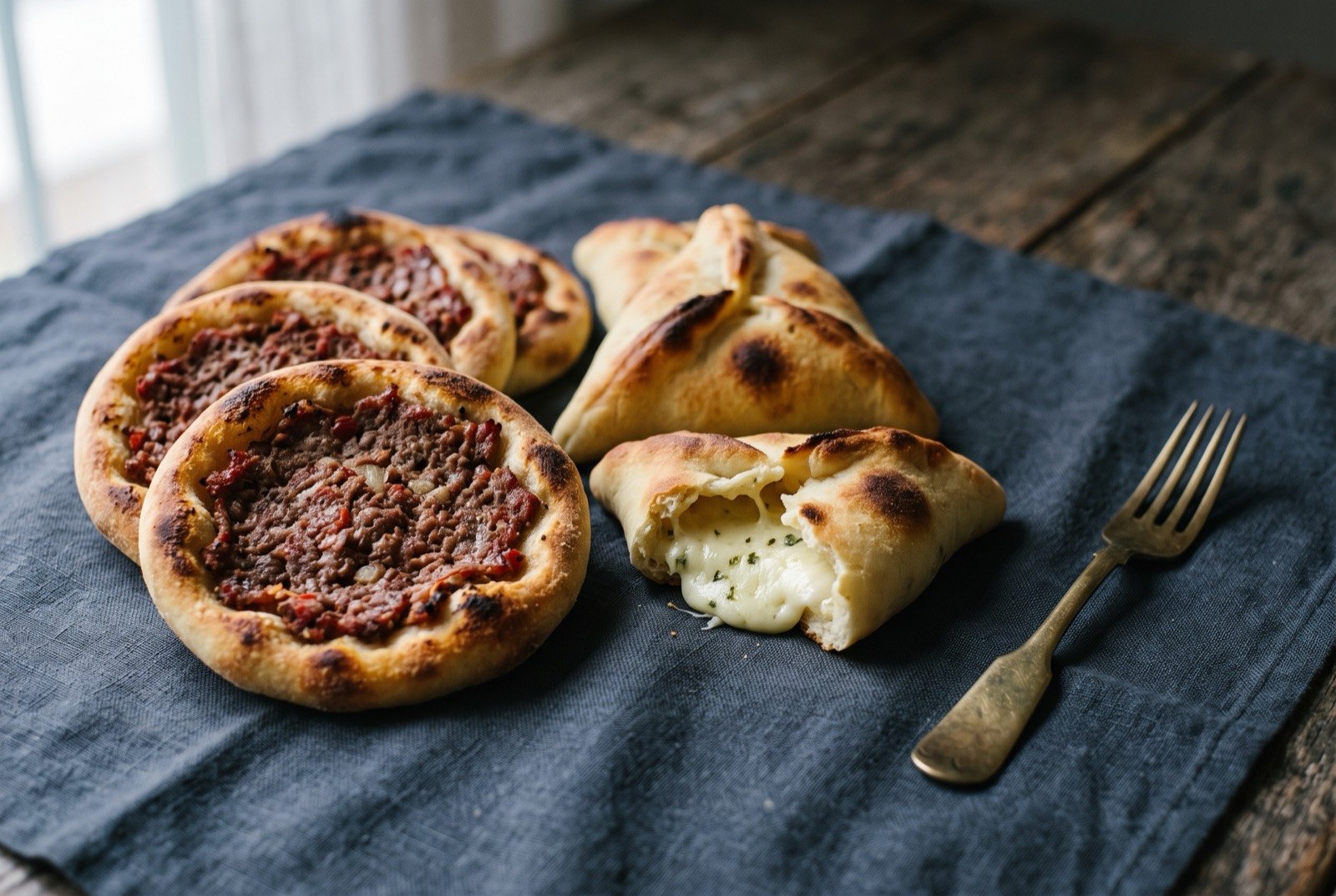
Illustration
As tradition built it
Esfiha (aberta and fechada)
Mass popularised by Habib's, founded 1988 in Lapa
Method
- For aberta (open-faced), roll a thin disc of dough and top with a drier filling such as spiced minced meat.
- For fechada (closed), fold a thicker dough over a wetter filling such as cheese or coalhada into a triangle or boat shape.
Notes
Where exactly within the Levant the dish began is a genuinely live dispute: one long-established São Paulo restaurateur credits the area around Homs, Syria, spreading into Lebanon's Beqaa Valley, while noting many others claim the reverse direction of travel; this chapter holds both claims rather than choosing between them.
A well-known story holds that an elderly Arab cook taught Habib's founder Antônio Alberto Saraiva, a Portuguese-born baker with no Arab ancestry, the recipe that became his flagship product; the story rests on a single oral-history source and does not appear in Saraiva's own published biography, which credits his success to competitive pricing and range. This chapter treats it as a good story rather than a verified one.
What a modern chef changes
A short cold ferment for a crisper base
Method
- Build the aberta dough with a short, cold ferment, four to six hours in the fridge rather than a quick same-day rise, for a thinner, crisper base that holds a wetter filling without turning soggy.
- Cook the minced-meat filling for the aberta version briefly sous vide with its own spicing before it goes onto the dough, so the meat is fully seasoned and just cooked through.
- For the fechada, cheese version, pass a genuine requeijão through a chinois with a little lemon zest before filling, for a smoother, less grainy result than folding the cheese in cold and raw.