Mainland Brazil · Volume 43, São Paulo, the Immigrant Metropolis and Coffee Interior
Pizza paulistana
Brás, São Paulo, Neapolitan immigrant tradition, Brazil
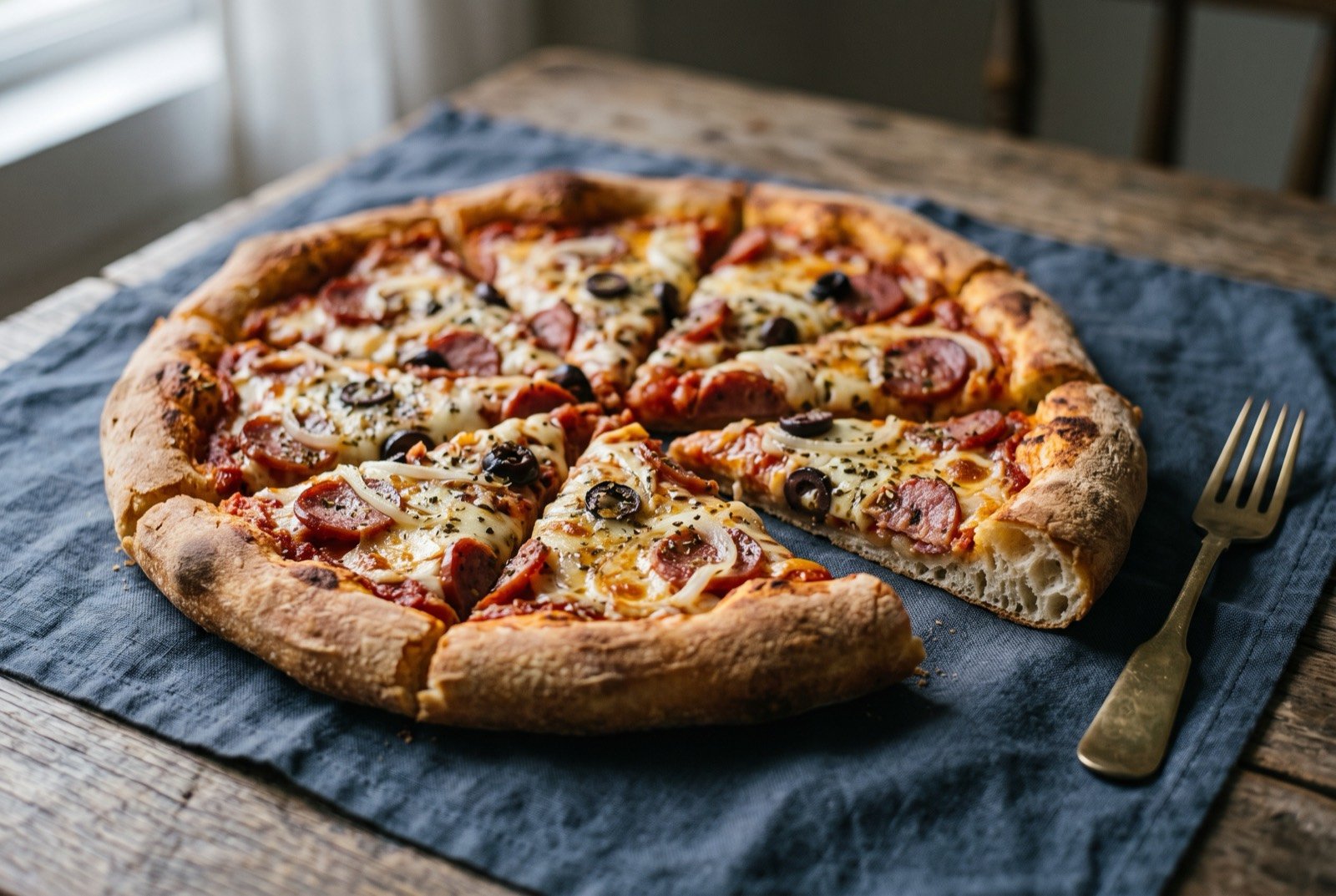
An illustration of the dish, not a photograph of it cooked.
- Time
- Not statedNo source states a time and the atlas has too few comparable dishes to estimate one.
- Researched
- No outside sources linked
- Reviewed
- Not yet reviewed from inside the tradition
- Cooked
- Not yet cooked and reported
As tradition built it
Pizza paulistana
Credited to Neapolitan immigrant Carmino Corvino, Brazil's first pizzeria, 1910
Method
- Pizza reached São Paulo through the Brás neighbourhood, credited to Neapolitan immigrant Carmino Corvino, who sold slices on the street before opening what is generally cited as Brazil's first pizzeria in 1910.
- Build a thicker, denser dough with a crisp base than Neapolitan pizza's thin, soft style, and top generously and evenly.
- For iconic flavours such as tuna, Portuguese-style and calabresa, leave the pizza with no cheese at all, as is traditional.
Notes
A decade-long study by USP researcher Silvana Azevedo de Almeida argues paulistanos were eating pizza before much of northern Italy was: the first paulistano pizza ovens appeared between 1910 and 1920, while pizza remained essentially unknown in the Veneto, Lombardy and Piedmont, the regions supplying most of São Paulo's Italian immigrants, until after the Second World War.
What a modern chef changes
A levain doing the flour's own gluten work over time
Rung 1: long fermentation
Method
- Build a levain-fermented dough at close to 80% hydration, minimum 24 hours with a British strong flour, extended to 48 to 72 hours with a genuine Italian 00 flour, water worked in gradually in thin streams during gluten development rather than added all at once.
- Bake on a pizza stone or steel inside a Big Green Egg run for real, stable, high dome heat, the closest domestic equivalent to a paulistana pizzeria's deck oven.
- Make the tomato base in a high-power blender from good tinned tomatoes passed afterwards through a chinois, for a smoother, less watery sauce than a hand-crushed version gives.
- Hold back on cheese for the calabresa and Portuguese-style versions, exactly as the paulistana original does.