Mainland Brazil · Volume 43, São Paulo, the Immigrant Metropolis and Coffee Interior
Virado à paulista
São Paulo interior, bandeirante and tropeiro tradition, Brazil
Illustration
As tradition built it
Virado à paulista
Registered Patrimônio Cultural Imaterial do Estado de São Paulo, 8 March 2018
Ingredients
The method as the tradition gives it, ingredients named but not yet weighed. Quantities follow as we verify them, lead dishes first.
- feijão carioca beans (for preference)
- manioc or maize flour
- white rice
- pork chop
- sausage
- egg
- couve (collard greens)
- banana
Method
- Traditionally, bean, manioc or maize flour, meat, banana, egg and couve were physically mixed and turned together by the motion of riding, the trail method the dish's name ("turned" or "flipped") describes.
- For the now-standard composed plate, cook feijão carioca beans (for preference) and thicken with manioc or maize flour.
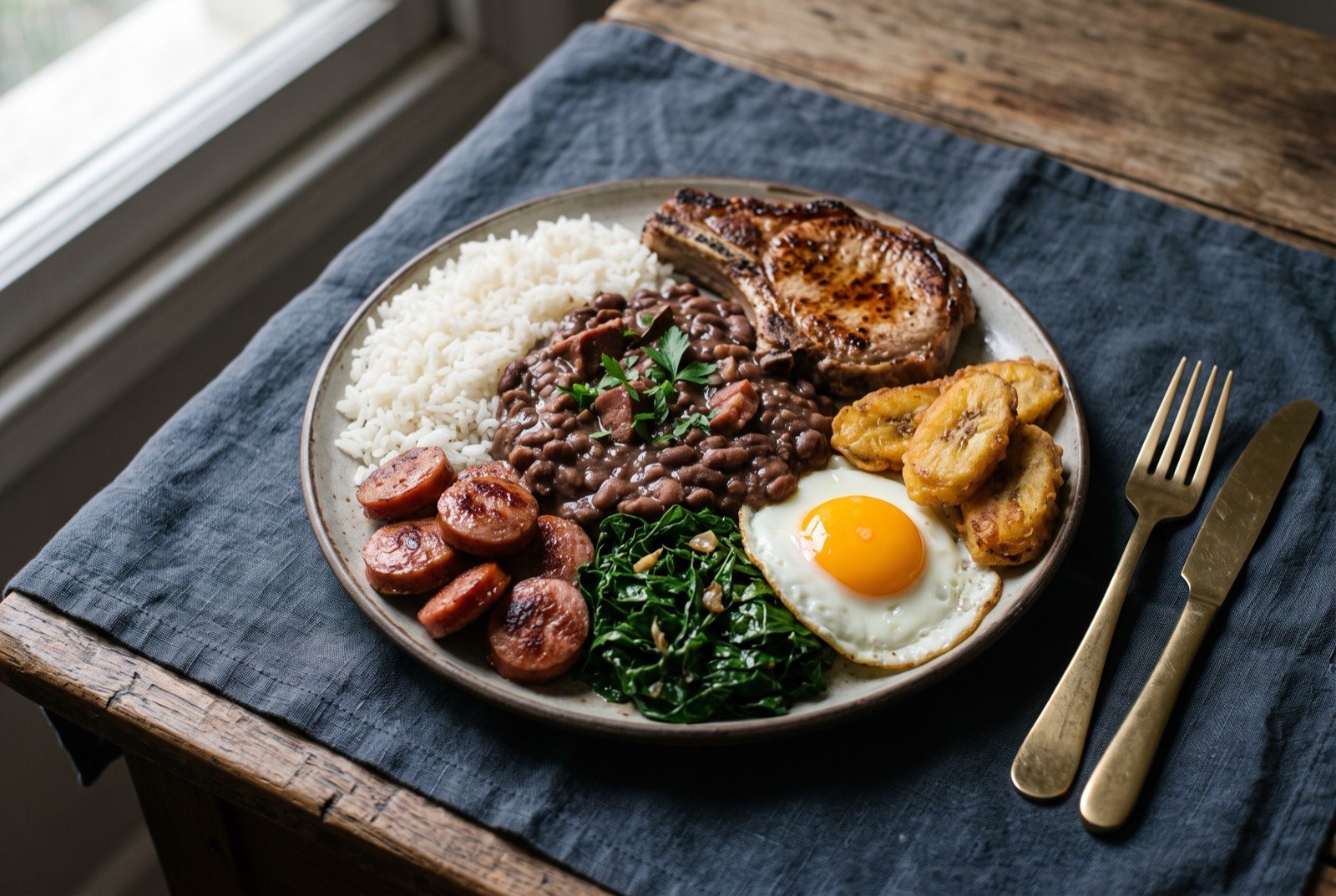
- Serve with white rice, a fried pork chop, fried sausage, a fried egg, sautéed couve and battered fried banana, all on one plate.
Notes
At least one respected Brazilian food historian argues the dish's older ancestor may have been a chicken and maize-flour stew rather than the bean version now famous, with virado better understood as a flexible cooking method, turning whatever trail food was to hand, than as one canonical dish.
Traditionally served on Mondays.
What a modern chef changes
Sous vide precision on each component, held to one composed plate
Method
- Cook the pork chop and the sausage sous vide separately to their own precise doneness, the chop held tender and rosy rather than the greyer result a hot pan alone tends to give a lean cut.
- Finish both hard and fast on a Big Green Egg for real seared colour.
- Blend and pass a portion of the bean cooking liquor through a chinois before it goes back to thicken the pot, for a genuinely smooth base rather than one carrying the skins a home masher leaves behind.
- Dehydrate the banana slices briefly before their final fry, concentrating their sugars so they caramelise harder and hold their shape against the plate's other components rather than collapsing into the beans around them.