Mainland Brazil · Volume 44, Fire, Mate and the Colônia Table
Cuca
Rio Grande do Sul and Santa Catarina, Brazil
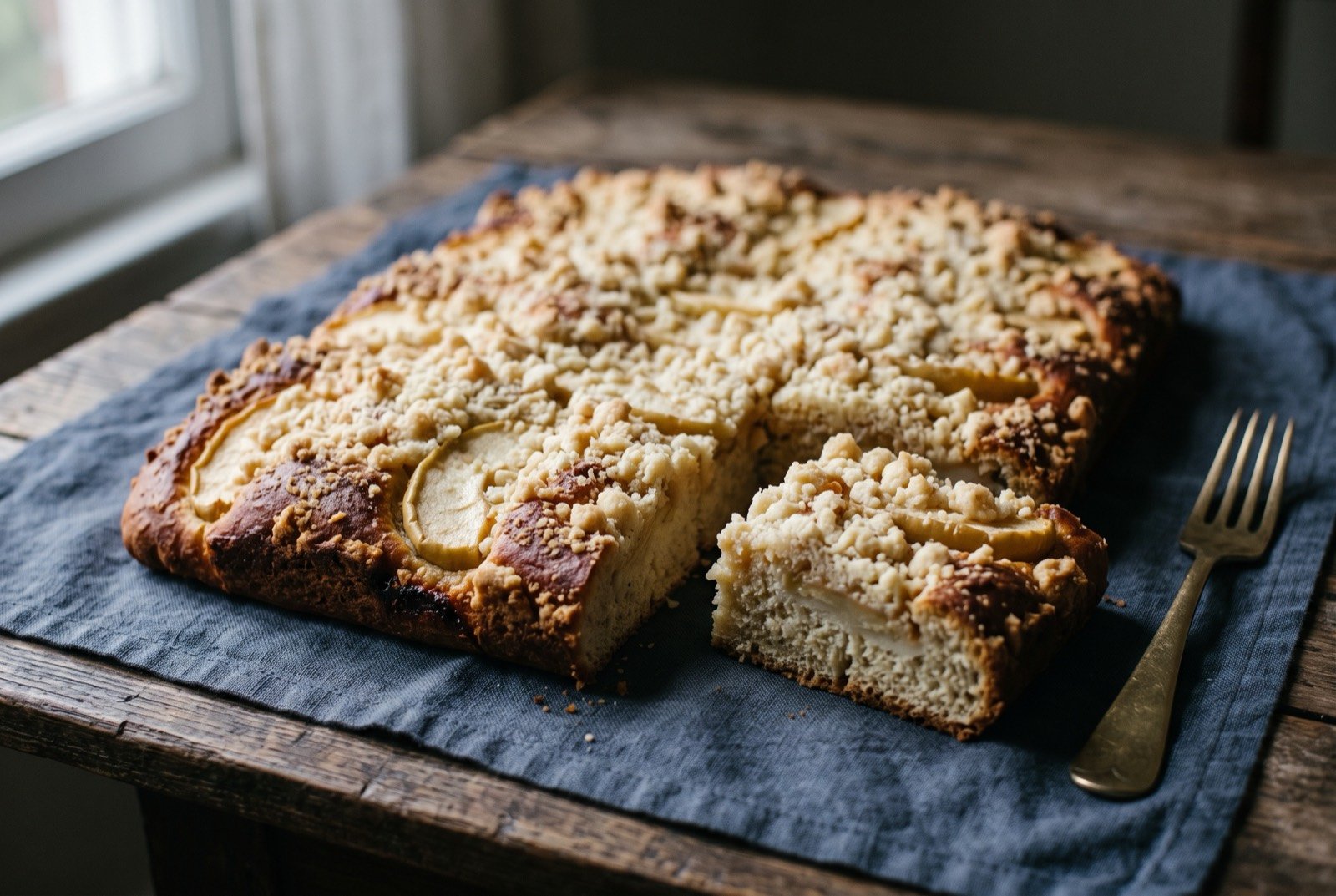
An illustration of the dish, not a photograph of it cooked.
- Time
- 1 hour
- Reviewed
- Not yet reviewed from inside the tradition
- Cooked
- Not yet cooked and reported
As tradition built it
Cuca
Makes one large cuca, serves 8 to 10. About 1 hour including proving, plus baking.
Ingredients
For the dough
- 1 tbsp dried yeast
- a pinch pinch of salt
- 150g (¾ cup) sugar
- 240ml (1 cup) warm water
- 2 eggs
- 100g butter, softened
- about 450g (3 cups) plain flour
- 2 large apples, or 2 to 3 bananas fruit of choice (apple or banana are the most common), sliced
For the streusel
- 100g each equal parts butter and plain flour, rubbed together to a coarse crumb
Method
- Combine the yeast, salt, sugar and warm water, then beat in the eggs.
- Work in enough flour that the dough comes together and no longer sticks to the hands, roughly 3 cups. Rest, covered, for 10 minutes.
- Work in the softened butter and any remaining flour, then prove, covered, for about 45 minutes, until doubled.
- Press the dough out flat and low into a wide tin rather than a tall loaf tin, matching the low, flat profile that distinguishes the gaúcho version from the German original.
- Arrange the sliced fruit generously over the surface, then scatter the streusel crumb thickly over the top.
- Bake at 200°C for about 45 minutes, until deeply golden.
Notes
The dough ratios above come from current Brazilian home practice rather than an archival source; this chapter found no scholarly quantified historical recipe to check them against.
What a modern chef changes
Precision fermentation and a fruit filling reduced rather than left raw.
Rung 2.
Method
- Prove the dough in a sous vide bath set to 28°C, sealed loosely in a bowl under cling film rather than left to the vagaries of a kitchen's ambient temperature, for a more consistent, repeatable rise.
- Reduce the fruit to a thick compote first, cooked down with a little sugar until jammy and passed through a chinois to remove any fibrous pieces, rather than laying raw slices onto the dough, so the topping sets rather than weeping liquid into the crumb during baking.
- Blitz the streusel in a food processor to an even, sandy crumb rather than rubbing it by hand, for a more consistent bake across the whole surface.