The Caribbean · Volume 16, Guyana and Suriname
Bakabana
Suriname
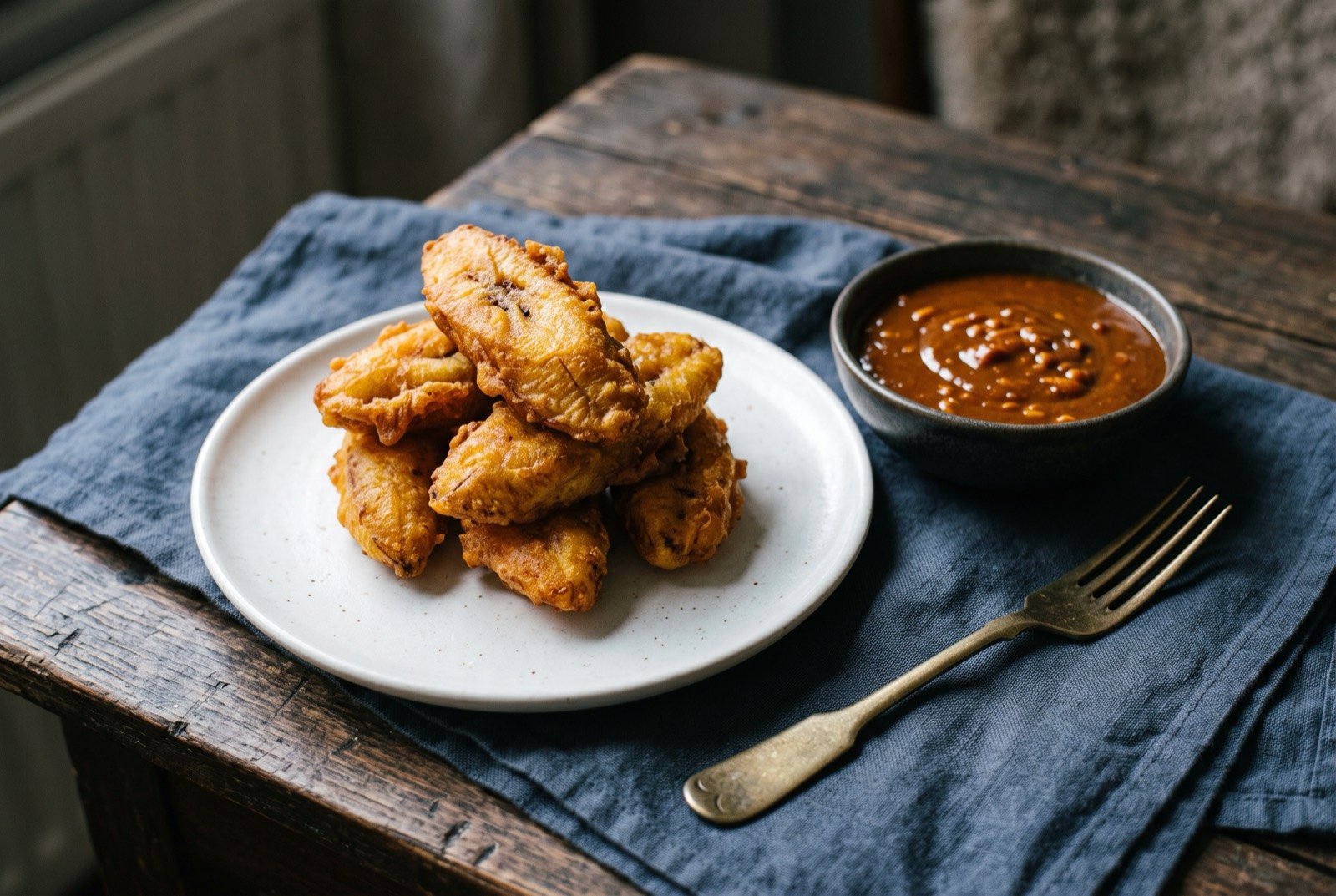
An illustration of the dish, not a photograph of it cooked.
- Time
- Not statedNo source states a time and the atlas has too few comparable dishes to estimate one.
- Researched
- No outside sources linked
- Reviewed
- Not yet reviewed from inside the tradition
- Cooked
- Not yet cooked and reported
As tradition built it
Bakabana
Brought over by the same Javanese indenture wave as saoto, adapted for local ingredients from the late 1890s
Ingredients
- 2 half-ripe plantains, sliced lengthwise into quarters
- 150g self-rising flour
- 1 tsp sugar
- 260ml sparkling water or lemonade
- as needed oil, for deep-frying
- 235g, salted peanuts, for the pindasaus
- 6 tbsp ketjap manis, for the pindasaus
Method
- Slice half-ripe plantains lengthwise into quarters and dip in a light batter of self-rising flour, sugar and sparkling water or lemonade, chosen specifically to keep the batter light rather than heavy.
- Deep-fry in hot oil until golden.
- Serve with a peanut sauce, pindasaus, itself built on ketjap manis, tying the dish directly to Indonesian satay technique carried over by the same community.
What a modern chef changes
Dehydrated plantain, fresh-ground pindasaus, tighter fry
Method
- Dehydrate a portion of the plantain briefly before battering, concentrating its natural sugar so the fry caramelises the surface more deeply without the fritter itself turning greasy.
- Build the pindasaus with peanuts toasted and ground fresh in the spice grinder rather than from a jar, blended to a genuinely smooth emulsion in the high-power blender, then passed through a chinois for a sauce with none of the graininess a hand-mashed version can carry.
- Fry in small batches at a slightly higher, more tightly controlled temperature than a domestic hob usually holds, so the sparkling-water batter's structure sets before it can absorb oil, the same principle the original recipe's choice of a carbonated liquid was already reaching for.