The Caribbean · Volume 16, Guyana and Suriname
Garlic pork
Guyana
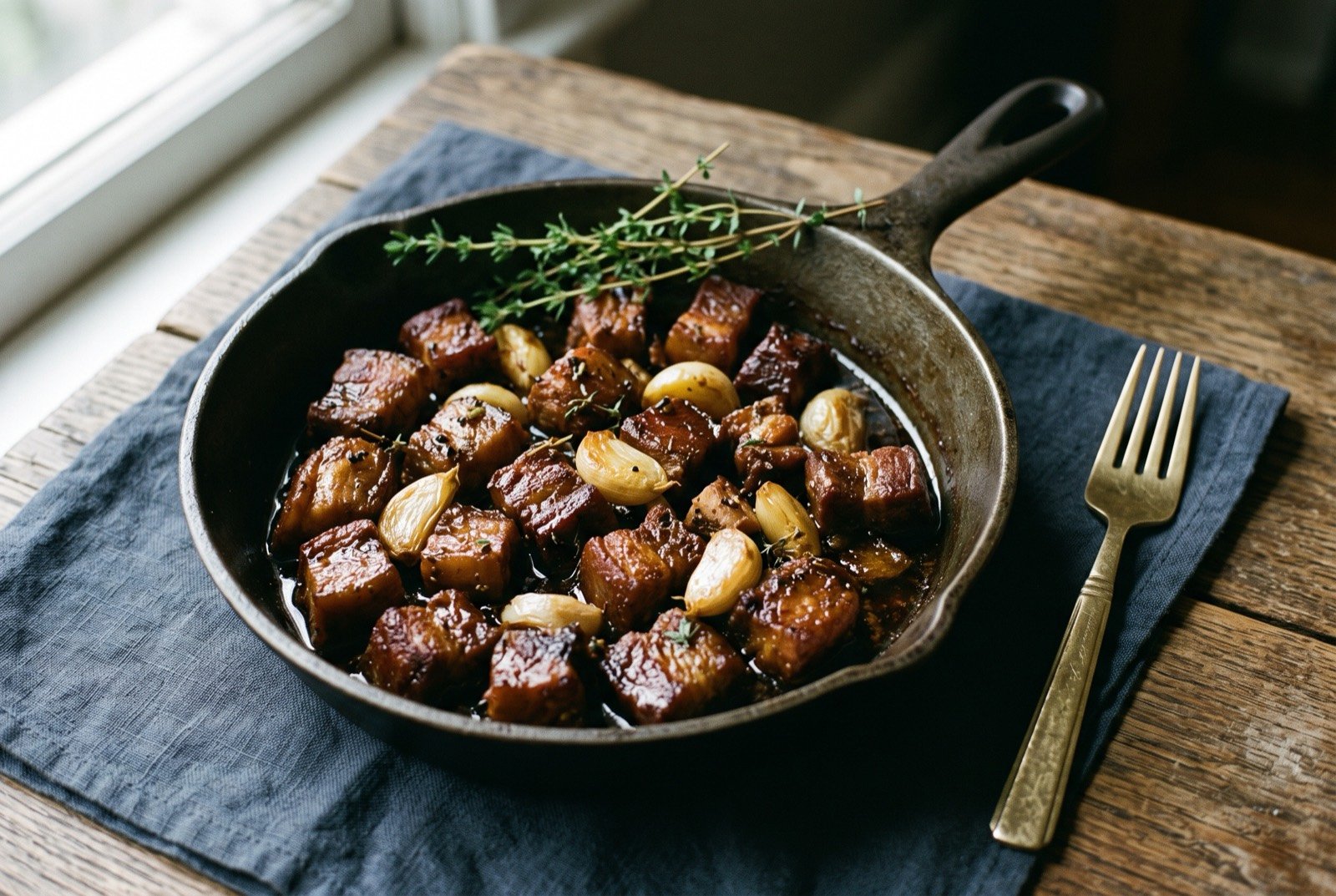
An illustration of the dish, not a photograph of it cooked.
- Time
- 30 minutes
- Researched
- No outside sources linked
- Reviewed
- Not yet reviewed from inside the tradition
- Cooked
- Not yet cooked and reported
As tradition built it
Garlic pork
Directly descended from Madeira's carne de vinha d'alhos, brought by the Portuguese indenture wave from 1834 · 3 to 4 days, plus about 30 minutes to cook
Ingredients
- 3lb pork shoulder or loin, cubed
- as needed diluted vinegar, for rinsing
- 1 tbsp salt
- ½ lb garlic, peeled
- ¼ cup wiri wiri pepper, or two habaneros
- 1 cup fresh thyme
- 4.5 cups white distilled vinegar
- reserved from the fresh thyme above thyme stems
Method
- Rinse the cubed pork shoulder or loin in diluted vinegar and salt it.
- Blend the peeled garlic, wiri wiri pepper (or two habaneros) and fresh thyme to a paste.
- Layer the pork in a sterilised jar with vinegar, the seasoning paste and thyme stems, repeating until the meat is fully submerged in the white distilled vinegar.
- Brine at room temperature for three to four days, the meat visibly paling as it cures.
- Drain and pan-fry on medium until the pickling liquid has evaporated and the meat browns in its own rendered fat, around 30 minutes, or broil or air-fry at high heat for a shorter finish.
What a modern chef changes
Sous vide render, dehydrated seasoning dust, live-fire bread
Rung 05
Method
- Hold the vinegar-brine cure exactly as tradition sets it, three to four days at room temperature is already doing real technical work and does not need shortening or replacing.
- Finish the cooking stage sous vide at a low, controlled temperature to render the fat through evenly before the final pan-sear, rather than relying on a hot pan alone to do both jobs at once.
- Dehydrate a portion of the garlic and thyme paste separately into a dry seasoning dust in the spice grinder, finished over the plated pork for a concentrated top note the wet cure alone cannot deliver.
- Serve with a version of the traditional plait bread baked in the Big Green Egg run as an oven, for a faint wood aroma the original coalpot-adjacent hearths this dish grew up around would have carried naturally.