The Caribbean · Volume 11, Two Kitchens Built by Indenture
Curry duck
Trinidad, Trinidad and Tobago
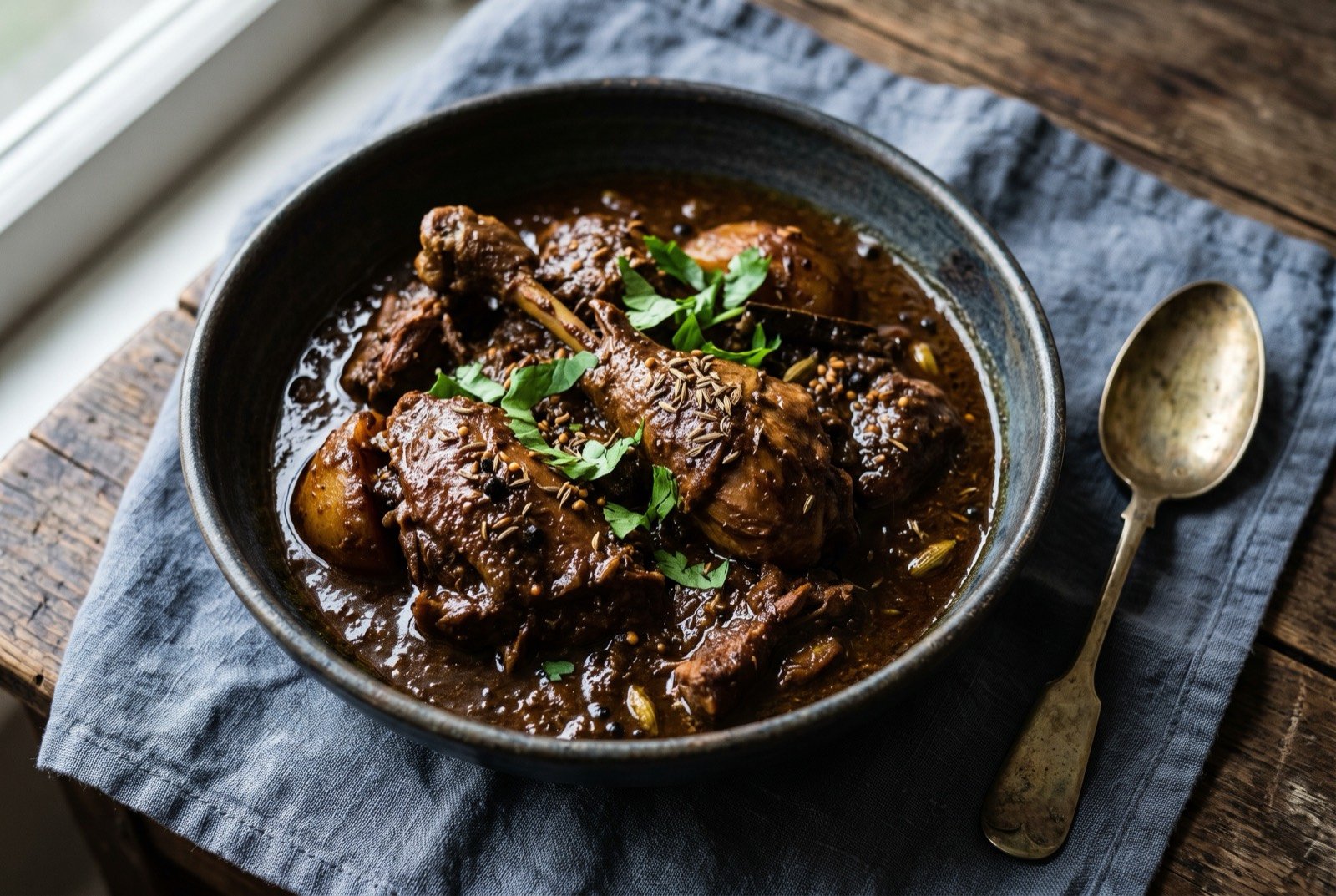
An illustration of the dish, not a photograph of it cooked.
- Time
- 2 hours
- Reviewed
- Not yet reviewed from inside the tradition
- Cooked
- Not yet cooked and reported
As tradition built it
Curry duck
Trinidad; simmered in two 35-minute stages after marinating 1 to 2 hours or overnight
Ingredients
An outline, not yet a recipe: the tradition's method with its ingredients named but not weighed. Quantities are being added from sources inside the tradition, lead dishes first.
Marinade
- 6 to 7lbs (2.7 to 3.2kg), trimmed and cut into pieces duck, traditionally Muscovy
- 1 medium, sliced tomato
- 1, sliced onion
- 1 habanero or scotch bonnet hot pepper
- 1/2 tsp geera
- 1/2 tsp amchar masala
- 3/4 tbsp salt
- 1 tbsp green seasoning
- 4 cloves, crushed garlic
- a dash black pepper
- 4 leaves shado beni
Curry
- curry powder
- 1/4 cup water, for the curry paste
- as available onion, for frying
- for frying oil
- 2 cups water, added later
Method
- Char the duck, traditionally Muscovy, over an open flame to remove the feathers and singe the skin, then scrape it clean.
- Marinate in tomato, onion, hot pepper, geera, amchar masala, salt, green seasoning, garlic, black pepper and shado beni for 1 to 2 hours or overnight.
- Make the curry powder into a paste with about a quarter cup of water and fry with onion in oil until fragrant, roughly 5 minutes, dry-toasting the curry powder, geera and amchar masala together in the pot at the start until their colour visibly darkens.
- Add the marinated duck, cover, and simmer 35 minutes.
- Add a further 2 cups of water and simmer a second 35 minutes until the duck is tender and the sauce reduced.
What a modern chef changes
Live-Fire Sear, Sous Vide in the Reduced Curry
Rung 01
Method
- Sear and singe the duck skin directly over live coals in the Big Green Egg, the tradition's own charring step done with real fire rather than a gas ring.
- Cook the duck sous vide in the finished, reduced curry sauce at a temperature that renders the skin's fat and keeps the meat properly moist through a longer, gentler cook than the stovetop simmer allows.
Notes
This chapter states plainly that no Trinidadian chef's documented practice was found for cooking curry duck this way; it is offered as a reasoned extension of the tradition's own long, slow, collagen-softening logic, not as an established technique, and should be tried and judged as such.