Amazonia · Volume 23, The Andean Amazon
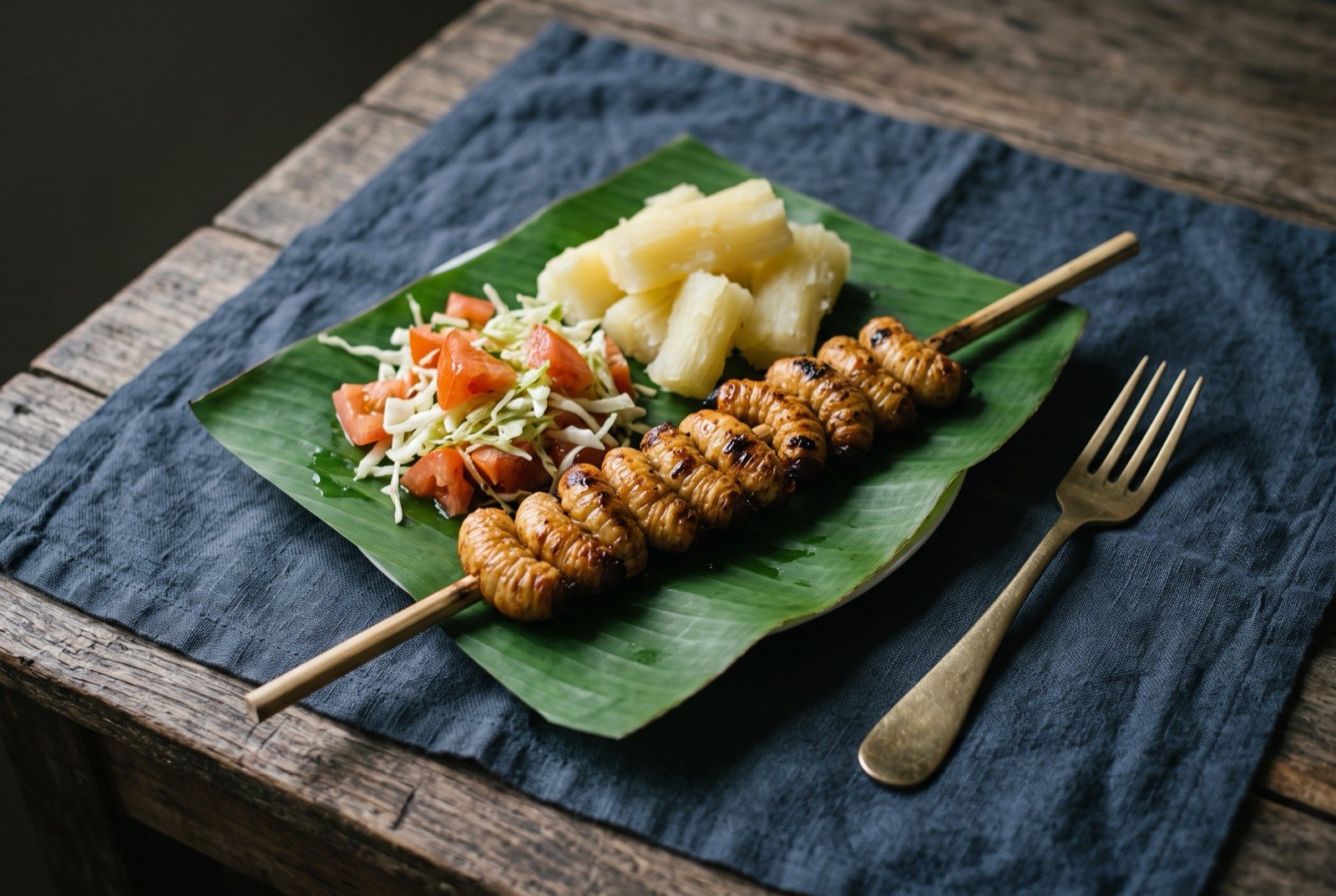
Suri and chontacuro, roasted
Loreto, Peru and Ecuador's Oriente
Illustration
- Researched
- Researched from 93 sources in the brief
As tradition built it
Suri and chontacuro, roasted
Belén market, Iquitos
Ingredients
- 3 to 4 per portion palm grubs (Rhynchophorus palmarum), suri in Loreto, chontacuro in the Ecuadorian Oriente, mukint in Shuar and Achuar usage
- to serve tomato-and-cabbage salad, to serve
- to serve yuca, to serve
- to serve palm heart, to serve
- to serve guayusa, to serve
Method
- Eat the grubs live, cooked or roasted.
- In the documented Ecuadorian preparation, thread three or four grubs per portion onto skewers.
- Wash and grill until golden and crisp over hot coals.
- Serve with tomato-and-cabbage salad, yuca, palm heart and guayusa.
Notes
A Peruvian source records roughly 3,500 units sold daily at Belén market alone, weekends busiest.
Named individuals across Ecuadorian reporting frame chontacuro as more than food: Jorge Vargas, an Amazonian shaman, on its spiritual dimension; Cleydi Grefa of Archidona and Nicole Yankuam of Cotundo on its traditional medicinal use, reportedly for cough, bronchitis and menstrual cramps among other complaints, reported beliefs stated here as such rather than as verified pharmacology.
What a modern chef changes
Self-basted over direct heat, the fat rendered for the yuca
Rung 05
Method
- Skewer and roast exactly as tradition demands, over the Big Green Egg's direct heat, letting the grub's own rendered fat self-baste and crisp the exterior with no added oil.
- Render a portion of that fat separately, strain it through a chinois, and use it to finish the accompanying yuca, a genuine use of the whole ingredient rather than a garnish added for its own sake.
Notes
This chapter could not find a single documented fine-dining use of suri or chontacuro anywhere in Peru or Ecuador, searched for specifically and twice over; this elevation is offered as a defensible, kit-appropriate treatment of a genuinely under-explored ingredient, not as a reproduction of an existing restaurant dish, since no such dish was found to exist.