North America · Volume 28, The Marine-Mammal Coast and the Caribou Interior
Nikku
Arctic Canada and Alaska, United States
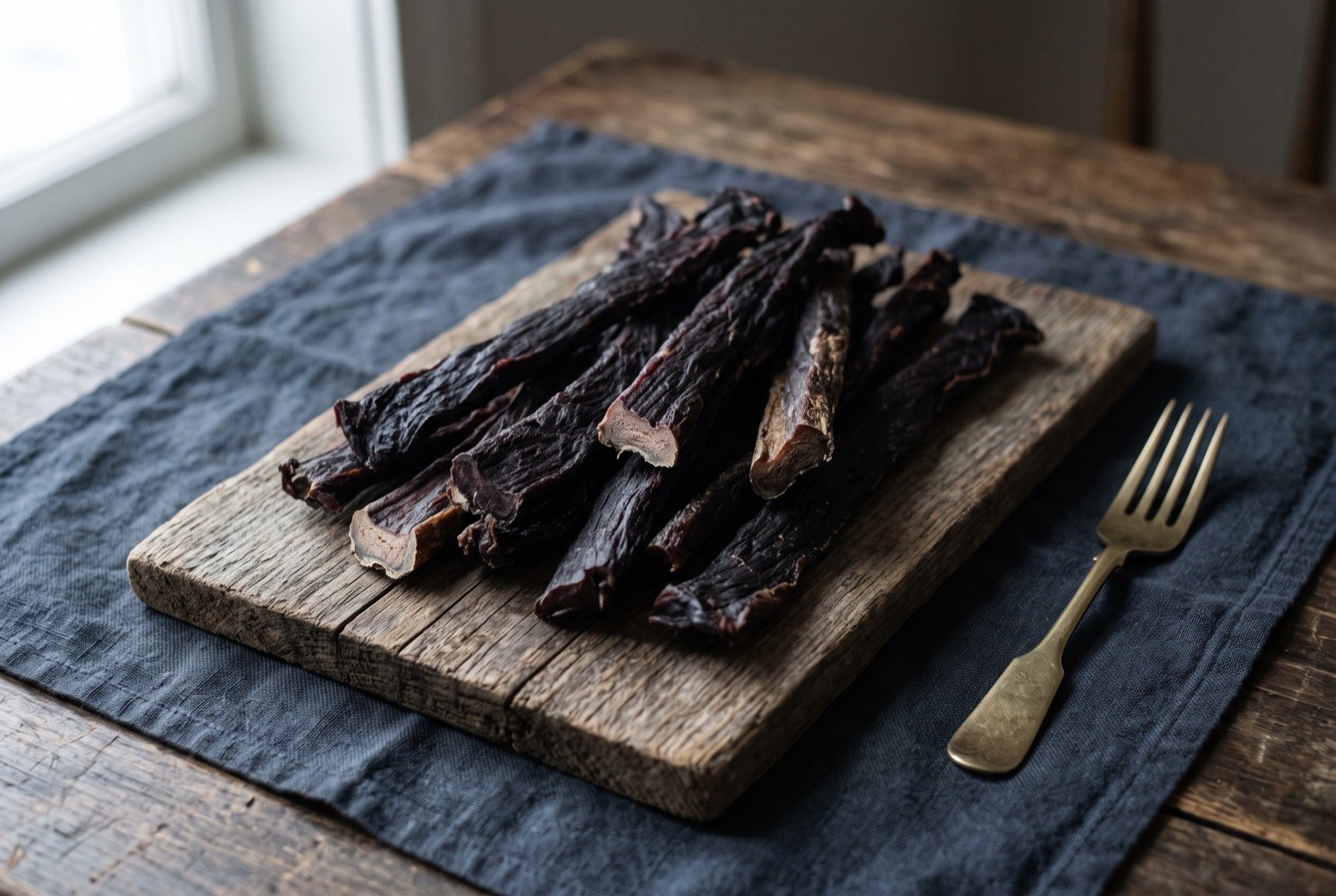
An illustration of the dish, not a photograph of it cooked.
- Time
- Not statedNo source states a time and the atlas has too few comparable dishes to estimate one.
- Reviewed
- Not yet reviewed from inside the tradition
- Cooked
- Not yet cooked and reported
As tradition built it
Nikku (mipku / mikku / paniqtaq)
North Slope Borough, Iñupiat method: about 5 to 6 days to dry, depending on the weather. Dene dry meat given separately; its drying time is not stated in the sources found.
Ingredients
An outline, not yet a recipe: the tradition's method with its ingredients named but not weighed. Quantities are being added from sources inside the tradition, lead dishes first.
Inuit dried meat (mipku / mikku / paniqtaq)
- seal, walrus or caribou meat, skinned
Dene dry meat
- meat, cut into thin but comparatively large pieces
- as available rotten or punky spruce, for smoking
Method
Inuit dried meat
- Catch seal, walrus or caribou meat, skin it, hang it, dry it, cut in strips.
- Dry for about 5 to 6 days, depending on the weather.
- It is ready to eat when the meat is dull black.
Dene dry meat
- Cut the meat into thin but comparatively large pieces.
- Dry by smoking over rotten or punky spruce.
- Once dry, pound with the back of a hatchet against a flat rock to soften it.
- Store, traditionally unseasoned, in cloth bags.
What a modern chef changes
Dehydrator-dried venison to a measured water activity
Rung 02
Method
- Wild caribou is not available in Britain: substitute venison, or the thin UK trade in Finnish-farmed reindeer, clearly labelled as such rather than presented as equivalent.
- Slice the venison against the grain into strips roughly half a centimetre thick, as the mipku method specifies.
- Dry in a dehydrator at a low, even temperature.
- Check doneness not by eye but with a cheap water-activity meter or food-safe hygrometer, targeting an aw of roughly 0.4 to 0.6, the number a peer-reviewed study actually measured in traditionally wind-dried Arctic meat.