North America · Volume 29, Salmon, Cedar and the Acorn World
Acorn Bread (yuu-pitlaš)
Rumsen and Chochenyo Ohlone territory, San Francisco Bay Area, USA
Illustration
- Researched
- Researched from 216 sources in the brief
As tradition built it
Acorn Bread (yuu-pitlaš)
Rumsen and Chochenyo Ohlone
Ingredients
The method as the tradition gives it, with the ingredients named. Quantities follow as we verify them, lead dishes first.
- acorns
- to cover water, for leaching
Method
- Follow the genuinely six-month process Louis Trevino (Rumsen Ohlone), co-founder of Café Ohlone by mak-'amham, describes: from the acorn's autumn drop through grinding, curing and leaching in water.
- Work the flour until fine enough to pass through the weave of a basket.
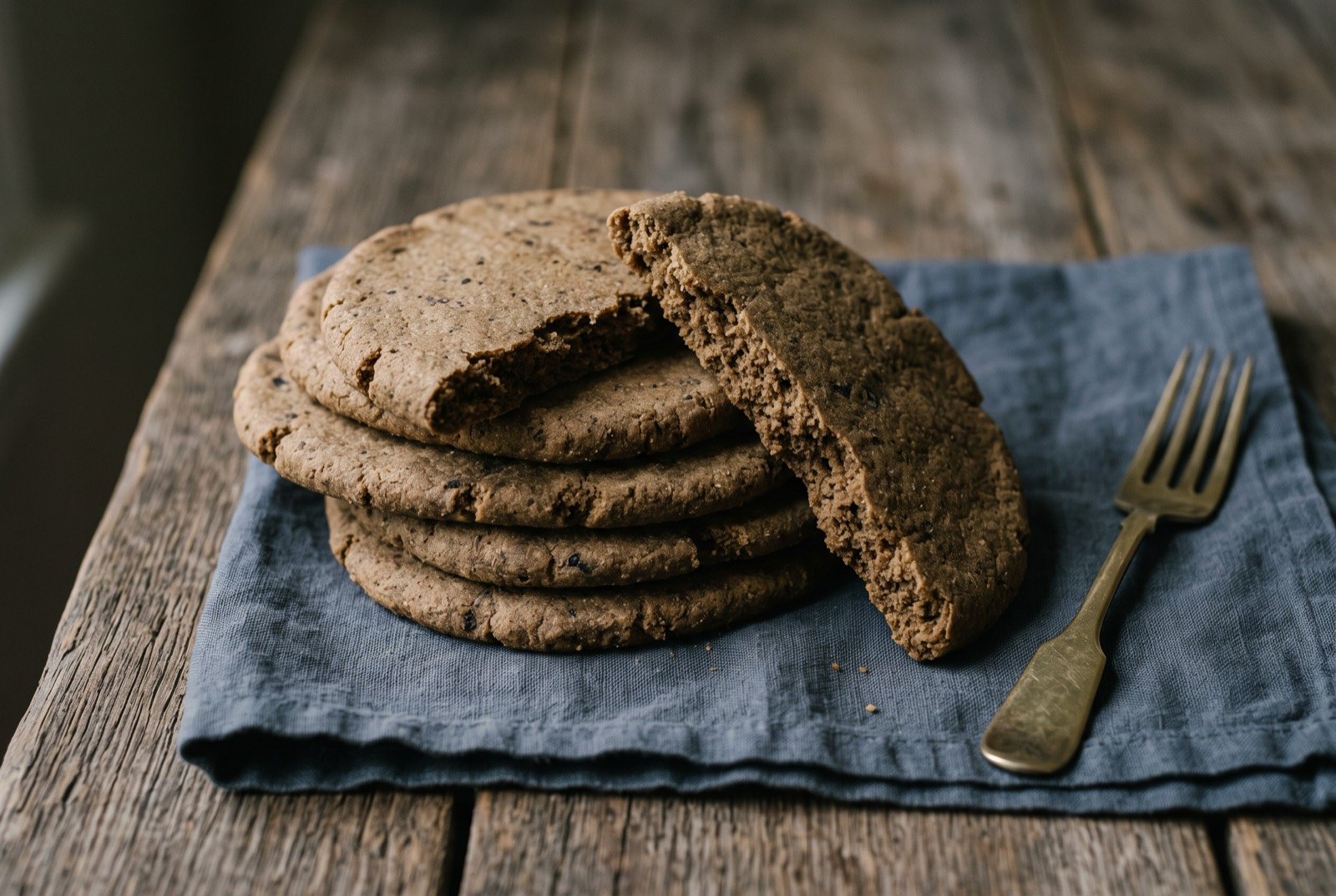
- Once the flour is fine and fully leached, bake or griddle the dough into a denser bread than the soup's mush, eaten as its own food rather than an accompaniment.
Notes
The Chochenyo Ohlone name for the finished flatbread, yuu-pitlaš, was recovered by Vincent Medina's work reconstructing the Chochenyo language from 1920s and 1930s recordings of its last fluent speakers.
What a modern chef changes
Consistency of drying, not compression of time
Method
- Do not propose shortening Trevino's six-month cycle with a dehydrator or any other equipment: the slowness is not a limitation the tradition is waiting to be freed from, it is the actual mechanism by which the flour reaches its finished fineness and flavour.
- Where a British kitchen can genuinely help is consistency of drying conditions during the parts of the cycle that call for it: hold a dehydrator at a low, steady temperature rather than leaving the flour in an unheated shed at the mercy of British autumn weather.
- Offer this as a practical concession to climate, not an attempt to compress six months into six days.