North America · Volume 29, Salmon, Cedar and the Acorn World
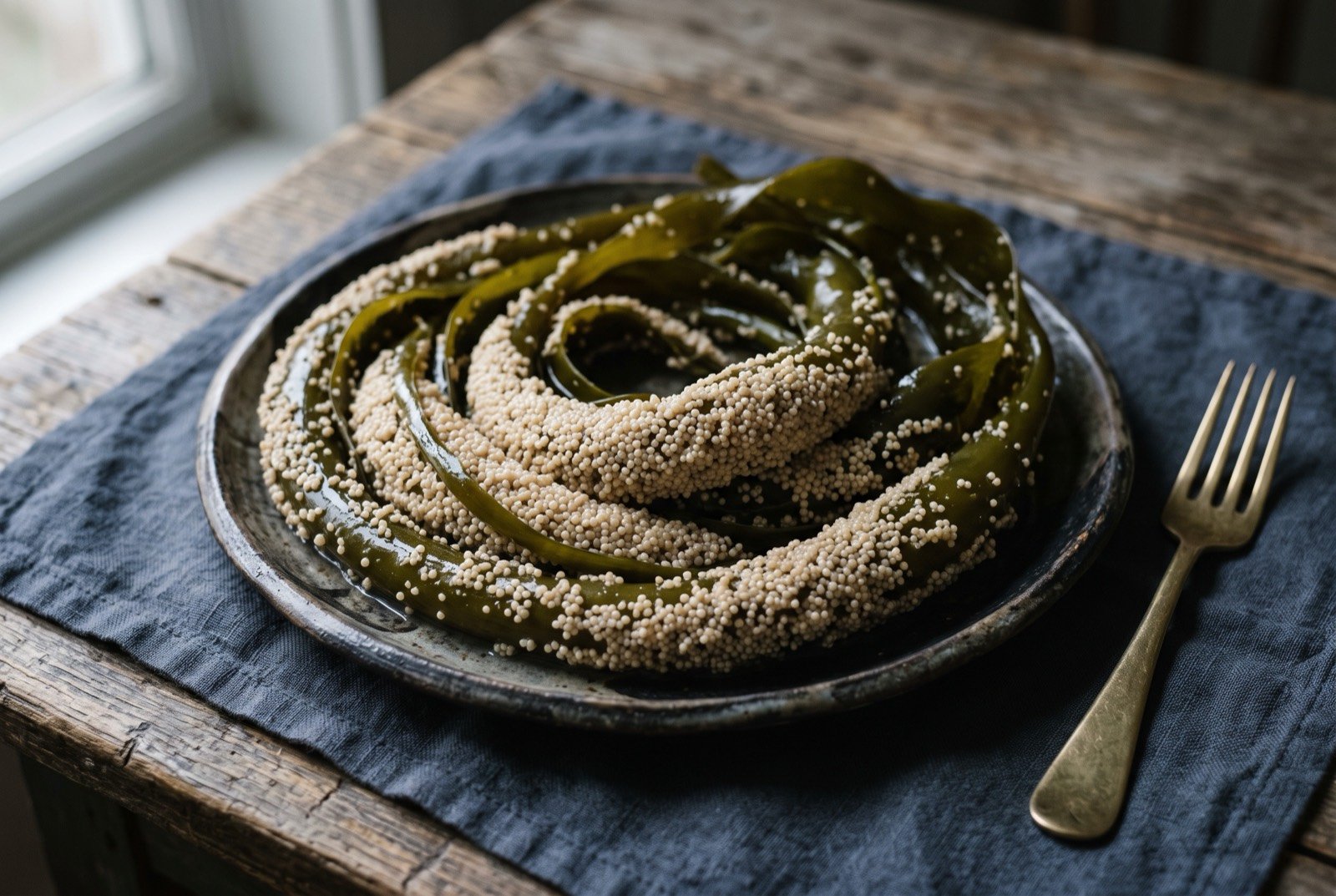
Herring Roe on Kelp (k'aaw)
Northwest Coast, Haida, Heiltsuk and Tlingit territories, Canada and USA
Illustration
- Researched
- Researched from 216 sources in the brief
As tradition built it
Herring Roe on Kelp (k'aaw)
Ingredients
- as available kelp fronds or hemlock boughs, weighted with rocks
- as available herring spawn, at a known spawning site
Method
- Set kelp fronds or hemlock boughs, weighted with rocks, into the water at known spawning sites in late March to early April, and leave for the herring to lay their eggs directly onto them.
- In Haida practice, wait a further three days after spawning before collecting.
- Retrieve the laden branches and rinse them in seawater to clear off milt.
- Serve the roe-coated kelp on its own, or briefly fried.
- Follow the documented harvest priority order: family and personal consumption first, then community sharing and inter-tribal trade, only then commercial sale.
Notes
This chapter names the technique and its priority order rather than a single fixed recipe, since the food itself is largely the roe and kelp as harvested, minimally handled.
Terminology is not pan-regional: Haida k'aaw is a different word from the Sitka Tlingit term for herring eggs, gáax'w, and this chapter does not treat them as interchangeable.
What a modern chef changes
A brief char, echoing how k'aaw is sometimes fried
Method
- Haida ponding, submerging kelp or hemlock in controlled pens to collect spawn rather than only harvesting from open water, is itself documented applied Indigenous fisheries science, and already stands as one of the most sustainable commercial fisheries in existence because only the eggs are taken and the adult population survives intact.
- A British cook has no equivalent pen to set, so the honest, modest addition here is technical rather than culinary: give the kelp's outer edge a very brief pass, seconds only, under a kitchen torch or a hot grill before serving, echoing the way k'aaw is sometimes briefly fried.
- Leave the roe itself unaltered; it needs no improving.