North America · Volume 29, Salmon, Cedar and the Acorn World · Cooked by cue
Camas Bulb Pit-Roast
Salish Sea, Coast Salish territory, Canada and USA
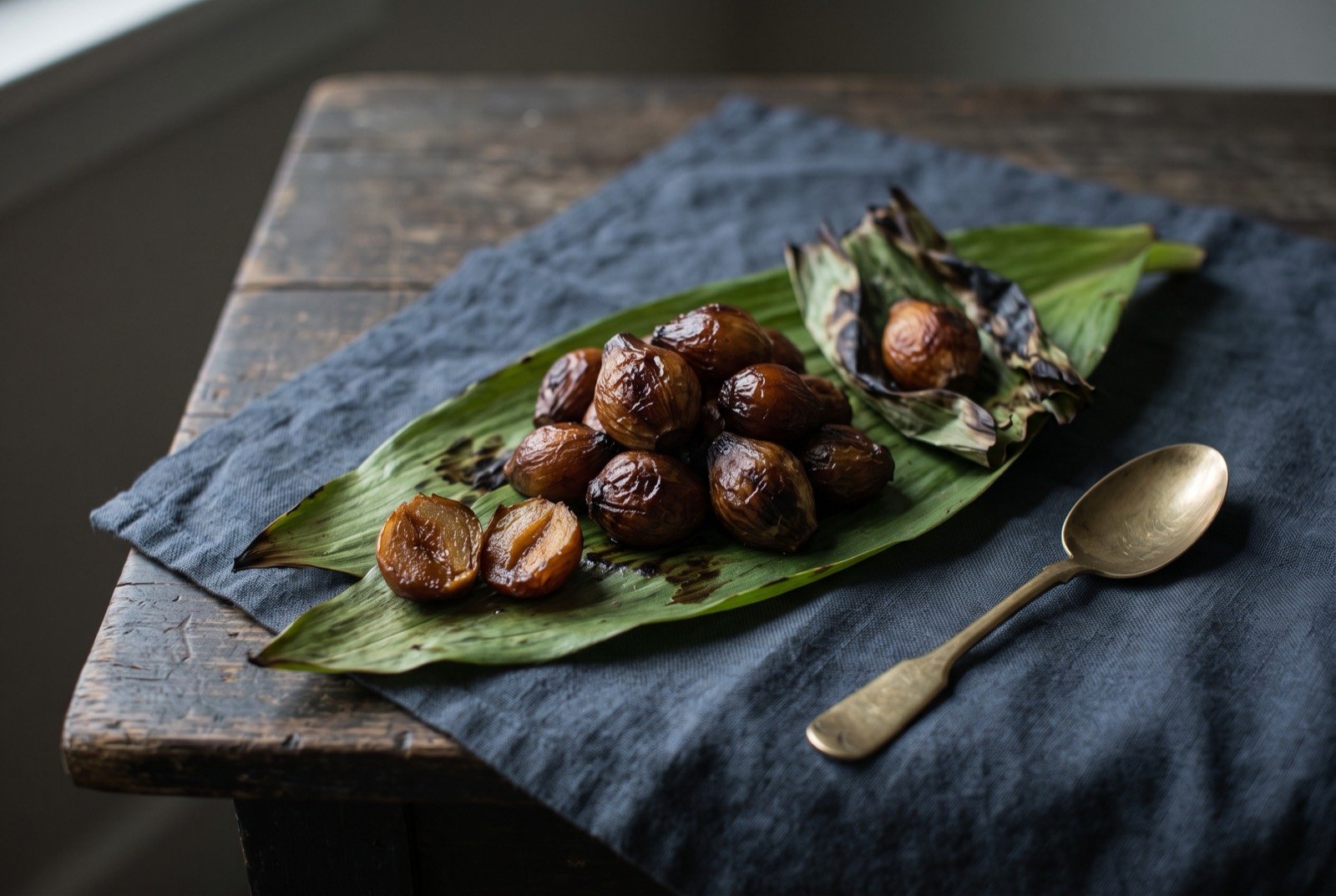
An illustration of the dish, not a photograph of it cooked.
- Reviewed
- Not yet reviewed from inside the tradition
- Cooked
- Not yet cooked and reported
As tradition built it
Camas Bulb Pit-Roast
Multi-tribe revival gathering, Whidbey Island, 2024 . 24 to 48 hours
Ingredients
No written recipe exists for the camas pit roast: it runs for days in the ground by cue, and the chapter gives the method as the nations who cook it tell it.
- camas bulbs (Camassia quamash), gathered in May or June
- as available skunk cabbage leaves
- as available wood and rock, for lining the pit
Method
- Gather camas bulbs in May or June with a curved digger stick, working carefully beside rather than directly on top of a plant so smaller bulbs are left to mature.
- Dig an underground pit and line it with stacked wood and rock.
- Wrap cleaned bulbs in skunk cabbage leaves, bundle them, and lay them on foraged leaf-and-branch stretchers to keep them off direct flame and dirt.
- Slow-roast in the ground for 24 to 48 hours; a documented 2024 multi-tribe revival gathering on Whidbey Island ran the roast for 36 hours straight.
- Do not shorten the time with higher heat: the long, slow heat is what converts the bulb's indigestible inulin into sweet fructose, and that is the entire point of the pit.
Notes
Camas fields were long weeded, cleared and periodically replenished by Coast Salish communities rather than simply foraged.
What a modern chef changes
A sous vide equivalent, offered as an untested extrapolation
Rung 4: Camas and inulin conversion
Method
- This chapter states its own uncertainty plainly rather than dressing up a guess as settled practice: hold a sous vide bath at a controlled low temperature for an equivalent multi-hour duration, which could in principle replicate the pit's steady, moisture-retaining heat with more precision than an amateur earth oven manages.
- Treat this as a reasonable extrapolation from the pit's own documented mechanism, not as something recorded as practised by any Coast Salish cook, and judge it on its own terms rather than as an improvement on a technique that already works.
Notes
Safety note: camas closely resembles the toxic death camas before flowering. This dish should never be attempted from foraged or misidentified bulbs; buy identified Camassia quamash bulbs instead.