North America · Volume 29, Salmon, Cedar and the Acorn World
Pinole
San Francisco Bay Area, Ohlone, and Chumash and Pomo territory, California, USA
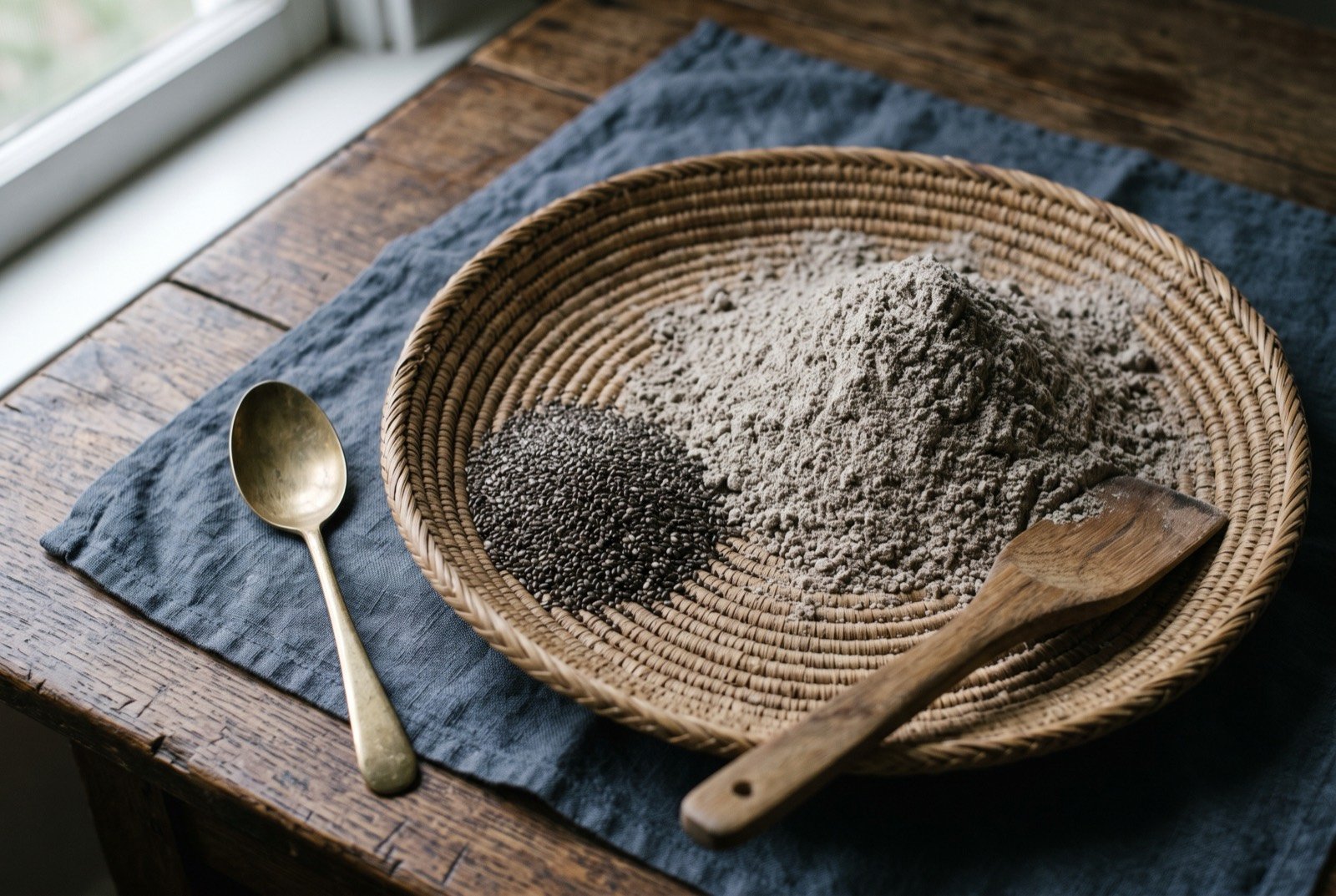
Illustration
- Researched
- Researched from 216 sources in the brief
As tradition built it
Pinole
Ingredients
The method as the tradition gives it, with the ingredients named. Quantities follow as we verify them, lead dishes first.
- chia seed (Salvia columbariae) and other ripe seed heads
- to taste water, to thin as a gruel or drink
Method
- Beat ripe chia and other seed heads into a burden basket with a paddle-shaped seed beater.
- Parch by tossing hot coals together with the seed in a flat tray, the wind aiding separation of husk from kernel as the mixture is tossed.
- Grind to a flour.
- Eat dry, as a gruel thinned with water, or press into portable travel cakes.
- The Chumash made a comparable chia pinole, thinned as a thirst-quenching drink or thickened into dried cakes depending on how much water was used; the Pomo made pinole too.
What a modern chef changes
The spice grinder's toasting mode, doing what the coals did
Method
- Recognise that the hot-coals-and-tray parching method is, mechanically, exactly what a spice grinder's dry-toast function or a heavy dry pan achieves today.
- Toast the seed in small batches in a dedicated spice grinder's toasting mode, or a dry pan over careful heat, for more even parching than tossing coals by hand.
- Change nothing about the method's basic logic of dry heat plus constant motion.