France and the Alps · Volume 15, Sauce, the Brigade and the Bistro Underneath
Pâté en croûte
Paris
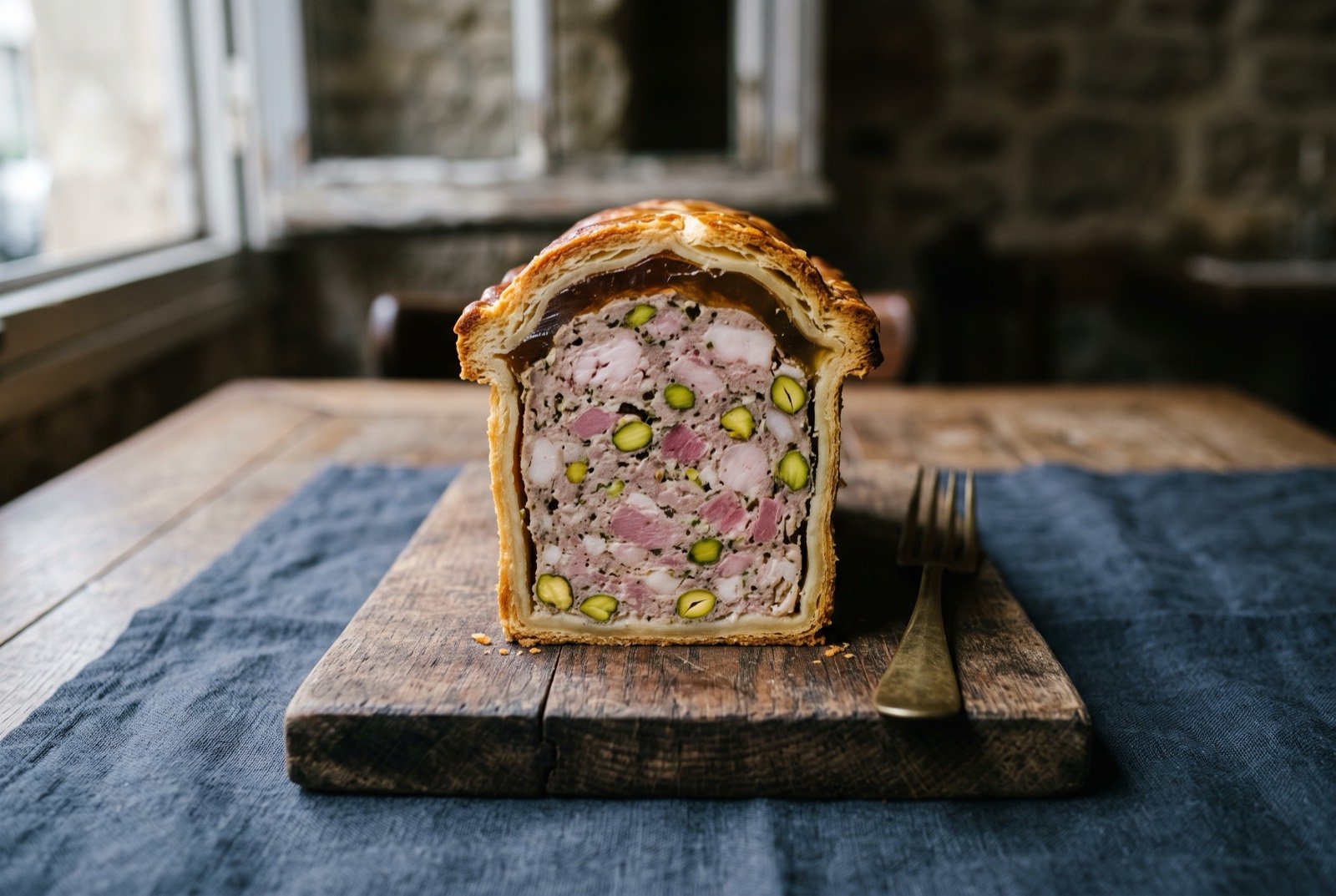
Illustration
- Researched
- 14 sources cited
As tradition built it
Serves 8 as a starter. About 1 day, mostly resting and baking.
Ingredients
- 600 g mixed pork and pork liver, coarsely minced
- 200 g pistachios or similar, whole
- to taste brandy, salt, pepper, quatre épices
- to cover shortcrust or hot-water pastry, enough to line and top a terrine mould
- to cover a well-set gelée (stock and gelatine), for filling once cooled
Method
- Mix the pork and pork liver, pistachios, brandy and seasoning, and chill thoroughly.
- Line a terrine mould with pastry, fill with the meat mixture, and top with a pastry lid, sealed well and vented.
- Bake in two stages: first hot, around 200°C, to set the pastry, then dropped to 170 to 180°C to cook the centre through fully without burning the crust. Use a probe thermometer if you have one; the centre should reach a safe internal temperature without drying out.
- Once fully cooled, pour warmed liquid gelée through the vents to fill any gaps left by shrinkage as the pâté cooled. Chill overnight before slicing, so the gelée is invisible until the first cut.
What a modern chef changes
The filling brought to temperature separately from the crust, and a gelée built with more control
Rungs 1 and 3
Method
- Cook the meat filling to a precise internal temperature sous vide before it ever goes near the pastry, then chill and set it inside the crust rather than relying on the pastry's own baking time to also cook the filling through. This removes the single biggest risk in the traditional method, a crust cooked correctly around a filling that is under or overdone.
- Build the gelée as a properly clarified consommé, egg-white raft and all, rather than a simple gelatine-set stock, for a filling gelée with genuine clarity rather than the traditionally slightly cloudy version.
- Bake the pastry shell separately, blind, then assemble, for an evenly golden crust with none of the soft patch a filled pastry sometimes develops where the filling sits directly against it for the full bake.