North America · Volume 31, Salt Pork, Scrapple and the Cold Atlantic Table
The Clambake (Appanaug)
Wampanoag and the southern New England coast
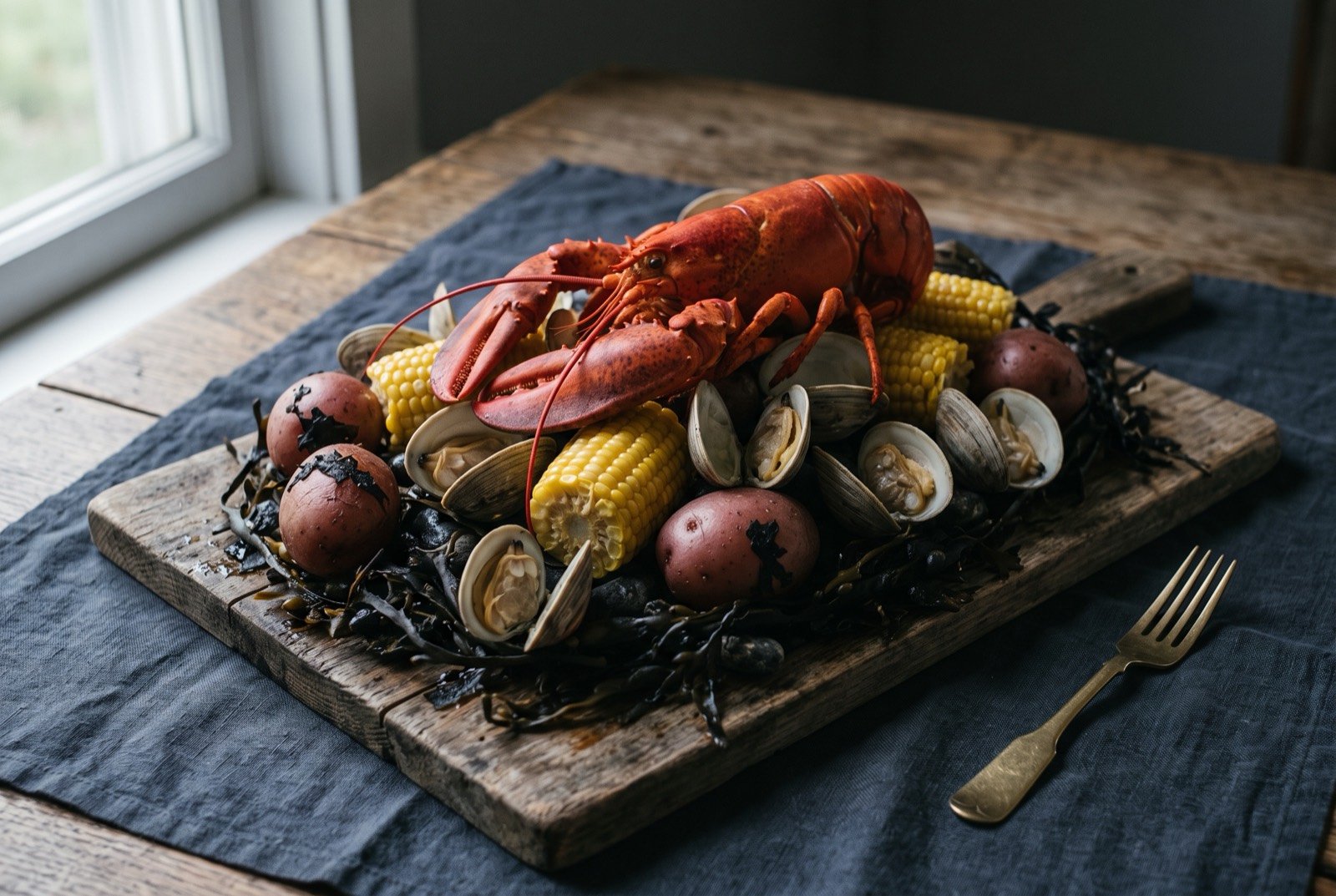
An illustration of the dish, not a photograph of it cooked.
- Time
- Not statedNo source states a time and the atlas has too few comparable dishes to estimate one.
- Reviewed
- Not yet reviewed from inside the tradition
- Cooked
- Not yet cooked and reported
As tradition built it
The Clambake (Appanaug)
Fire two to three hours; steam one to two hours
Ingredients
- as available hardwood, for the fire
- as available stones
- 1 bag, or a generous armful, enough to layer thickly twice over rockweed
- 2 to 3 medium, per person potatoes
- 1 ear, per person corn
- 3/4 to 1 lb, per person clams
- 1 lb, per person lobster
Method
- Dig a pit and line it with stones.
- Burn a hardwood fire for two to three hours until the rocks run white-hot.
- Rake away the ashes and layer rockweed on thickly.
- Add the hard vegetables first, potatoes, then corn, then the seafood, clams and lobster, placed shell-down, on top.
- Cover the whole pit again in rockweed and canvas and leave it to steam for one to two hours.
Notes
As Joan Tavares Avant's own Wampanoag account makes clear, this is appanaug before it is anything else, a pre-contact steaming technology, not a New England invention with an Indigenous garnish.
What a modern chef changes
The same stone-and-rockweed principle, sealed in a Big Green Egg
Cross-refs Rung 02, appanaug's steam-and-mineralise layering
Method
- Heat a bed of natural lump charcoal and volcanic rock in a Big Green Egg to the same white-hot state a traditional fire pit reaches.
- Lay a genuine layer of fresh or brined rockweed directly on it and seal the lid rather than covering with canvas, turning the open-air pit into a controlled, repeatable steam chamber that holds the same marine salinity the original technique relies on.
- Cook the lobster sous vide beforehand to a precise, still-translucent doneness, then finish it briefly under the rockweed steam only for aroma, so the meat itself never overcooks even as the whole event keeps its genuine communal, steam-under-seaweed theatre.