North America · Volume 31, Salt Pork, Scrapple and the Cold Atlantic Table
Jiggs Dinner
Newfoundland, Atlantic Canada
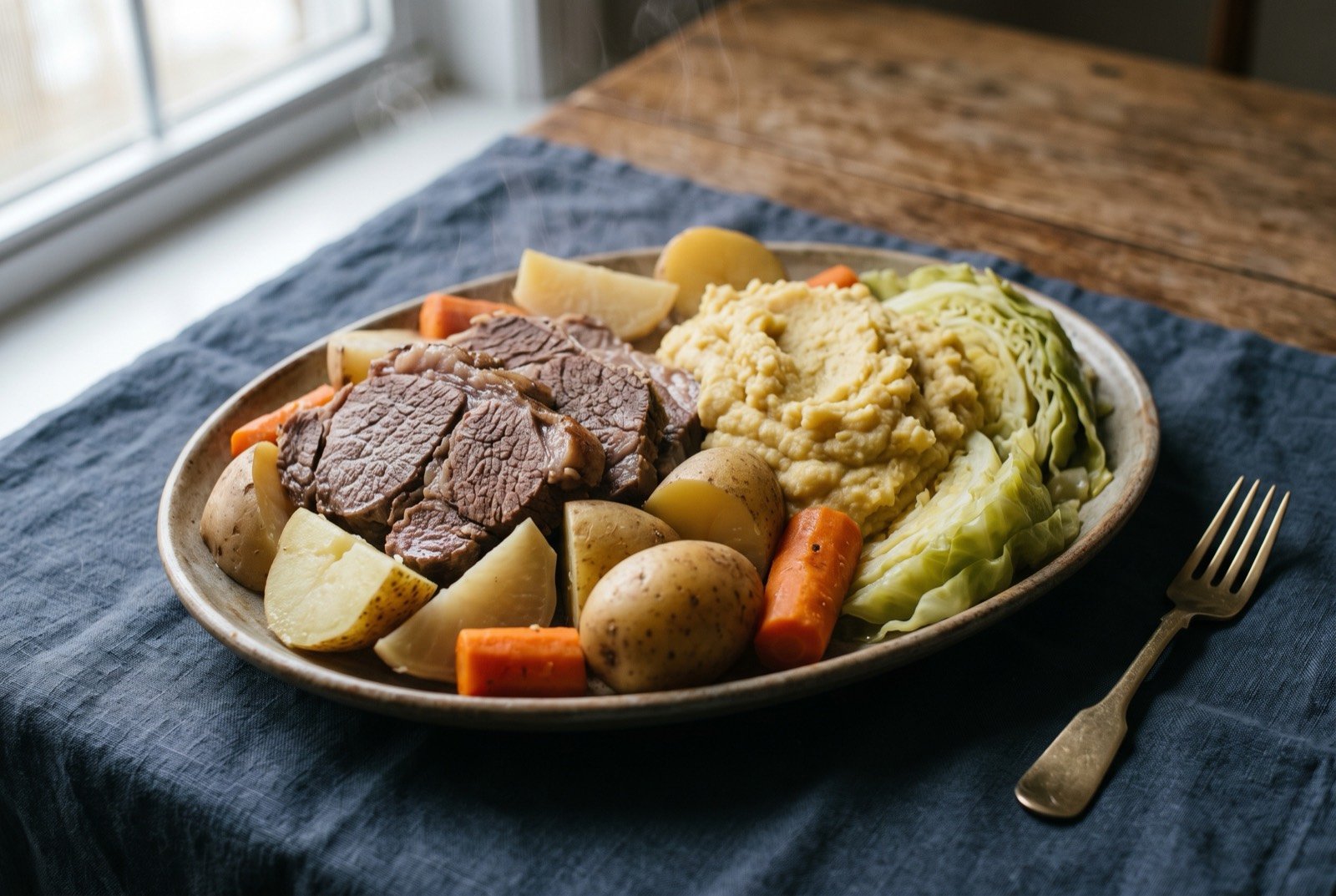
An illustration of the dish, not a photograph of it cooked.
- Time
- Not statedNo source states a time and the atlas has too few comparable dishes to estimate one.
- Reviewed
- Not yet reviewed from inside the tradition
- Cooked
- Not yet cooked and reported
As tradition built it
Jiggs Dinner
Simmer several hours
Ingredients
- 4½ lb (2kg), cubed salt beef
- 2¼ lb (1kg) potatoes, whole
- 1 lb (500g) carrot
- almost 1 lb (400g) turnip
- 1 lb (500g) cabbage
- 4 oz (125g), soaked overnight, tied in cheesecloth dried yellow split peas, often tied in a cheesecloth bag, for pease pudding
- a good knob, about 25g, to mash through the pease pudding butter
Method
- Soak the salt beef overnight to draw out excess salt.
- Simmer it for several hours with whole potatoes, carrot, turnip and cabbage added in stages, the cabbage last, so nothing overcooks.
- Boil the pease pudding, dried yellow split peas, often tied in a cheesecloth bag, alongside the meat and vegetables in the same pot, absorbing the cooking liquor.
- Mash the pease pudding with butter to serve.
Notes
The dish is named, on the strongest evidence, for the comic-strip character Jiggs, whose favourite meal was corned beef and cabbage, entering Newfoundland vernacular by the 1920s for this Irish-inflected local variant.
What a modern chef changes
Each element cooked to its own doneness, reunited at plating
Cross-refs Rung 06, salt cod and salt beef rehydration
Method
- Cook the salt beef sous vide at a low, steady temperature for many hours rather than simmering it directly, for an evenly tender result with none of the toughening a rolling boil risks on a cut this lean.
- Cook the root vegetables separately, each to its own precise doneness in the same stock, rather than staggering them in one pot by guesswork, then reunite everything only at the point of plating.
- Pass the pease pudding through a chinois after mashing for a genuinely silken finish, the one step this dish's traditional method, built for feeding a family quickly rather than for texture, was never trying to achieve.