The Gulf and Arabia · Volume 08, The Sultanate the Desert Never Fully Closed
Rukhal bread
Muscat and the Batinah coast, eaten nationwide
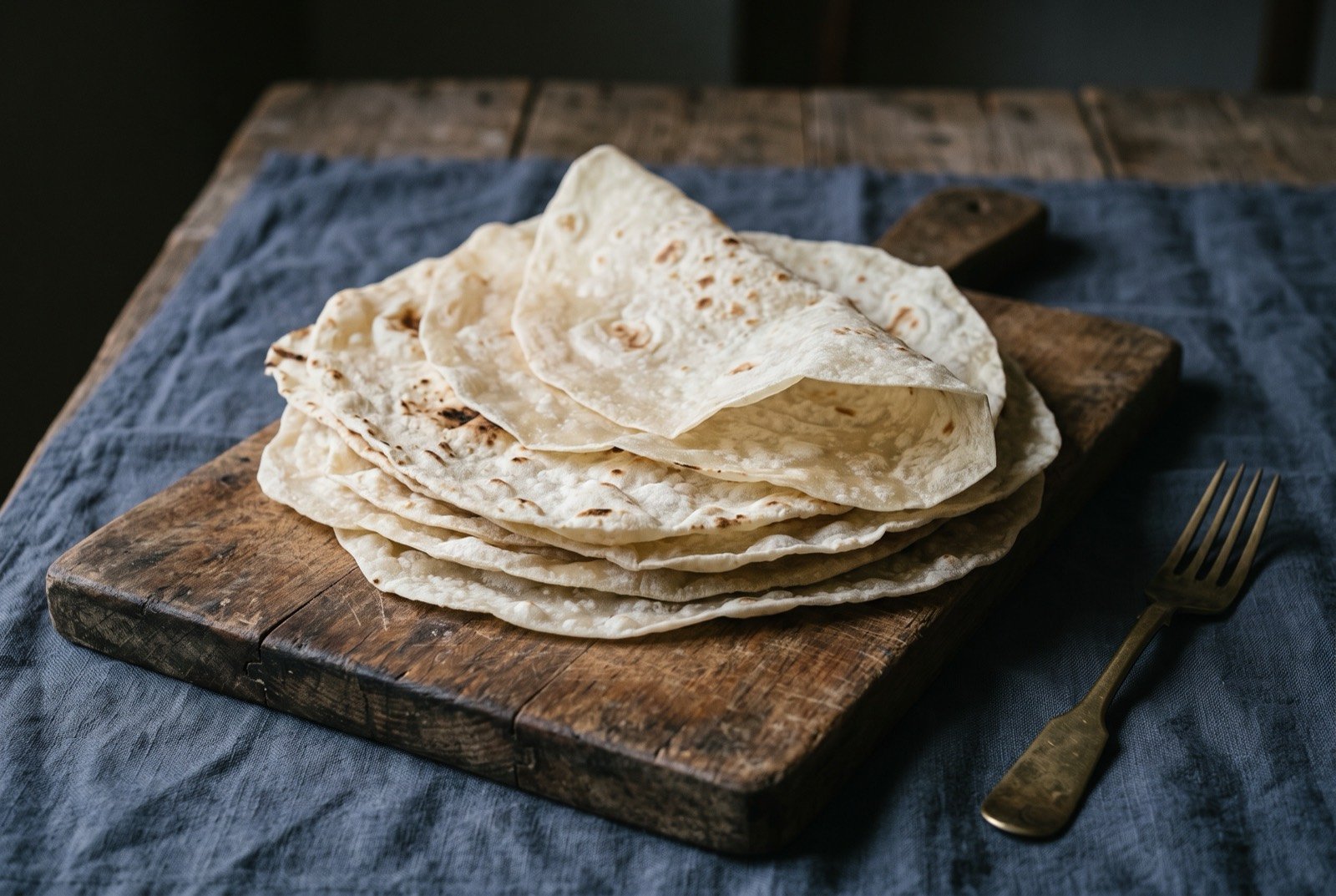
An illustration of the dish, not a photograph of it cooked.
- Time
- 1 hour 15
- Researched
- No outside sources linked
- Reviewed
- Not yet reviewed from inside the tradition
- Cooked
- Not yet cooked and reported
Oman's everyday flatbread, dough stretched paper-thin and slapped onto a domed metal saj hot enough to blister and colour it in seconds, eaten with everything from breakfast ghee and date syrup to a shared plate of shuwa.
As tradition built it
Makes 8. About 45 minutes, plus 30 minutes' resting.
Ingredients
- 300g strong white flour
- 1 teaspoon fine salt
- 200ml warm water
Method
- Mix the flour, salt and warm water to a soft, slack dough, knead 8 minutes until smooth and elastic, rest covered for 30 minutes.
- Divide into 8 pieces, stretch or roll each paper-thin, almost translucent.
- Cook one at a time on a very hot dry saj or, in a home kitchen, an unglazed pizza steel preheated as hot as the oven or grill will go, 30 to 40 seconds a side, until it blisters and browns in spots.
- Stack under a clean cloth to stay soft.
Notes
Eaten with everything, alongside shuwa, dipped in ghee and date syrup for breakfast.
What a modern chef changes
Live-fire char on a Big Green Egg, built as a base rather than a side
Rung 3
Ingredients
Method
- Roll the dough over a lightly semolina-dusted surface for extra crispness.
- Cook directly on a Big Green Egg's ceramic surface with the dome closed, 250°C plus, for a genuine live-fire char the saj itself was always chasing.
- Serve as a base for a composed shuwa or mishkak plate rather than a side, torn and layered under sliced meat so it soaks the resting juices.