The Levant and Anatolia · Volume 04, The Jameed, the Taboon and the Zarb Pit
Knafeh Nablusiyeh
Nablus
Illustration
- Researched
- Researched from 121 sources in the brief
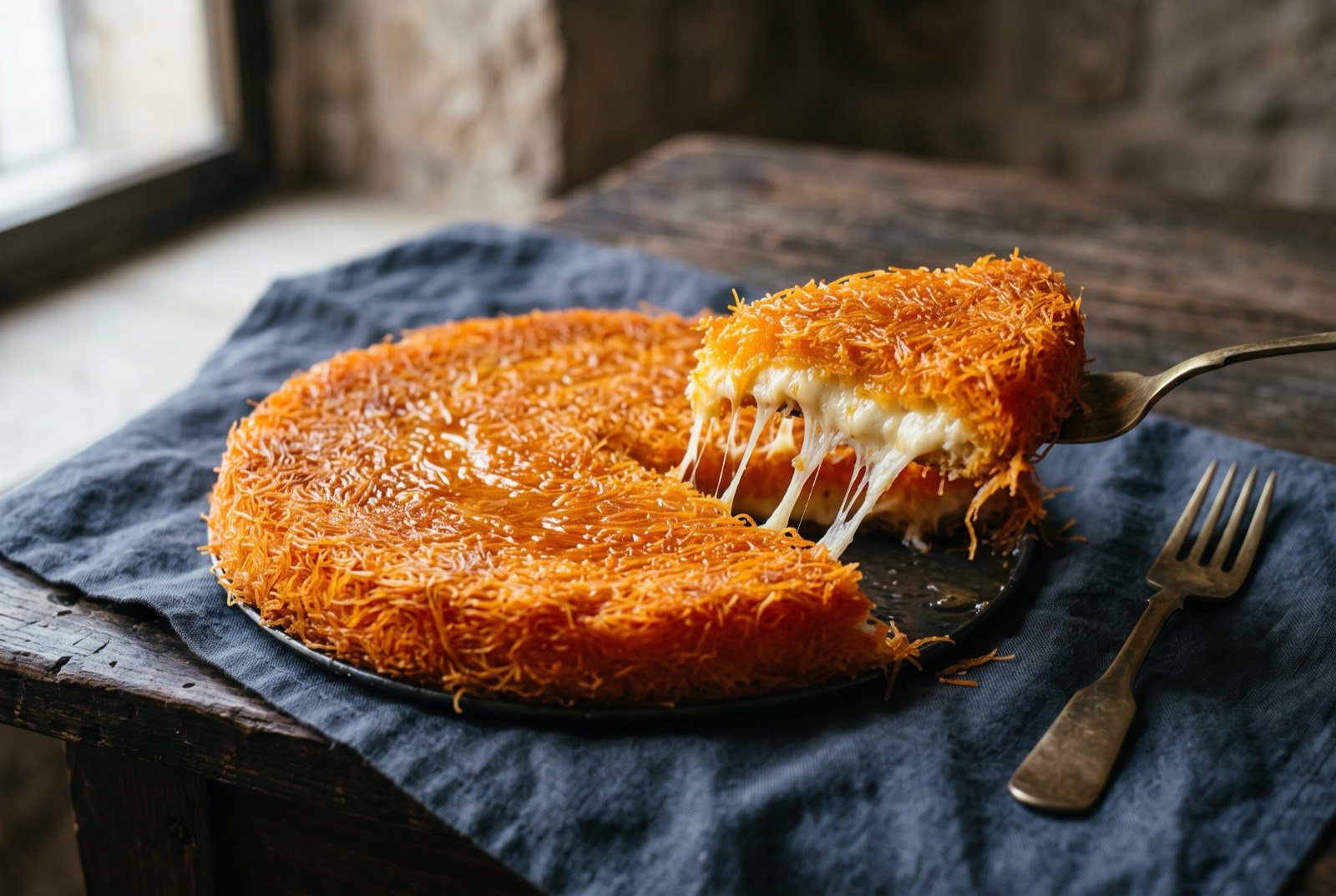
Nablus's own sweet, cheese-based pastry, Nabulsi cheese desalted and layered under a crisp, syrup-soaked dough, still made in the city's own knafeh souk by a method its makers describe as unchanged for over a hundred years.
As tradition built it
Cheese soaked several hours; baked until deeply golden.
Ingredients
- 250g (Akawi cheese, the source's practical substitute) Nabulsi cheese, soaked in water several hours
- 500g shredded kataifi-style dough, coloured orange with a little food colouring or turmeric (knafeh khishneh), or a semolina-based dough called farkeh (knafeh na'ameh)
- 250g samneh, melted
- 2 cups sugar to 1 cup water, plus a little lemon juice and orange blossom water qatir (sugar-and-water syrup), made and cooled well in advance
Method
- Soak the Nabulsi cheese in water for several hours to leach out enough salt to work as the base of a sweet dish, then layer it into a wide pan.
- Choose one of two named regional styles: knafeh khishneh, using shredded kataifi-style dough coloured orange with a little food colouring or turmeric, or the smoother knafeh na'ameh, using a semolina-based dough called farkeh instead.
- Press the dough over the cheese with melted samneh worked through it, and bake until the underside is deeply golden.
- Turn the knafeh out so the crisp base becomes the top, and pour the qatir, made and cooled well in advance, over the pastry the moment it comes out of the oven, while it is still hot.
Notes
Nablus's own knafeh souk describes its production method as unchanged for over a hundred years. This chapter's sourcing here leans more heavily on general reference material than the strong, named voices found elsewhere in this chapter, a real gap: no Nablus-based knafeh maker or Palestinian pastry writer was found quoted directly on the technique's specifics.
What a modern chef changes
A cleaner samneh, an evenly toasted dough, and the cold syrup discipline held exact
Rung 5
Method
- Warm the samneh gently and pass it through the chinois before it meets the dough, for a cleaner-tasting fat with none of the sediment a whole block can carry.
- Toast the dough in stages on the Big Green Egg's indirect side, rather than in a single domestic oven bake, for more even colour across the whole pan than one uniform heat source gives.
- Make the qatir a shade more slowly than tradition allows, holding it at a gentle simmer rather than a rolling boil, then chill it properly cold before pouring, so the thermal shock against the hot pastry that seals the crust's structure is as sharp and complete as the technique ladder above depends on. Rung 5.