The Levant and Anatolia · Volume 04, The Jameed, the Taboon and the Zarb Pit
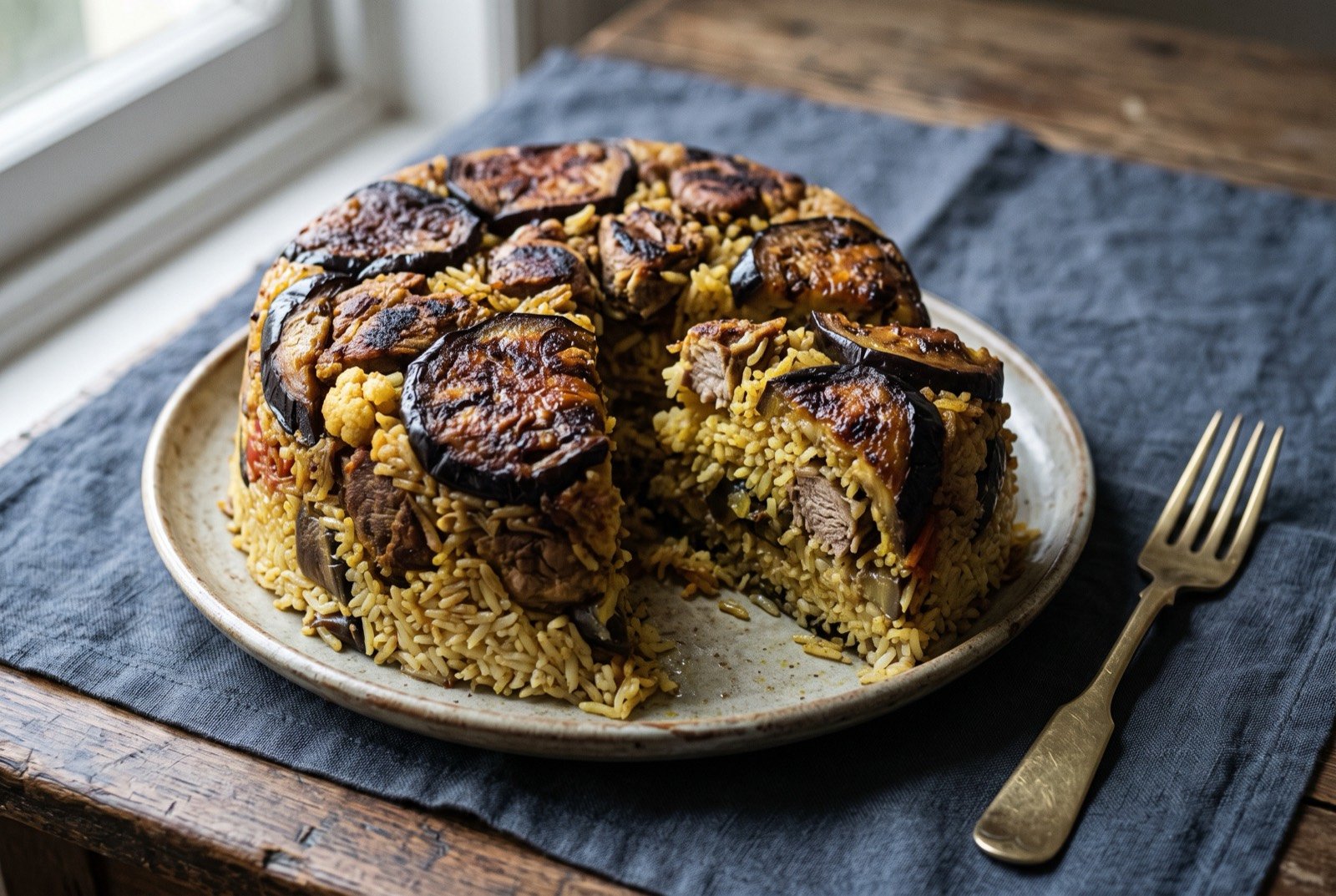
Maqluba
Palestine, Jordan, Syria, Lebanon and Iraq
Illustration
- Time
- Hands on 30 minutes · Waiting 10 minutes
- Researched
- Researched from 121 sources in the brief
Rice, meat and vegetables cooked together in one pot and inverted onto a platter at the table, eaten under recognisably the same name and technique across Palestine, Jordan, Syria, Lebanon and Iraq.
As tradition built it
Rice soaked at least 30 minutes; about 50 minutes to cook, plus a 10 minute rest.
Ingredients
- 2, sliced (cauliflower quantity not given by this source) aubergine, sliced, or cauliflower, cut into pieces
- 2 cups rice, rinsed and soaked at least 30 minutes
- 1 whole chicken, quartered (lamb quantity not given by this source) meat, lamb or chicken, browned
- 1.5 to 1.75 cups liquid per cup of rice
Method
- Fry the aubergine two to three minutes per side, or fry the cauliflower three to four minutes, or roast it around twenty minutes, and layer it as the base of a deep pot, since whatever sits at the bottom during cooking becomes the visible top once the dish is inverted.
- Rinse and soak the rice at least thirty minutes to control its own surface starch, then layer it over the browned meat, lamb or chicken, and the fried vegetables, adding liquid to just cover the rice, roughly one and a half to one and three quarter cups per cup of rice, since the meat and vegetables release further moisture of their own as they cook.
- Simmer the pot on the stovetop roughly ten minutes at medium-high heat, then reduce the heat and cover for a further thirty minutes without opening the pot.
- Rest ten minutes, then place a serving platter over the pot and invert the whole thing in one confident motion.
Notes
This chapter could not source a single, fully quantified, named Palestinian-authored recipe with exact weights: the figures above are a genuine consensus across multiple recipe sources rather than one settled text, and a chapter reader who wants the exact version behind this account should look to Reem Kassis's The Palestinian Table or Falastin directly.
What a modern chef changes
The meat browned as a separate step, and the rice's own controlled liquid ratio held exact
Rung 4
Method
- Cook the meat sous vide first at a precise temperature that renders it fully tender before it ever meets the pot, then sear it hard in a pan purely for colour, so the browning tradition already builds into the base layer becomes a deliberate, separate step rather than something achieved only by the time the rice has finished steaming above it.
- Fry the aubergine or roast the cauliflower to a genuinely deep colour under the Big Green Egg's direct heat rather than in a pan, for a smokier note the stovetop version cannot reach.
- Reduce a portion of the cooking liquid separately in a wide pan before it goes back into the pot, concentrating the same flavour tradition already extracts over its thirty-minute simmer into a fraction of that time, without changing the rice's own controlled liquid ratio, the one variable this dish cannot afford to alter. Rung 4.