The Sinosphere · Volume 27, The Iron Pot, the Frozen Pear and the Railway’s Own Sausage
Dalieba
Harbin
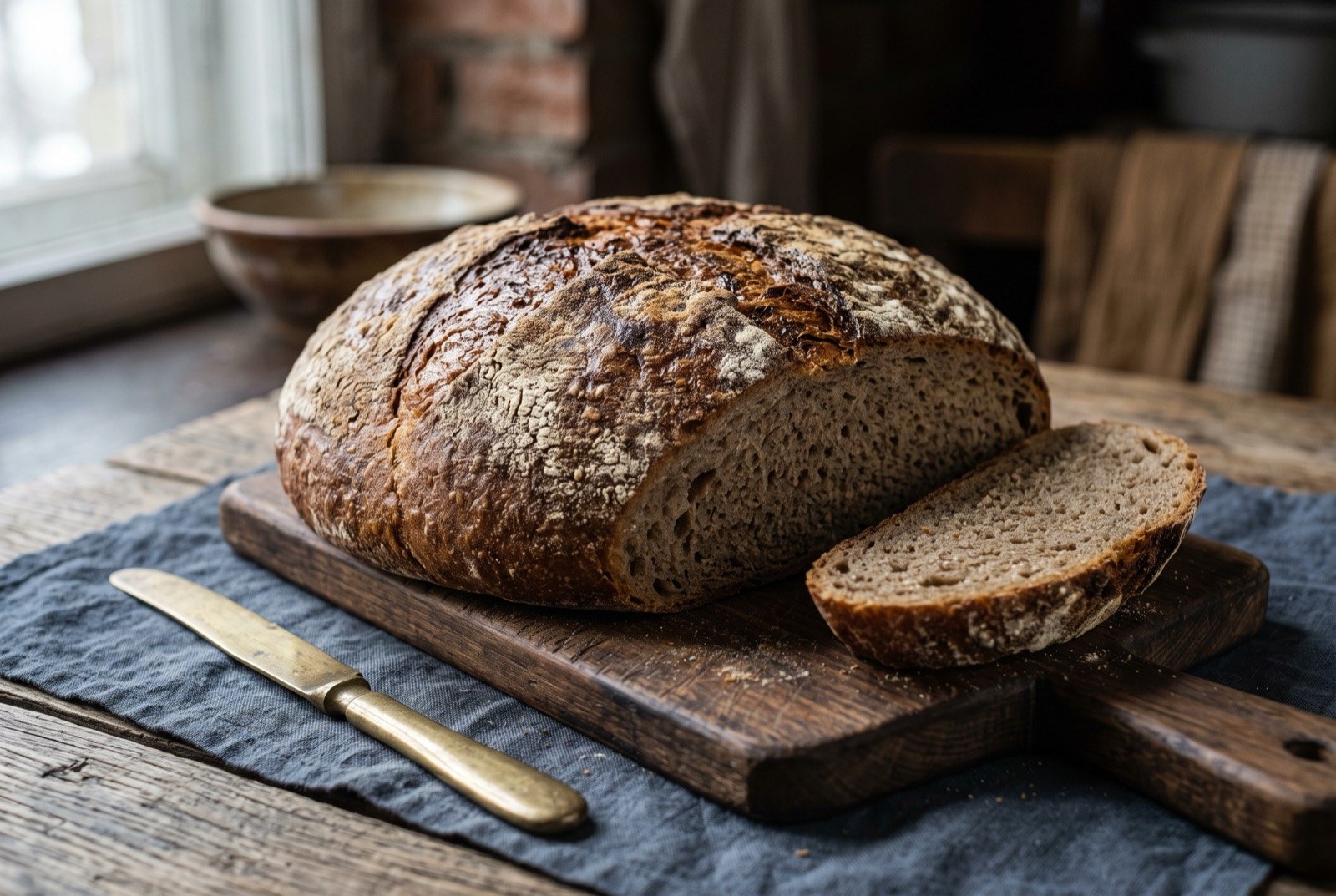
An illustration of the dish, not a photograph of it cooked.
- Time
- 20 hours
- Reviewed
- Not yet reviewed from inside the tradition
- Cooked
- Not yet cooked and reported
Despite its Russian ancestry and its name, a transliteration of Russian for "big bread," dalieba is made primarily with wheat flour, not rye, Harbin's own adaptation of the technique to what actually grew nearby.
As tradition built it
Makes 1 large loaf. About 20 hours, mostly fermentation.
Ingredients
- 15 g dried hop flowers
- 300 ml water, plus more for the dough
- 30 g plain flour, for the starter
- 500 g strong white bread flour
- 100 g light rye flour (see Sourcing)
- 12 g salt
Method
- Simmer the hop flowers in the water for 20 minutes, strain, and cool the liquid to lukewarm. Whisk in the 30g of flour and leave, covered, somewhere warm for 24 to 48 hours, until it bubbles and smells faintly sour, your own hop-flower liquid starter.
- Combine the bread and rye flours with the salt, add the starter and enough extra water to bring the dough together, and knead well.
- Ferment the dough at room temperature, knocking it back twice more at roughly hour intervals, three fermentations in total over the course of about 16 hours.
- Shape into a large, round loaf, roughly 25 to 30cm across, and proof once more until visibly puffed.
- Bake in a very hot oven, or a Big Green Egg fired with hardwood and fitted with a baking stone, starting hot, around 230°C, then dropping to finish through, until the crust is deeply coloured and the loaf sounds hollow when tapped, roughly an hour in total.
What a modern chef changes
A temperature-controlled starter and a genuine hardwood-fired crust.
Rung 5, run with proper kit.
Method
- Hold the hop-flower starter at a steady, gentle warmth, a proving drawer or an oven with just the light on, rather than an unmeasured warm spot, for a more predictable, repeatable ferment.
- Fire the Big Green Egg with beech or oak specifically, the woods this chapter's Harbin sausage sourcing also names, for a genuine smoky top note on the crust that a domestic oven cannot give.
- Steam the oven briefly at the start of the bake, a tray of hot water or a spritz of the loaf itself, for the kind of crisp, blistered crust a wood-fired oven gives more or less by accident.