The Sinosphere · Volume 27, The Iron Pot, the Frozen Pear and the Railway’s Own Sausage
Zhu Rou Dun Fentiao
Liaoning and Jilin
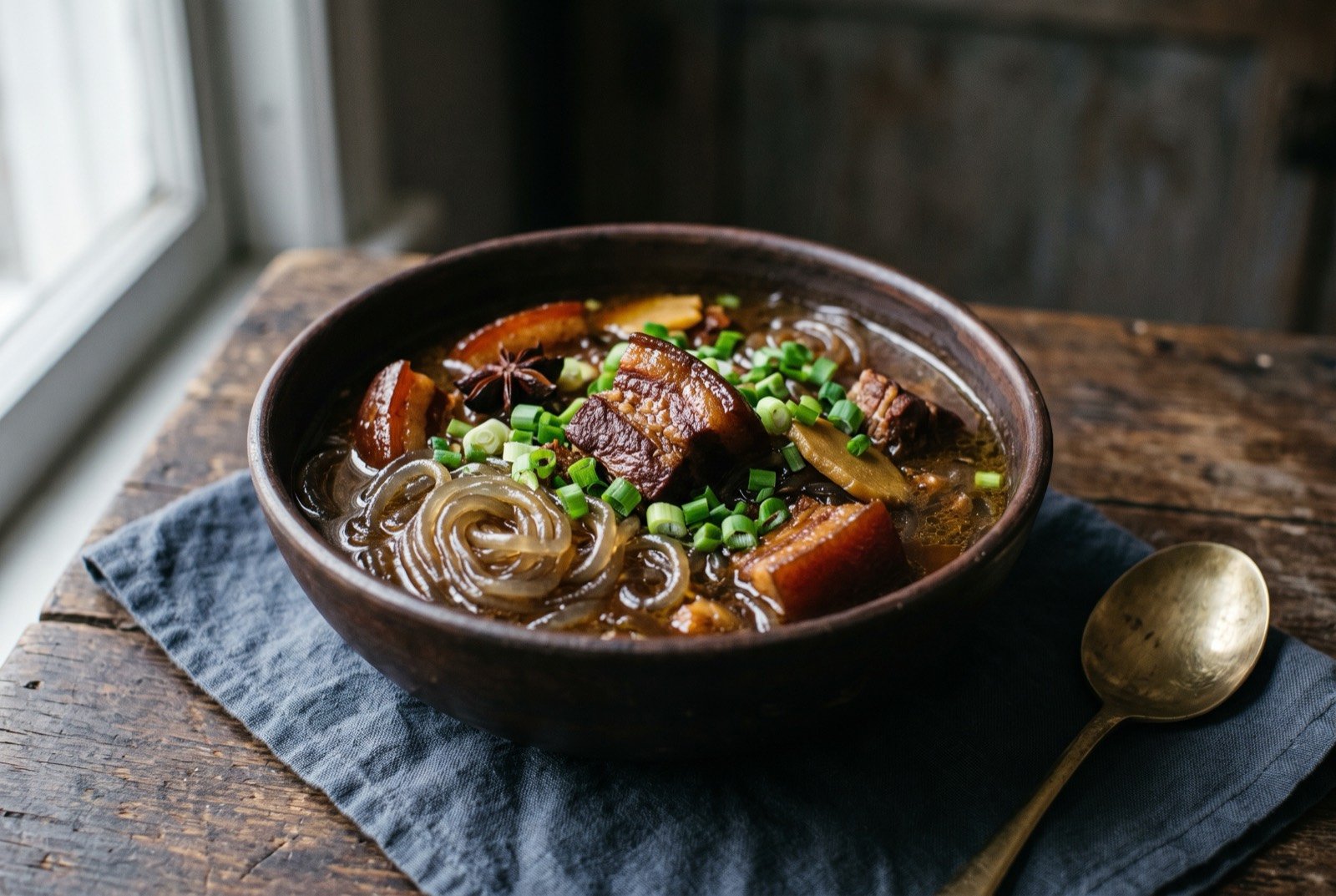
An illustration of the dish, not a photograph of it cooked.
- Time
- 1 hour
- Reviewed
- Not yet reviewed from inside the tradition
- Cooked
- Not yet cooked and reported
A Jin-dynasty military-provisioning legend, a Tang-dynasty tale of the general Xue Rengui carrying the dish from Sichuan into exile in the Northeast, and a twentieth-century anecdote about the warlord Zhang Zuolin's preference for big bowls of wine and meat over refined banquet food, are all in circulation. None is independently documented beyond popular food-history web writing, and this chapter repeats them as exactly that, attractive stories rather than verified provenance.
As tradition built it
Serves 4. About 1 hour, plus soaking time.
Ingredients
- 100 g dried sweet potato or mung bean vermicelli (fentiao, see Sourcing)
- 600 g skin-on pork belly, cut into roughly 2cm cubes
- 1 spring onion, 3 slices ginger, garlic to taste scallion, ginger, garlic
- to taste light and dark soy sauce, a star anise, a little sugar and salt
- 800 ml hot water
Method
- Soak the vermicelli in warm water for 2 to 3 hours until pliable.
- Blanch the pork belly from cold water, bring to the boil and simmer 5 to 6 minutes, skimming off any scum.
- Brown the pork in a dry pot with the scallion, ginger, garlic and star anise, then add the soy sauces, sugar and salt.
- Add the hot water, bring back to a simmer and stew, covered, about 40 minutes, until the pork is tender.
- Add the drained vermicelli and cook a further 10 minutes, until it has taken on the stew's colour and flavour.
What a modern chef changes
A long, controlled sous vide braise before the vermicelli goes in.
Not a numbered rung.
Method
- Braise the pork belly sous vide, 78°C for 10 to 12 hours with the aromatics vacuum-sealed alongside it, for a more consistently tender result than a 40-minute stovetop simmer can guarantee.
- Finish the braising liquid in a wide pan, reducing it briefly to concentrate flavour before the vermicelli is added, since a sous vide braise produces more liquid than a stovetop reduction.
- Add the vermicelli last, off the heat, letting residual warmth finish softening it rather than continued simmering, to keep its texture distinct from the meat rather than fully collapsed into the stew.