Iberia · Volume 07, The Roast, the Pot and the Acorn Line
Cochinillo Asado
Castile, Segovia
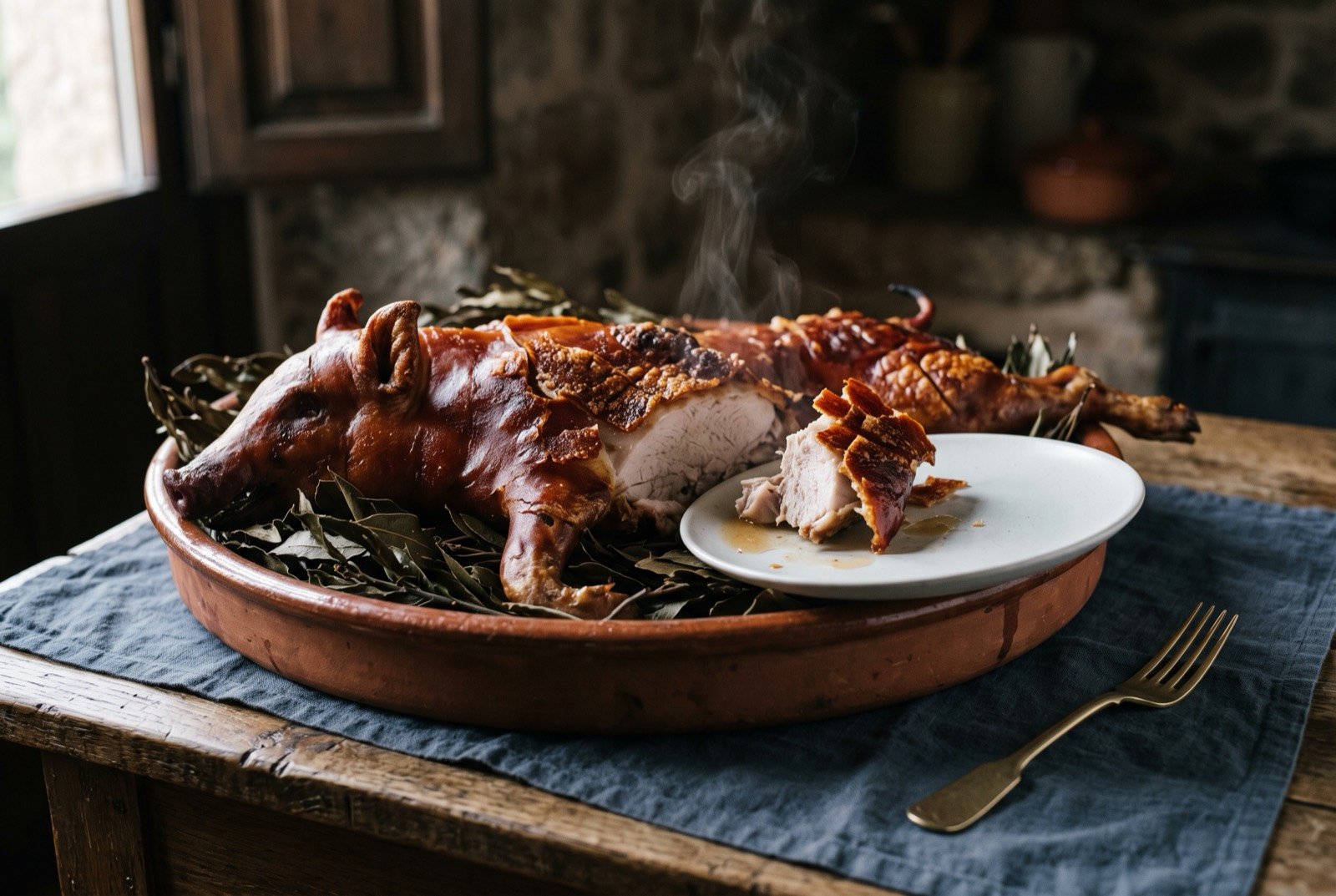
An illustration of the dish, not a photograph of it cooked.
- Time
- About 30 minutes to 1 hour 15No source states a time. Comparable dishes in this atlas take this long.
- Researched
- No outside sources linked
- Reviewed
- Not yet reviewed from inside the tradition
- Cooked
- Not yet cooked and reported
Castile, Segovia, the plate-cutting ritual and a genuinely 2024 protection.
As tradition built it
Ingredients
- 1 suckling pig, no older than 21 days, live weight 4.5 to 6.5 kg, fed exclusively on the sow's milk
- 500ml, enough to just cover the base of the cazuela water
- A generous rub of coarse salt salt
- A bed of laurel branches, enough to line the cazuela laurel branches
Method
- Season the suckling pig with nothing but water and salt.
- Set it skin-side down initially on a bed of laurel branches in a wide clay cazuela with water in the base, so the skin never touches the vessel.
- Turn the animal, prick the skin to release trapped air, and coat it lightly in its own fat.
- Return to the oven until the skin is crisp enough to be cut cleanly with the flat edge of a plate rather than a knife, the ritual test of a properly finished roast.
Notes
No confident numeric oven temperature or time for cochinillo asado survived this research to the same confidence as lechazo; the method is described in full rather than filled in with a false-precision figure.
What a modern chef changes
Sous vide low, then a high-heat crackling finish
Rung 4
Method
- Vacuum-seal the whole animal per rung four and cook low, around 80°C for roughly 12 hours.
- Ice-bath shock it, then press it under refrigeration overnight to firm the structure before finishing.
- Dry the skin completely, a hairdryer on a cool setting works reliably.
- Finish it at very high heat, a Big Green Egg run hard, for the final crackling stage, decoupling interior doneness from exterior crispness rather than gambling on one long roast to solve both at once.
- Serve with the plate-cutting ritual intact regardless of the modern method behind it: the theatre survives the technique change perfectly well.