Iberia · Volume 10, Bacalhau and the Long Way Home
Espetada em Pau de Louro
Madeira
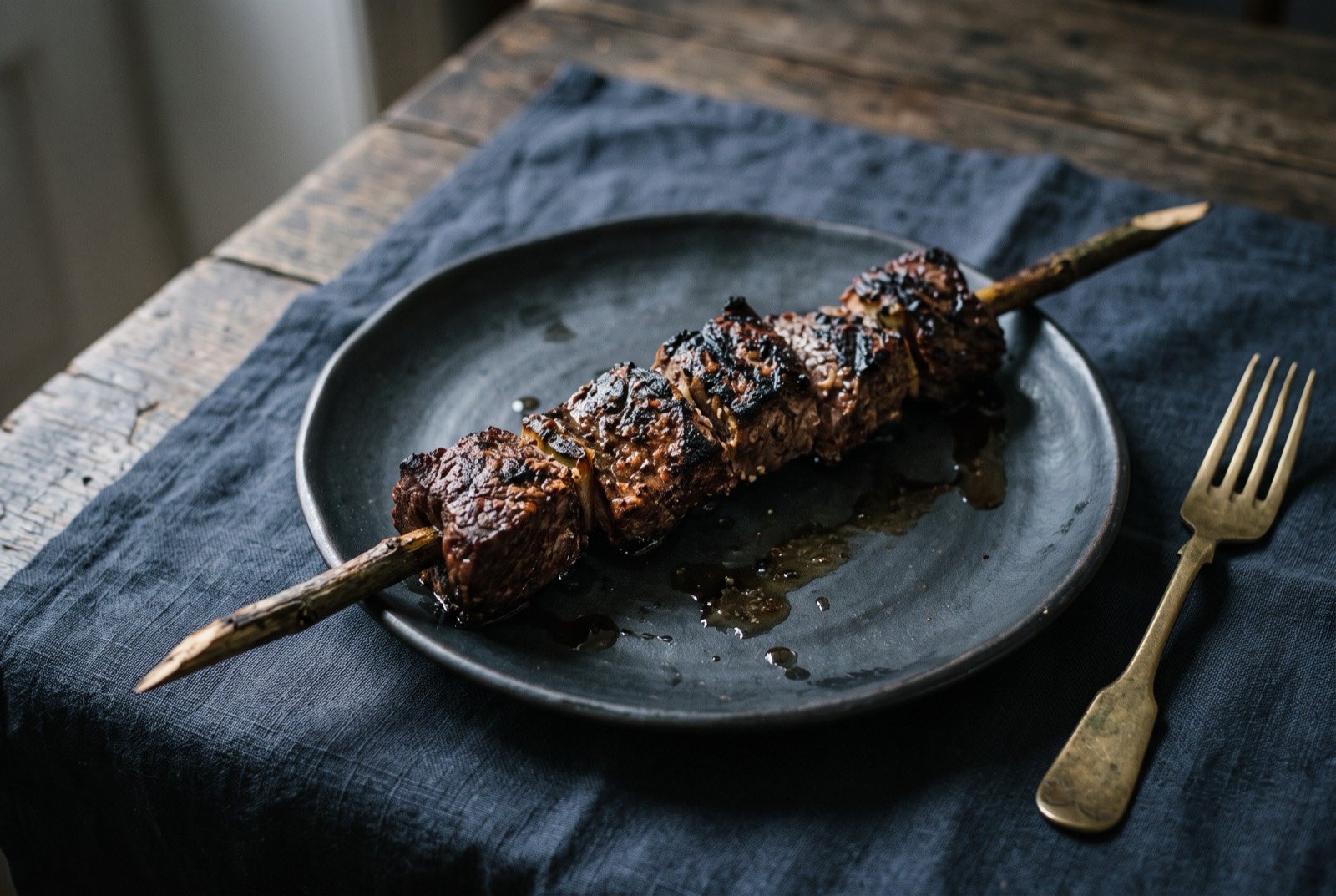
An illustration of the dish, not a photograph of it cooked.
- Time
- 30 minutes
- Researched
- 2 sources cited
- Reviewed
- Not yet reviewed from inside the tradition
- Cooked
- Not yet cooked and reported
Traced specifically to Estreito de Câmara de Lobos, where it began as food for arraiais and romarias, village festivals, eaten by hand with only bread and wine. It was brought into restaurant service around the 1950s by Francisco da Silva Freitas, in that same parish, and the laurel wood is credited with giving the meat its "sabor típico e campestre," a characteristic rustic flavour a metal skewer cannot replicate.
As tradition built it
Serves 4. About 30 minutes, plus marinating.
Ingredients
- 800 g beef, cut into large cubes
- to taste garlic, coarse salt, bay leaves
- as available fresh, sturdy bay laurel branches, stripped of most leaves, or a metal skewer if genuinely unavailable
Method
- Marinate the beef simply, in crushed garlic and coarse salt, for at least an hour.
- Thread the beef onto the laurel branches, positioning any fat consistently facing the same side.
- Grill over a hot charcoal fire, turning regularly, until well charred outside and still pink within, roughly 15 to 20 minutes depending on cube size.
- Traditionally hung directly over the table from a hook so the meat continues to drip and rest as it is eaten, served with bolo do caco and garlic butter.
What a modern chef changes
The laurel wood's own contribution isolated and controlled
Rung 2, applied by analogy from fish to beef
Method
- Source fresh, sturdy UK grown bay laurel specifically for skewering rather than the smaller culinary sprigs sold for cooking, since the branch itself, not just the leaf, is doing aromatic work through direct contact with hot meat.
- Rest the skewered, marinated beef with the laurel already in contact for an hour before grilling, letting some of the wood's own aromatic oil transfer into the meat before heat is ever applied.
- Finish over a Big Green Egg run hot and direct, then rest hanging rather than flat, keeping the traditional dripping, self basting presentation rather than losing it to a plated finish.