Iberia · Volume 10, Bacalhau and the Long Way Home
Pastéis de Nata
Lisbon
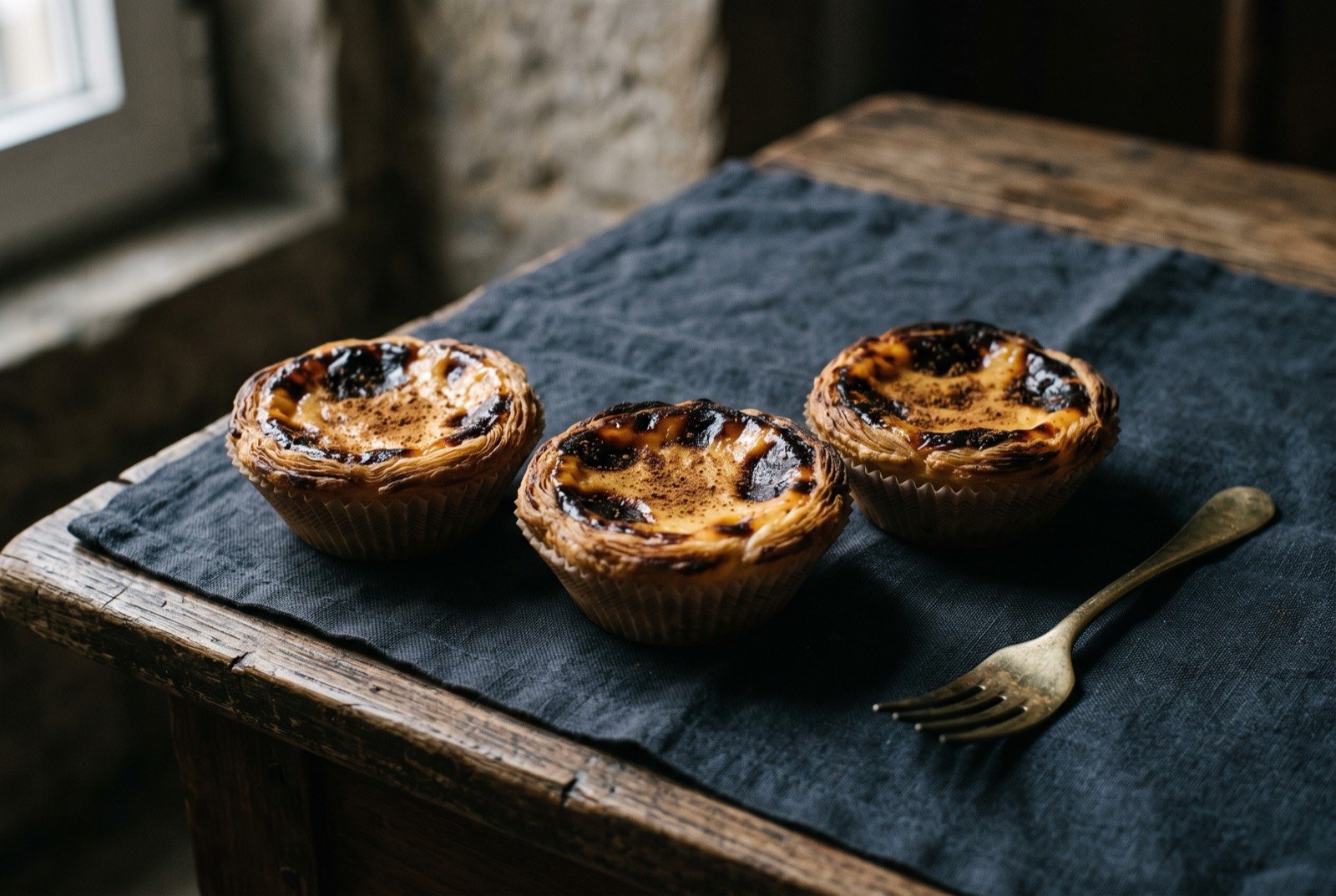
An illustration of the dish, not a photograph of it cooked.
- Time
- 1 hour
- Researched
- 2 sources cited
- Reviewed
- Not yet reviewed from inside the tradition
- Cooked
- Not yet cooked and reported
Pastéis de Belém's own recipe is kept under a signed non disclosure contract known to a handful of staff, so no authoritative ratio can be sourced, and this chapter does not pretend otherwise. What is documented: the custard is cooked in a bain marie, then baked in a domestic oven defeating 400 degrees Celsius for around 20 minutes, which is genuinely why a home version rarely achieves the same near burnt leopard spotting across the top.
As tradition built it
Makes about 12. About 1 hour, plus resting.
Ingredients
- 500 g ready made or homemade all butter puff pastry
- 250 ml whole milk
- 1 cinnamon stick, a strip of lemon zest
- 150 g sugar
- 75 ml water
- 30 g plain flour
- 6 egg yolks
Method
- Infuse the milk with cinnamon and lemon zest over low heat, then strain and cool slightly.
- Whisk the flour into a little of the milk to a smooth paste, then combine with the rest.
- Make a sugar syrup with the sugar and water, cooked to a light thread stage.
- Whisk the egg yolks, then combine with the milk mixture and the hot syrup, cooking gently over a bain marie until thickened to a pourable custard.
- Line tart tins with thinly rolled puff pastry, pressed up the sides with the thumbs.
- Fill with the custard and bake in the hottest oven available, as close to 400 degrees Celsius as the equipment allows, until the tops are deeply blistered and near black in patches, the pastry fully crisp beneath.
Notes
(A credible, named recipe, not presented as Belém's own.)
What a modern chef changes
The one variable a home cook can genuinely fix
Rung 5
Method
- Use a pizza oven, a Big Green Egg run wide open, or a domestic oven's absolute maximum setting with a preheated pizza stone, the only realistic route to anything near the temperature this bake actually needs; a standard 220 to 250 degree domestic oven will not blister the custard the same way, however long it runs.
- Rest the finished custard mixture overnight before baking, for a fuller, more settled flavour than baking it the same day.
- Serve immediately, still warm, dusted with cinnamon and icing sugar, since the pastry's crispness genuinely does not survive more than an hour or two.