Iberia · Volume 10, Bacalhau and the Long Way Home
Cataplana de Marisco
The Algarve
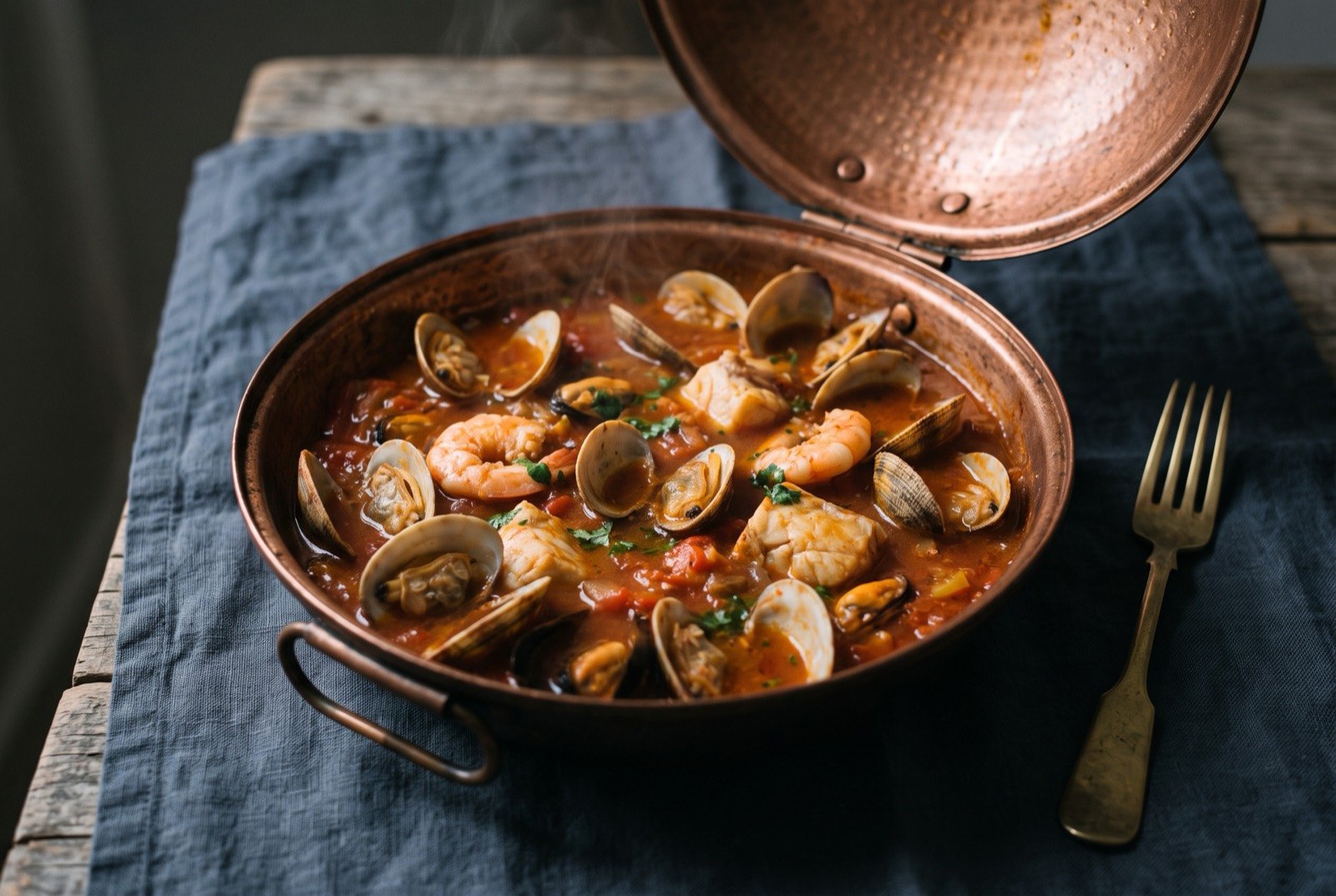
An illustration of the dish, not a photograph of it cooked.
- Time
- 45 minutes
- Researched
- 2 sources cited
- Reviewed
- Not yet reviewed from inside the tradition
- Cooked
- Not yet cooked and reported
The cataplana is almost always described as descended from the Moroccan tajine via Muslim rule of the Algarve, but even the sources repeating that story admit "não existem registos históricos oficiais," no official historical record of its appearance exists. The one piece of real investigation behind this chapter's research, a 2015 Jornal SOL feature, states plainly that "das origens da cataplana nada se sabe de rigoroso," nothing rigorous is known of its origins, and the only firmly dated figure connected to it is Ricardo Pinguinha Guerreiro, born 1927, a craftsman credited with refining the modern hermetic pan. A second researcher, Óscar Cabral, argues the vessel is not Arab in mechanics or form at all and traces it instead to a First World War era field cooking pot, two soldiers' helmets fitted together, adapted by Algarve tinsmiths around 1950; the food writer Maria de Lourdes Modesto is cited eating cataplana in the Algarve in 1951, among the earliest personal testimony of the finished form. This chapter presents both accounts and adjudicates neither, but notes that the better documented one points to the twentieth century, not the Middle Ages.
As tradition built it
Serves 4. About 45 minutes.
Ingredients
- 2 onions, sliced
- 3 potatoes, sliced
- 1 red and 1 green pepper, in strips
- 2 ripe tomatoes, sliced
- 3 garlic cloves
- about 1 kg combined firm fish (monkfish, dogfish or skate), clams and prawns
Method
- Soak the clams in cold salted water for 2 hours to purge sand, discarding any that stay open when tapped.
- Layer the onions, potatoes, pepper, tomatoes and garlic in the base of the cataplana, the fish next, the shellfish on top.
- Close and seal the pan, and cook over medium heat, 35 to 40 minutes for a full mixed version, or 8 to 10 minutes for a clam and prawn forward version, until the clams have opened and the prawns are pink.
- Keep the pan closed throughout the cook, and open it only at the table.
What a modern chef changes
The seal respected, and the vessel bought properly rather than improvised
Rung 3
Method
- Buy a real hammered copper cataplana rather than improvising with a lidded pot, genuinely available from UK specialist Portuguese retailers (see Sourcing, below); the pan's shape and material are doing real work, not just theatre.
- Bring the pan fully to temperature on the hob before sealing, rather than sealing cold, for a faster, more even build of the internal steam pressure the dish depends on.
- Where a cataplana genuinely cannot be sourced in time, use a sous vide bag for the sealed moisture principle and a heavy Dutch oven for the direct heat, run in sequence rather than pretending one vessel does both jobs, an honest substitute rather than a silent one.