Iberia · Volume 10, Bacalhau and the Long Way Home
Frango Piri-Piri à Guia
The Algarve, and the Mozambican retornado who brought it home
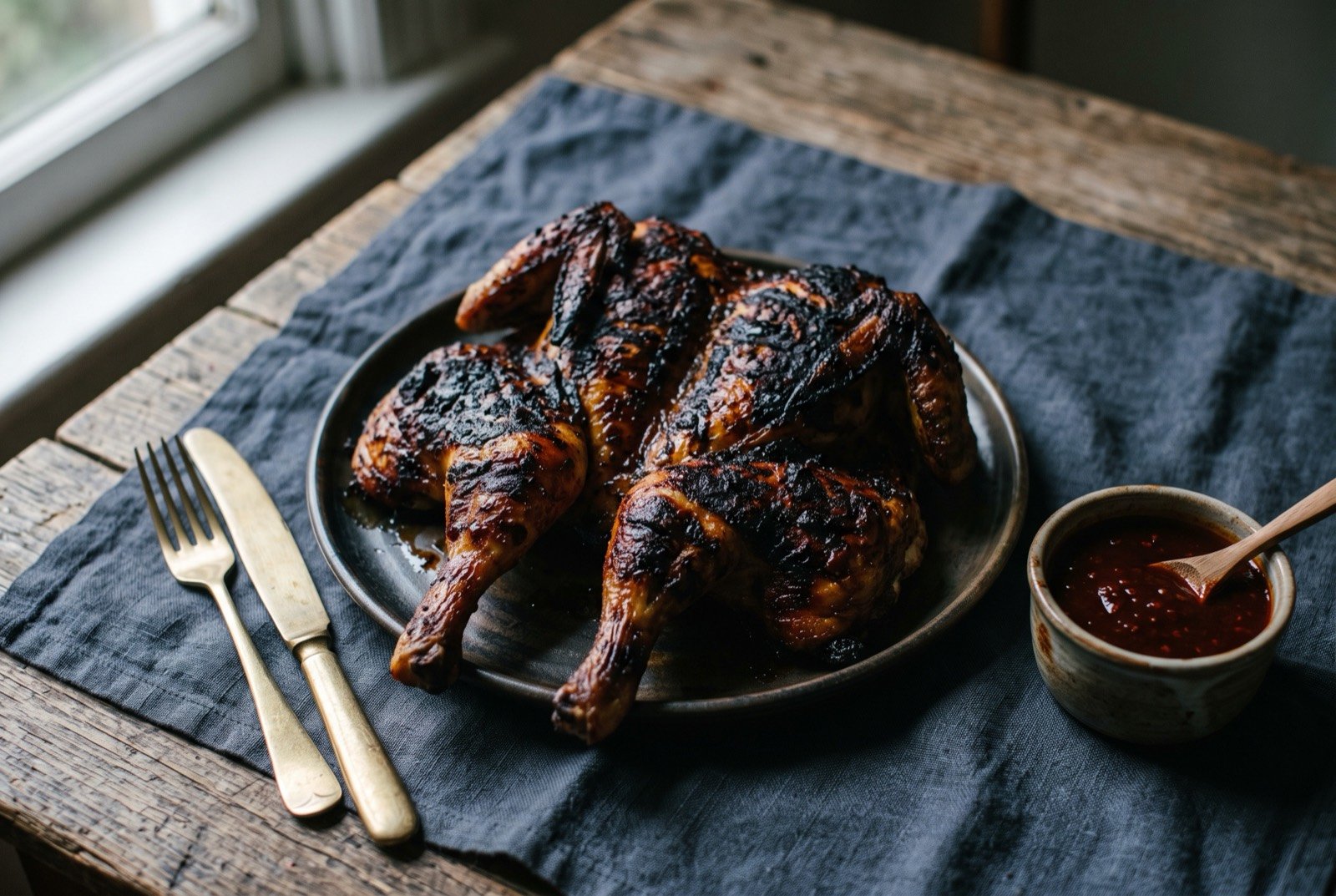
An illustration of the dish, not a photograph of it cooked.
- Time
- 1 hour
- Researched
- 2 sources cited
- Reviewed
- Not yet reviewed from inside the tradition
- Cooked
- Not yet cooked and reported
The most repeated account credits José Ramires, a shoemaker returned from Mozambique, opening a small café in the parish of Guia in 1964 and grilling small chickens over charcoal basted in garlic and piri-piri; a Correio da Manhã report of the restaurant's "45 anos de existência" implies a later founding closer to the late 1970s, and this chapter notes the inconsistency rather than silently picking a date. Guia now markets itself as Portugal's "capital do frango," roughly thirty restaurants built around the dish and an annual Festa do Frango da Guia each August.
As tradition built it
Serves 4. About 1 hour, plus marinating.
Ingredients
- 1 whole chicken, spatchcocked
- to taste for the marinade: garlic, olive oil, piri-piri (fresh or paste), lemon juice, salt
- to taste piri-piri sauce, served separately at the table
Method
- Marinate the spatchcocked chicken in garlic, olive oil, piri-piri and lemon for several hours or overnight.
- Build a charcoal fire to a pyramid and let it burn until the ash has gone fully white, roughly 30 minutes.
- Grill the chicken directly over the embers, skin side down first, turning as needed, basting occasionally, until cooked through and well charred at the edges, 35 to 45 minutes depending on size.
- Salt during cooking rather than only at the end, and serve the piri-piri sauce on the side for the diner to add, rather than pre-sauced.
What a modern chef changes
The two things the fast casual version of this dish gets wrong, corrected
Rung 2
Method
- Source a younger, smaller bird, ideally three to four months old and under a kilo, rather than a standard supermarket roasting chicken, for meat that stays properly moist over direct heat rather than drying out before it chars.
- Baste continuously with rendered fat rather than sauce during the cook, keeping the piri-piri sauce entirely off the meat until it reaches the table, the single clearest technical difference between a real Algarve grelhador and the version that hides a mediocre bird under a heavy, sweetened sauce.
- Make the sauce itself from real dried piri-piri pods rather than a bottled substitute, since the dish's whole character depends on the chilli's own quality more than on any other single ingredient.