Iberia · Volume 10, Bacalhau and the Long Way Home
Açorda Alentejana
The Alentejo
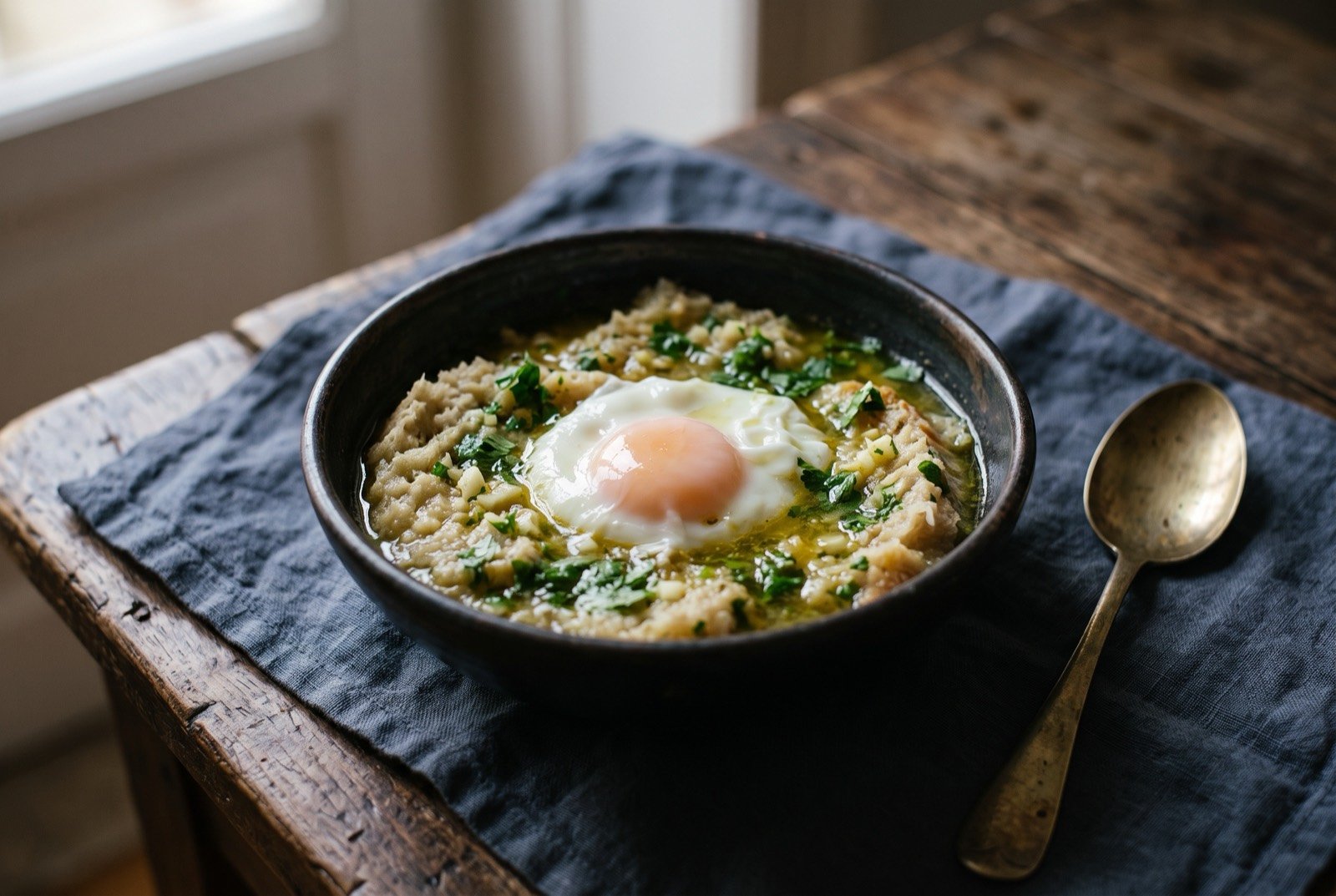
An illustration of the dish, not a photograph of it cooked.
- Time
- 20 minutes
- Researched
- 2 sources cited
- Reviewed
- Not yet reviewed from inside the tradition
- Cooked
- Not yet cooked and reported
The dish's name traces to Andalusian Arabic dialectal roots, thurda or çurda, a genuinely traceable Arabic etymology, unlike the cataplana's contested one.
As tradition built it
Serves 4. About 20 minutes.
Ingredients
- 4 garlic cloves
- to taste coarse salt
- to taste coentros or poejo, a generous bunch
- to taste olive oil
- 4 eggs
- 400 g hard, day old Alentejo bread, sliced
Method
- Pound the garlic, coentros or poejo and coarse salt together in a mortar to a rough paste.
- Bring salted water to the boil and poach the eggs in it.
- Put the pounded paste into a deep bowl or terrine with a generous measure of olive oil.
- Pour the still boiling poaching water over the paste and mix in.
- Add the sliced hard bread to the bowl, letting it soak, then top with the poached eggs.
- Rest 3 to 5 minutes before serving, long enough for the bread to absorb the liquid without collapsing to total mush.
What a modern chef changes
The egg and the bread each given more precise control
Kit note, not tied to a numbered rung.
Method
- Poach the eggs sous vide at a controlled 63 degrees Celsius for 45 minutes, for a more reliably soft set yolk than a pan poach across four eggs at once achieves.
- Toast the stale bread lightly before soaking it, adding a little more structure and a faint roasted note the traditional straight soak does not carry.
- Finish with a coarser final scatter of coriander added at the very last moment, restoring some of the fresh, sharp top note the long soak otherwise loses.