France and the Alps · Volume 16, Altitude, Cheese and a Border the Kitchen Never Drew
Tartiflette
Savoie and Haute-Savoie
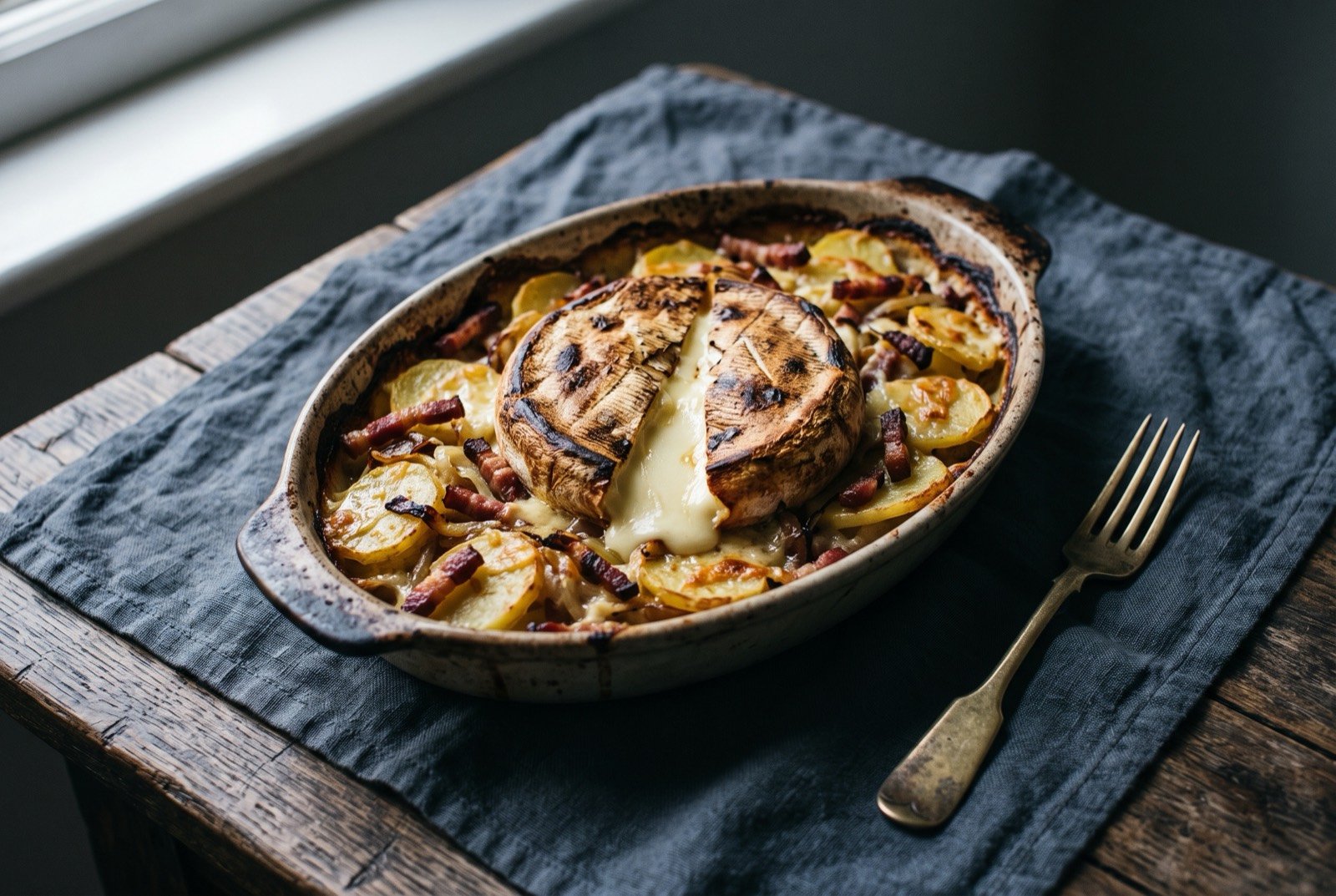
An illustration of the dish, not a photograph of it cooked.
- Time
- 1 hour
- Researched
- 22 sources cited
- Reviewed
- Not yet reviewed from inside the tradition
- Cooked
- Not yet cooked and reported
Savoie and Haute-Savoie. A genuinely late-20th-century commercial invention, built on a genuinely older peasant dish. See the history section above for the full, unresolved authorship question.
As tradition built it
Serves 4. About 1 hour.
Ingredients
- 1 kg potatoes, peeled and diced
- 1 whole Reblochon de Savoie AOP
- 200 g smoked lardons
- 200 g onion, chopped
- 10 cl Apremont AOC white wine
- 1 garlic clove
- to taste pepper and nutmeg
Method
- Brown the lardons with the onion in a pan.
- Add the diced potatoes and cook around 20 minutes.
- Deglaze with the white wine and season with pepper and nutmeg.
- Transfer to a garlic-rubbed gratin dish preheated to 200°C.
- Cut the Reblochon in half without removing the rind. Dice one half into the mixture, and place the other rind-side up on top.
- Bake 15 to 20 minutes, until the rind is browned and blistered.
Notes
This official recipe, from the Savoie Mont Blanc tourism board, contains no cream, despite cream being extremely common in modern and restaurant versions.
What a modern chef changes
A held-temperature confit for the potatoes, and the rind treated as the whole point
Rungs 3 and 5
Method
- Confit the diced potatoes in duck or clarified butter at 85°C in a water bath, 40 minutes, before the pan-frying stage, rather than boiling or pan-cooking from raw. This gives a fully tender interior with none of the water-logging that makes a rushed tartiflette collapse into mush under the cheese, and lets the pan stage that follows exist purely to build colour, not to cook the potato through.
- Score the Reblochon's rind lightly before placing it, rind-up. This is a direct extension of the rind-up tradition, not a departure from it: a shallow cross-hatch lets the oven's heat penetrate the rind faster without exposing the paste underneath, so the browning and blistering rung 3 identifies as the point happens more evenly across the whole surface rather than concentrating at the centre.
- Finish under a very hot, brief broiler blast rather than a long low bake, once the potato and lardon base is already hot from the confit stage. This shortens the cheese's own time in the oven to the minute or two it actually needs to brown, protecting the delicate washed-rind character from overcooking into bitterness.