Mesoamerica · Volume 01, The Highland Mole and Maize World
Mole Negro Oaxaqueño
Central Valleys, Oaxaca
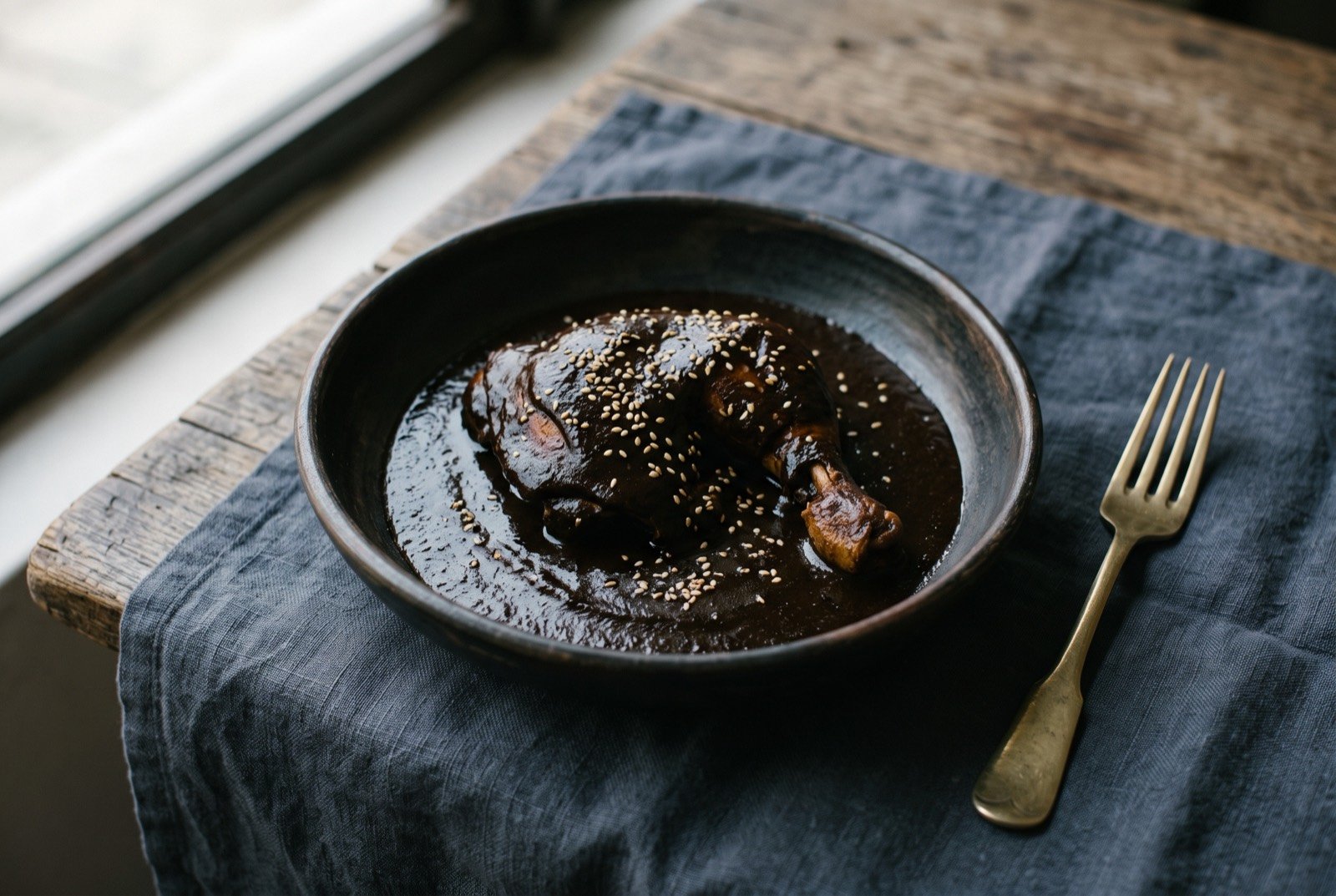
An illustration of the dish, not a photograph of it cooked.
- Time
- 2 hours 30
- Reviewed
- Not yet reviewed from inside the tradition
- Cooked
- Not yet cooked and reported
As tradition built it
Mole negro oaxaqueño
La tierra de los moles, INPI, 2021 . 2 hours 30 minutes
Ingredients
- 8 chiles chilhuacle negro
- 2 chiles chilhuacle rojo, where obtainable
- 6 chiles mulatos
- 6 chiles pasilla negro or chilcoste
- ½ cup the chiles' own seeds
- 2 white onions
- 7 cloves garlic
- 3 tomatoes
- 8 tomatillos
- ¼ cup raisins
- 500g lard
- 1 tsp cloves
- 1 plantain
- 4 star anise
- 1 whole corn tortilla
- 1 tsp, coarse black pepper
- ½ loaf pan de yema
- 2 sticks cinnamon
- ¼ cup sesame
- 1 tsp, whole cumin
- ¼ cup peanuts
- 1 tsp, ground nutmeg
- ¼ cup almonds
- ¼ cup pepitas
- 1 tsp thyme
- 1 tbsp, criollo oregano
- 1 tsp marjoram
- 1 bay leaf
- 6 cups chicken stock
- 80g Oaxacan chocolate
- 3 avocado leaves
Method
- Toast the chiles, then soak them.
- Char the chiles' own seeds separately on the comal, moving them constantly so they scorch rather than burn outright, then soak them soft again.
- Char the onion, garlic, tomato and tomatillo on the same comal.
- Fry the nuts, bread, raisins, plantain and tortilla in lard with the whole spices and the nutmeg, then blend.
- Fry the chile paste and the nut-and-spice paste each separately in hot lard for roughly fifteen minutes, stirring without pause so the mole itself does not burn.
- Fold in the tomato mixture, chocolate and the chicken stock.
- Add the avocado leaves, sugar and salt only at the very end.
Notes
This government source's own bibliography leans heavily on Spanish-language recipe media rather than a named traditional cook, despite its cover claiming to speak in the voice of indigenous cooks. It is the strongest quantity source this chapter could reach, and it is not the same thing as a primary recipe from a named Zapotec kitchen.
What a modern chef changes
Controlled charring, standardised drying
Rungs 03, 05
Method
- Run the chile-seed and tortilla charring stage on a Big Green Egg's direct, very hot zone with the lid up, watched constantly, rather than over an open comal flame, for a controllable, repeatable point at which Maillard browning tips into the deliberate light carbonisation the dish wants without crossing into acrid bitterness.
- Dehydrate the chiles to a consistent moisture level before toasting, so every batch chars at the same rate rather than fighting inconsistent starting dryness.
- Finish the sauce's last reduction in a low, controlled oven rather than a stovetop pot, where half a kilo of lard and a near-black chile paste will catch and ruin two days of work in the final minutes if left unwatched.