North America · Volume 34, The Hollow, the Ridge and the Mill Town
Lexington-Style Piedmont Barbecue
Lexington, North Carolina Piedmont, United States
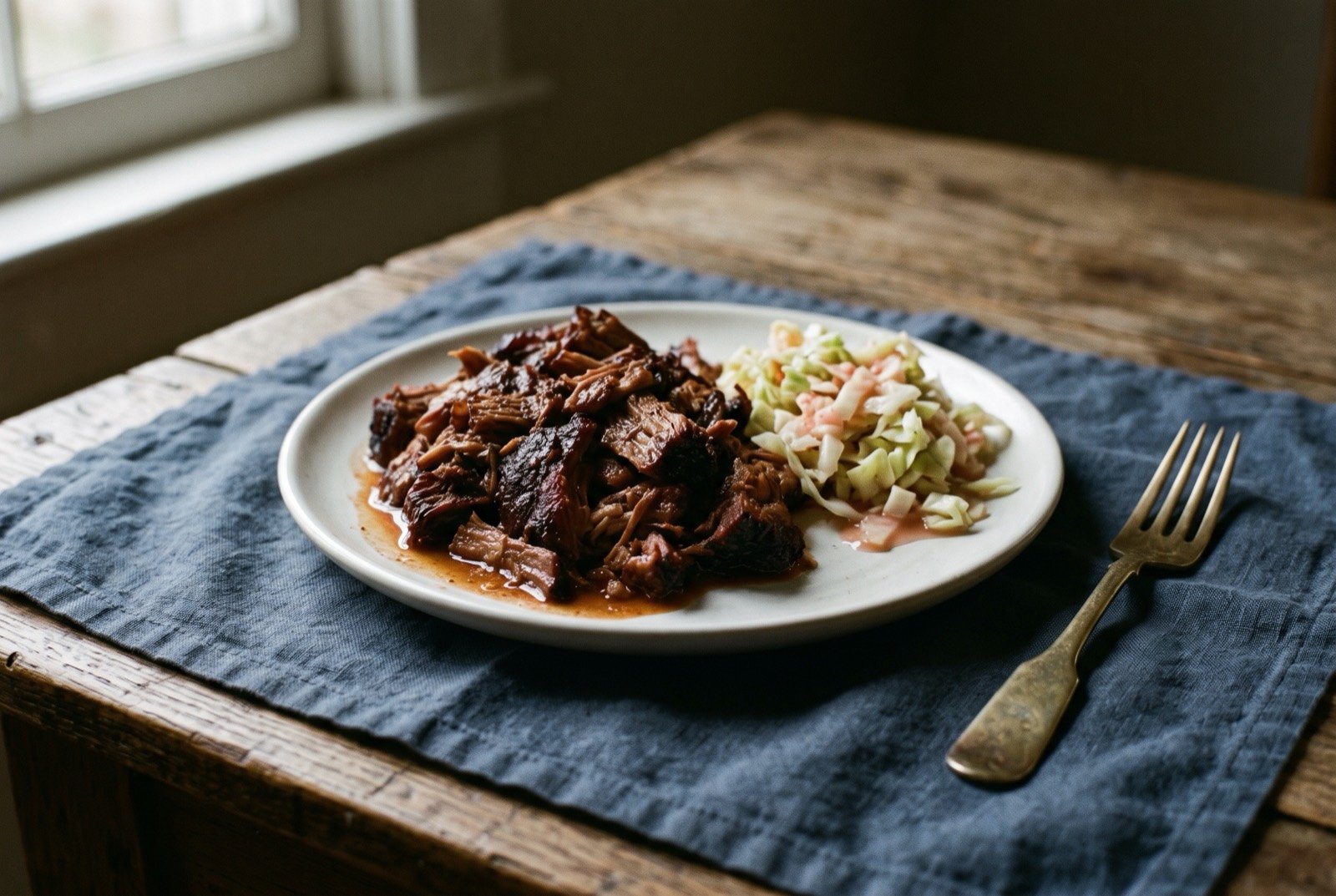
An illustration of the dish, not a photograph of it cooked.
- Time
- 8 hours
- Reviewed
- Not yet reviewed from inside the tradition
- Cooked
- Not yet cooked and reported
As tradition built it
Lexington-Style Piedmont Barbecue
Serves 6 to 8. About 8 hours.
Ingredients
- 1 bone-in pork shoulder, about 3kg
- to taste salt and black pepper
- as needed, for an 8-hour smoke hickory wood or charcoal, for smoking
For the dip
- 250ml cider vinegar
- 60ml tomato ketchup
- 1 tsp crushed red pepper flakes
- to taste salt and black pepper
For red slaw
- 1 medium head, shredded shredded cabbage tossed with a portion of the dip
Method
- Season the shoulder simply with salt and pepper the night before.
- Cook over indirect heat with hickory smoke at around 110 to 120°C, maintaining a steady, low temperature for roughly 8 hours, until the internal temperature reaches about 93°C and the meat pulls apart easily.
- Rest, then pull or lightly chop the meat.
- Whisk together the vinegar, ketchup, red pepper flakes, salt and pepper for the dip and toss a portion through shredded cabbage for red slaw; serve the pulled pork moistened with the remaining dip, the red slaw alongside, and hush puppies.
What a modern chef changes
The same collagen-to-gelatin logic, made repeatable on a Big Green Egg.
Rung 4
Method
- Hold the Big Green Egg at a steady 107°C using its own ceramic thermal mass rather than an open pit, giving far tighter temperature control over the 8-hour cook than an open fire allows, while still burning genuine hickory for smoke.
- Reduce a portion of the dip separately until syrupy before tossing it through the pulled meat, concentrating the vinegar and pepper into a glaze rather than a thin sauce, so less of it carries more flavour.