North America · Volume 36, The Fish Fry, the Curd and the Kettle
Kansas City Burnt Ends
Kansas City, Missouri
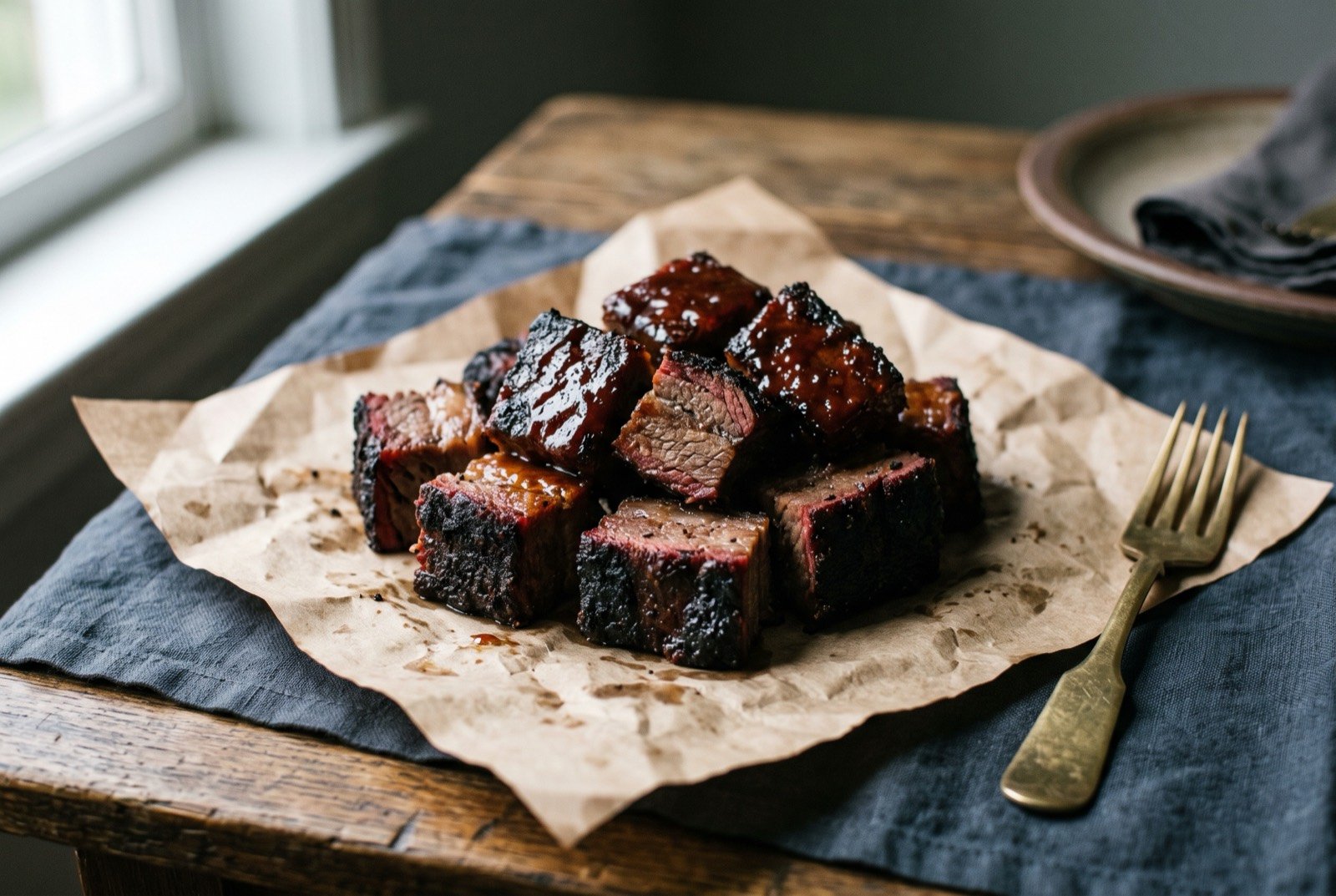
An illustration of the dish, not a photograph of it cooked.
- Time
- 14 hours
- Reviewed
- Not yet reviewed from inside the tradition
- Cooked
- Not yet cooked and reported
As tradition built it
Kansas City Burnt Ends
Serves 8 · 14 hours, mostly unattended
Ingredients
- 3kg beef brisket point end
- 1½ tbsp paprika, 1½ tbsp brown sugar, 2 tsp salt, 1 tbsp black pepper, 1 tsp garlic powder dry rub: paprika, brown sugar, salt, black pepper, garlic powder
For the sauce
- 300ml ketchup
- 60g molasses
- 60g brown sugar
- 2 tbsp cider vinegar
- 1 tbsp Worcestershire sauce
- a pinch pinch of cayenne
Method
- Coat the brisket generously in the dry rub and smoke at 110 to 120°C over hickory, low and slow, until it reaches an internal temperature of around 95°C and is fully tender, roughly 10 to 12 hours.
- Rest, then cube the point end into large chunks.
- Toss the cubes back into a little of the rub and rendered fat, and return to the smoker or a very hot pan for a further 45 minutes to an hour, to re-render and crisp the exposed edges.
- Meanwhile combine the ketchup, molasses, brown sugar, cider vinegar, Worcestershire sauce and cayenne, and simmer 10 minutes to thicken.
- Toss the burnt ends in the sauce only at the very end, per Rung 6, or serve it on the side.
Notes
Kansas City sauce, thick, tomato-and-molasses based, is a comparatively late twentieth-century development over an earlier, sharper style.
What a modern chef changes
The sauce applied only as a final glaze, exactly as Rung 6 argues it must be.
Rung 6
Method
- Smoke the brisket entirely unsauced through the full cook, letting the bark and smoke ring develop on their own terms, then glaze the cubed burnt ends with the sauce only in the final few minutes of the second smoke, per Rung 6, rather than sauced throughout, so the sugar in the glaze caramelises rather than scorches.
- Reduce the sauce further than the tradition recipe calls for, to a genuinely clinging glaze rather than a pourable sauce, so it lacquers the crisped edges rather than steaming them soft again.